Follow Buddhist stories through cave sculpture, sacred relics, temple courtyards and the landscapes around them. Choose a close look at art and history, time in living temples, or a journey shaped around your own practice.
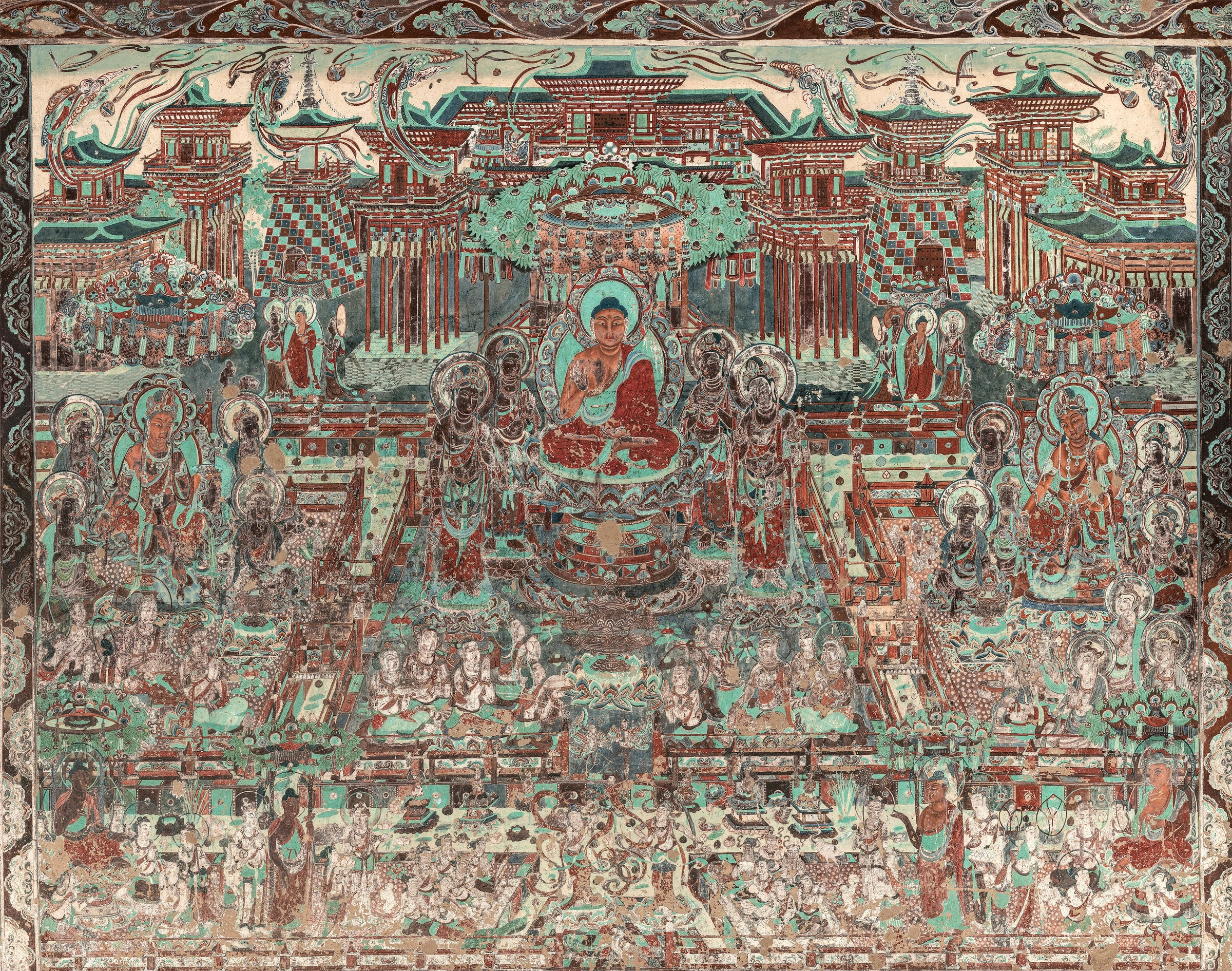
Amitābha’s Pure Land · Mogao Cave 217, Dunhuang · Tang dynasty
BUDDHISM IN CHINESE CULTURE
How Buddhism took root in China.
ConfuciusConfucian thoughtShakyamuni BuddhaBuddhist teachingLaoziDaoist thought
Symbolic editorial portraits of three figures associated with the traditions.
By the later Han period, Buddhist ideas were reaching China through Central Asian trading and monastic networks; maritime connections also carried people and texts. This was no single arrival on a single road. At the oasis cities and courts, translators and patrons made new ideas available in Chinese, while cave temples and sculpture gave those ideas a visible form.
What made Buddhism part of Chinese life was a long process of translation, adaptation and exchange. It entered a world already shaped by Confucian family ethics and political thought, as well as Daoist language and ideas of self-cultivation. Buddhist teachers engaged with those traditions, sometimes finding common language and sometimes disagreeing. The “three teachings” did not become one religion; their encounter helped reshape each other’s place in Chinese culture.
From the fourth and fifth centuries onward, major translation projects deepened that exchange. Kumārajīva and his team in Chang’an are one important chapter. Schools including Chan took form within Chinese Buddhist communities, and under the Sui and Tang dynasties temples, pilgrimage, art and scholarship flourished. The result was not simply an imported faith repeated unchanged, but a range of living traditions with distinctly Chinese histories.
Today you can approach this story through cave art, sacred mountains, living temples, vegetarian food and the books people carried between them. Each place belongs to its own century and tradition; the journeys below are ways to explore those connections, not a claim that one traveller followed a single line.
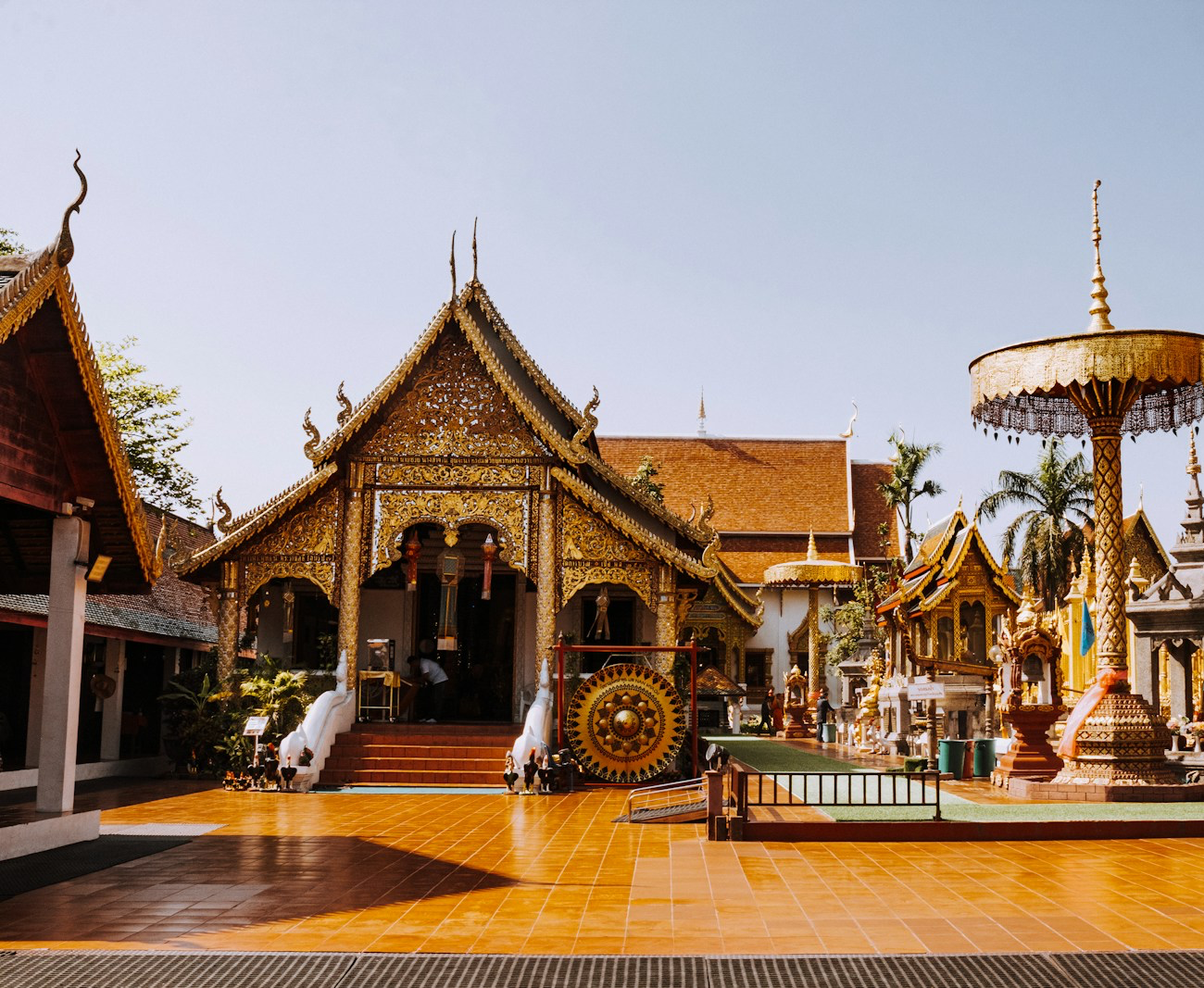
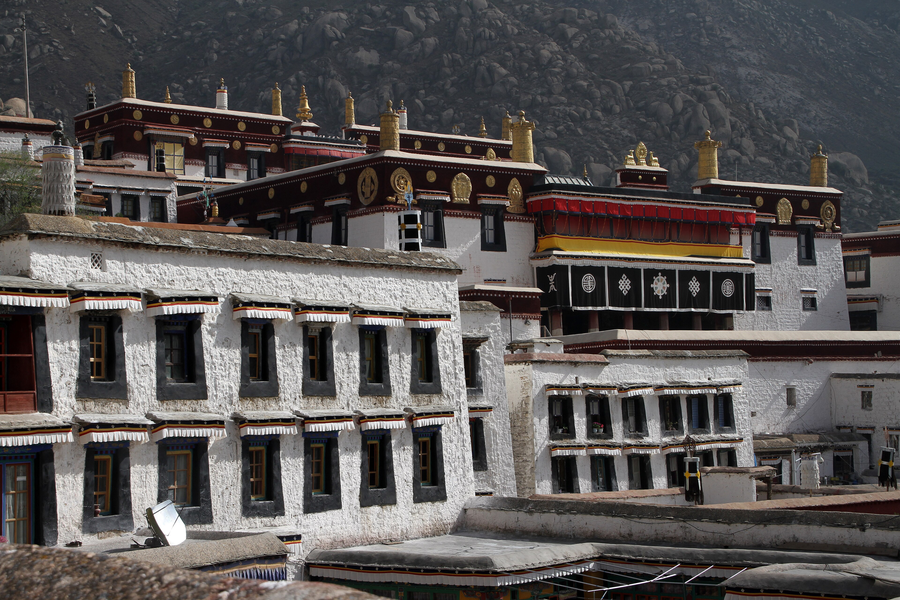
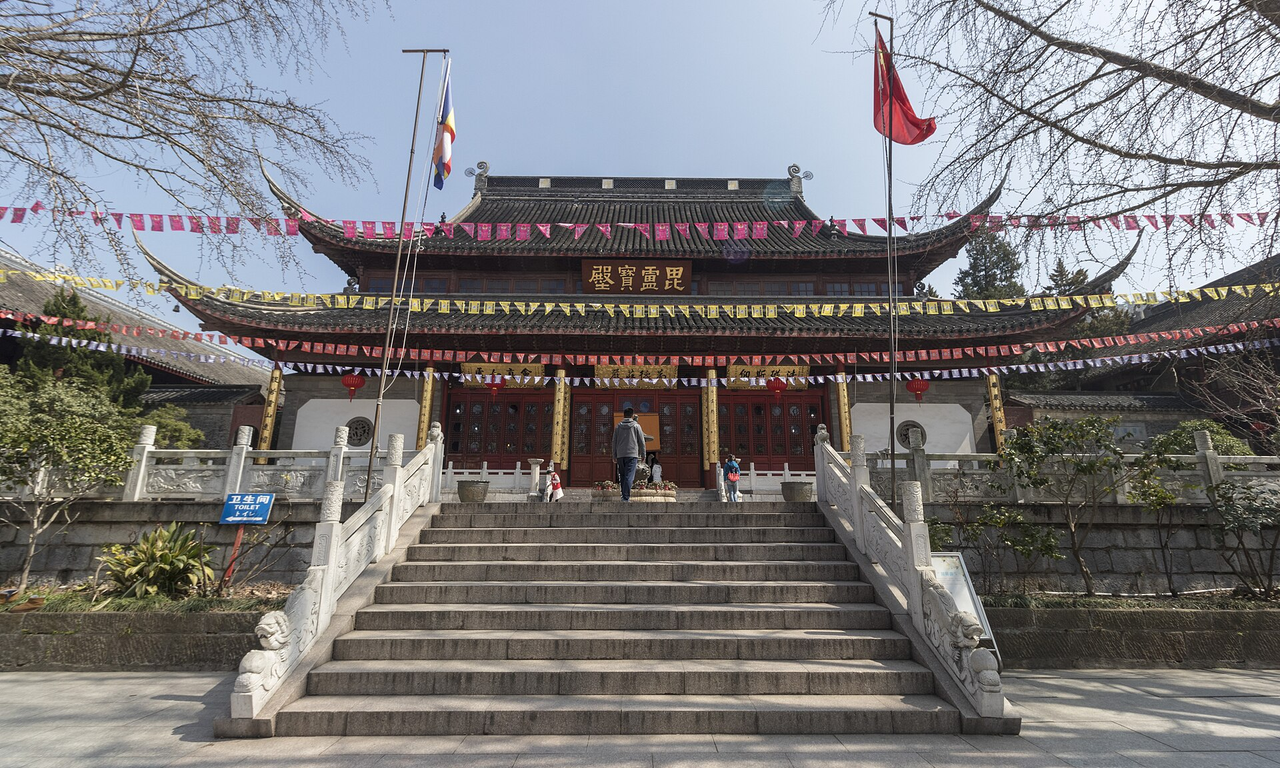
MahayanaDonglin Temple · ChinaTheravadaWat Phra That Hariphunchai · ThailandVajrayanaDrepung Monastery · Tibet
Mahayana, influential across East Asia, places the bodhisattva aspiration to Buddhahood for the benefit of all beings at its centre. Theravada, prominent in Sri Lanka and mainland Southeast Asia, often describes the arhat’s liberation as a central goal. Both traditions value compassion; neither is a simple measure of who cares more for others.
Vajrayana, central to Tibetan Buddhism, shares the Mahayana goal while using distinctive ritual and contemplative methods.
Older texts sometimes use “Hinayana” (“lesser vehicle”) for other Buddhist schools. It is a dismissive historical label, not a neutral name for Theravada.
Chan gives special weight to meditation, direct insight and the relationship of practice to everyday life. Explore the history, Bodhidharma’s traditional story and the lineage on our dedicated Chan page.
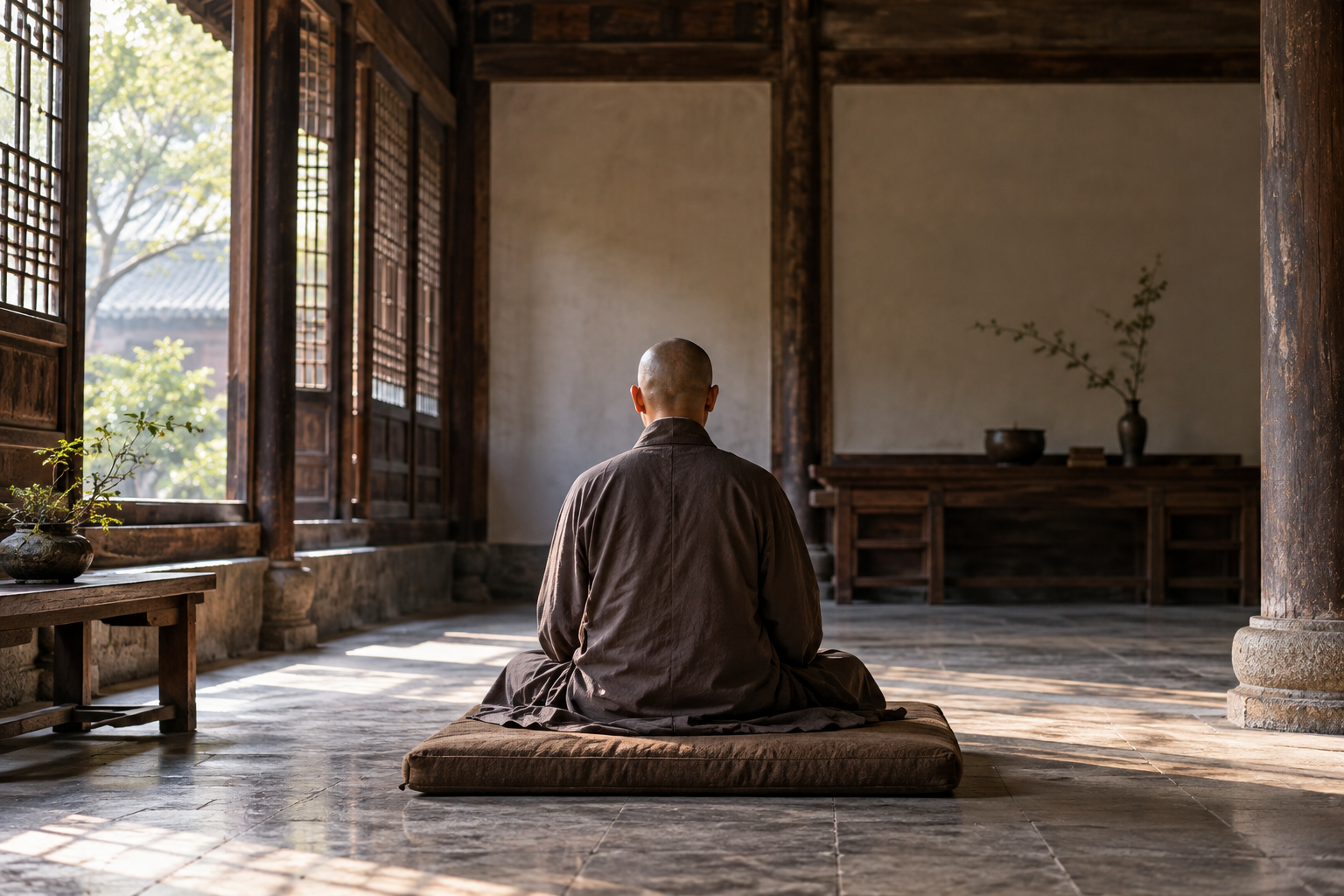
Illustrative scene · not a photograph of a named monastery
Pure Land
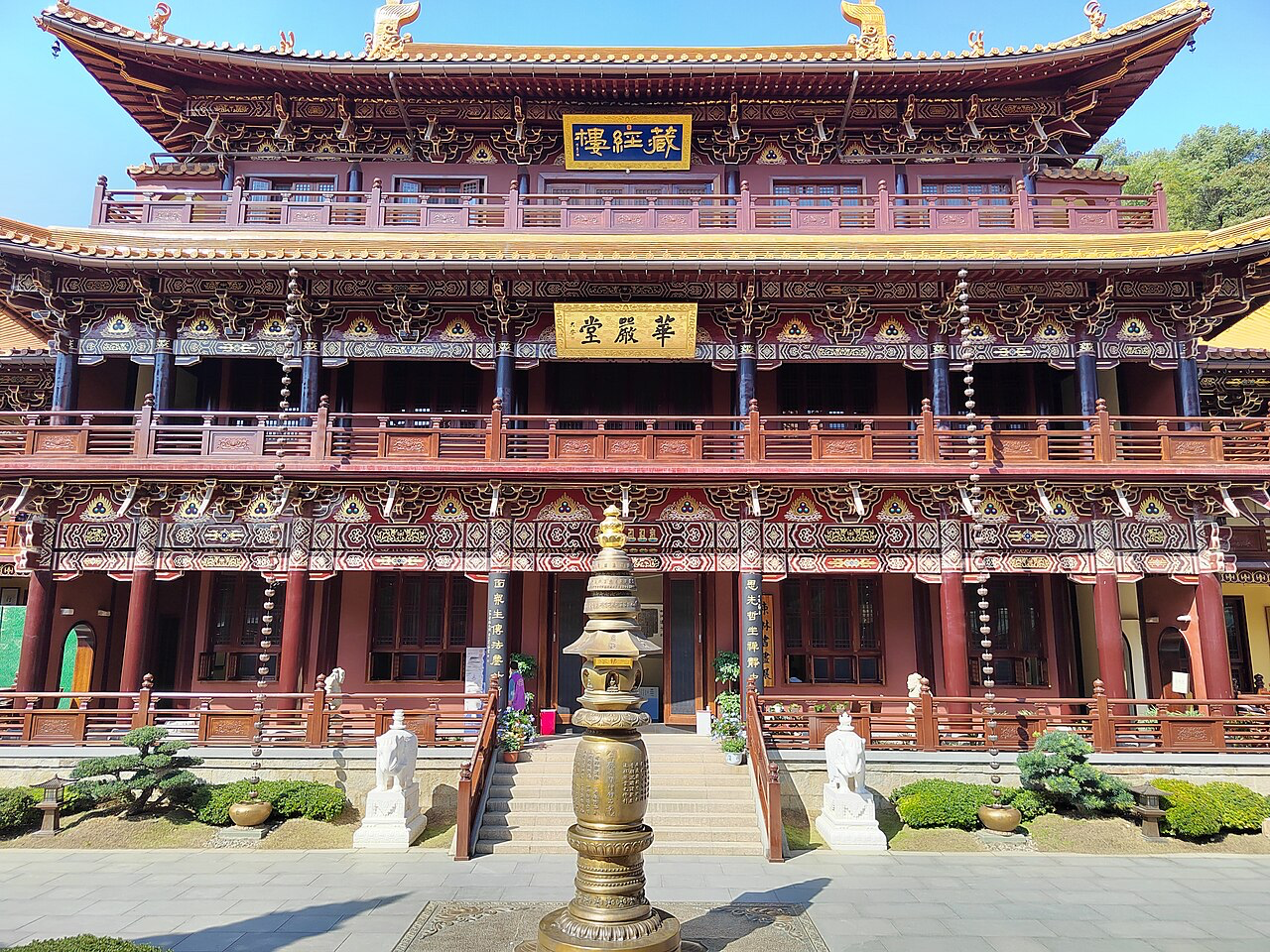
Pure Land devotion, often centred on reciting Amitabha Buddha’s name, has been deeply influential in Chinese Buddhist life. Donglin Temple at Mount Lu is closely associated with Huiyuan and its formative history.
Donglin Temple · Mount Lu, Jiangxi
Chan and Pure Land are two particularly visible currents of Han Chinese Buddhism outside Tibet, alongside other traditions including Tiantai, Huayan and Vinaya. Temples and practitioners do not always fit a single exclusive school: meditation and Amitabha recitation have long been practised together, often called Chan–Pure Land dual cultivation (禅净双修).
In Chinese Buddhist tradition, Putuo, Jiuhua, Wutai and Emei are the sacred seats of practice and pilgrimage (daochang) of Guanyin, Ksitigarbha, Manjushri and Samantabhadra. Buddhist tradition holds that these bodhisattvas dwell at their respective mountains, making each landscape a place to encounter a different ideal of practice.
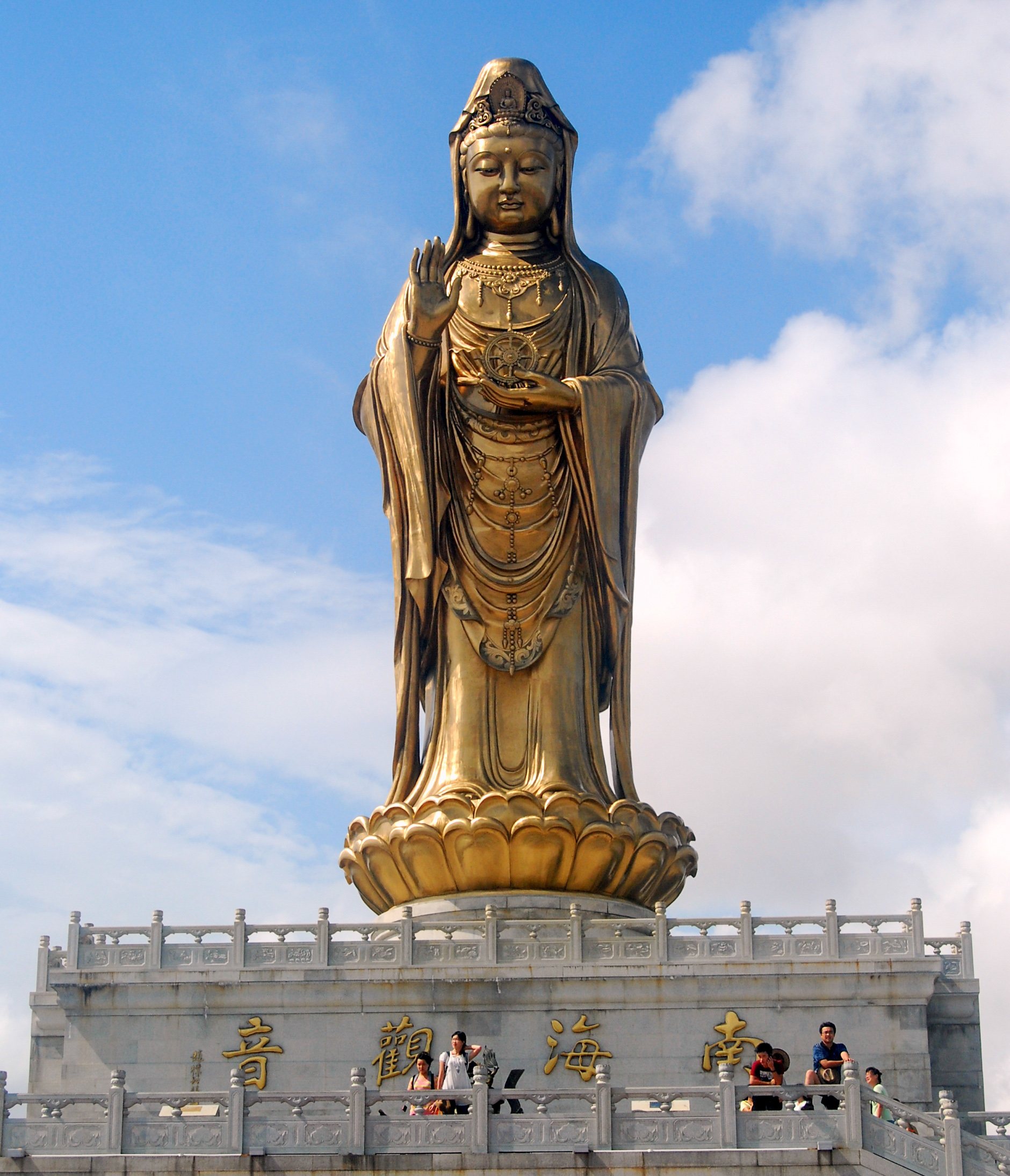
Nanhai Guanyin · Mount Putuo, Zhejiang
ZhejiangAvalokiteshvaraGreat Compassion
Guanyin, the Chinese name for Avalokiteshvara, embodies Great Compassion: listening to suffering and responding with care. Buddhist tradition holds that Guanyin dwells at Mount Putuo, an island off Zhejiang’s coast and a sacred seat of practice and pilgrimage. The Nanhai Guanyin statue overlooks this landscape of sea and temples, inviting reflection on kindness, attentive listening and practical help for others.
Explore the mountain ↗Guanyin Fajie · neighbouring Zhujiajian. Add a separate half-day for its art and architecture.
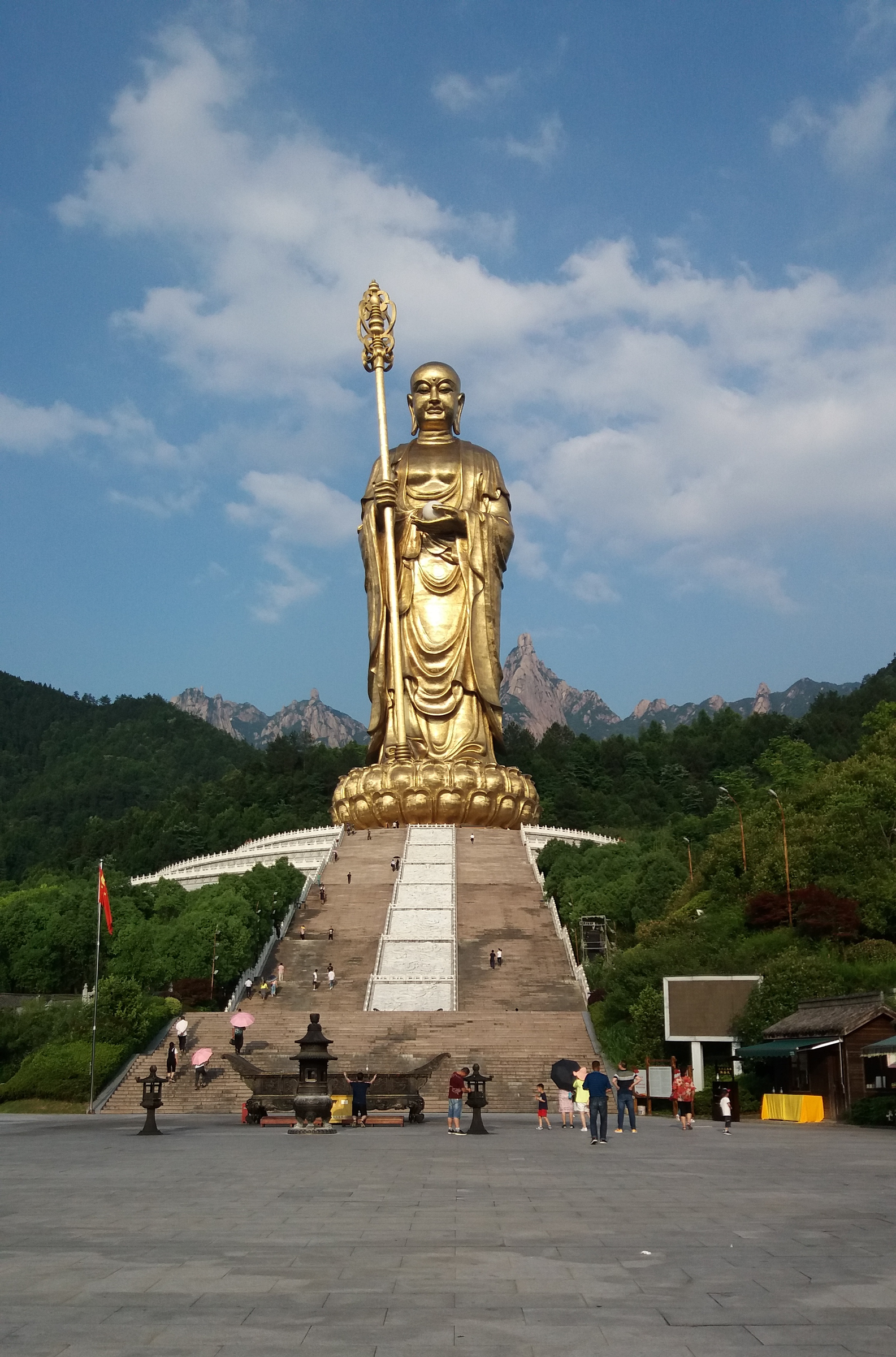
Ksitigarbha · Great Vow Cultural Park, at the foot of Mount Jiuhua
AnhuiKsitigarbhaGreat Vow
Ksitigarbha, known in Chinese as Dizang, embodies the Great Vow: a steadfast commitment to helping beings enduring the deepest suffering. His celebrated vow in Buddhist tradition is to continue this work until even the hell realms are empty. Mount Jiuhua is regarded as his abode and sacred seat of practice and pilgrimage. Its temples and monumental statue express this devotion through protection, hope and an enduring commitment to others.
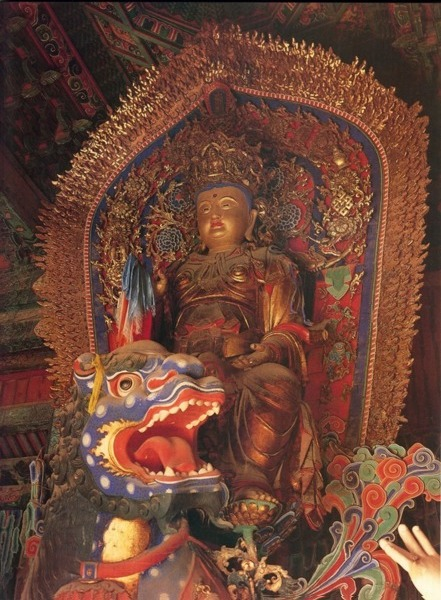
Manjushri riding a lion · Shuxiang Temple, Mount Wutai
ShanxiManjushriGreat Wisdom
Manjushri, known as Wenshu in Chinese, embodies Great Wisdom: the insight that dispels ignorance and guides compassionate action. Buddhist tradition holds that he dwells at Mount Wutai, his sacred seat of practice and pilgrimage. The mountain brings together Han Chinese and Tibetan Buddhist communities. The lion-riding Manjushri at Shuxiang Temple gives this tradition of wisdom a vivid form.
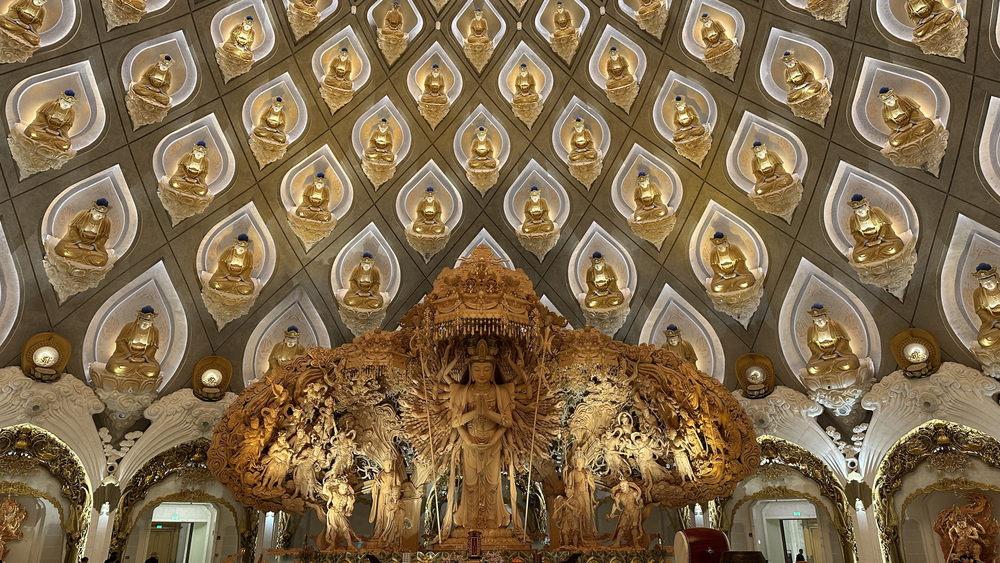
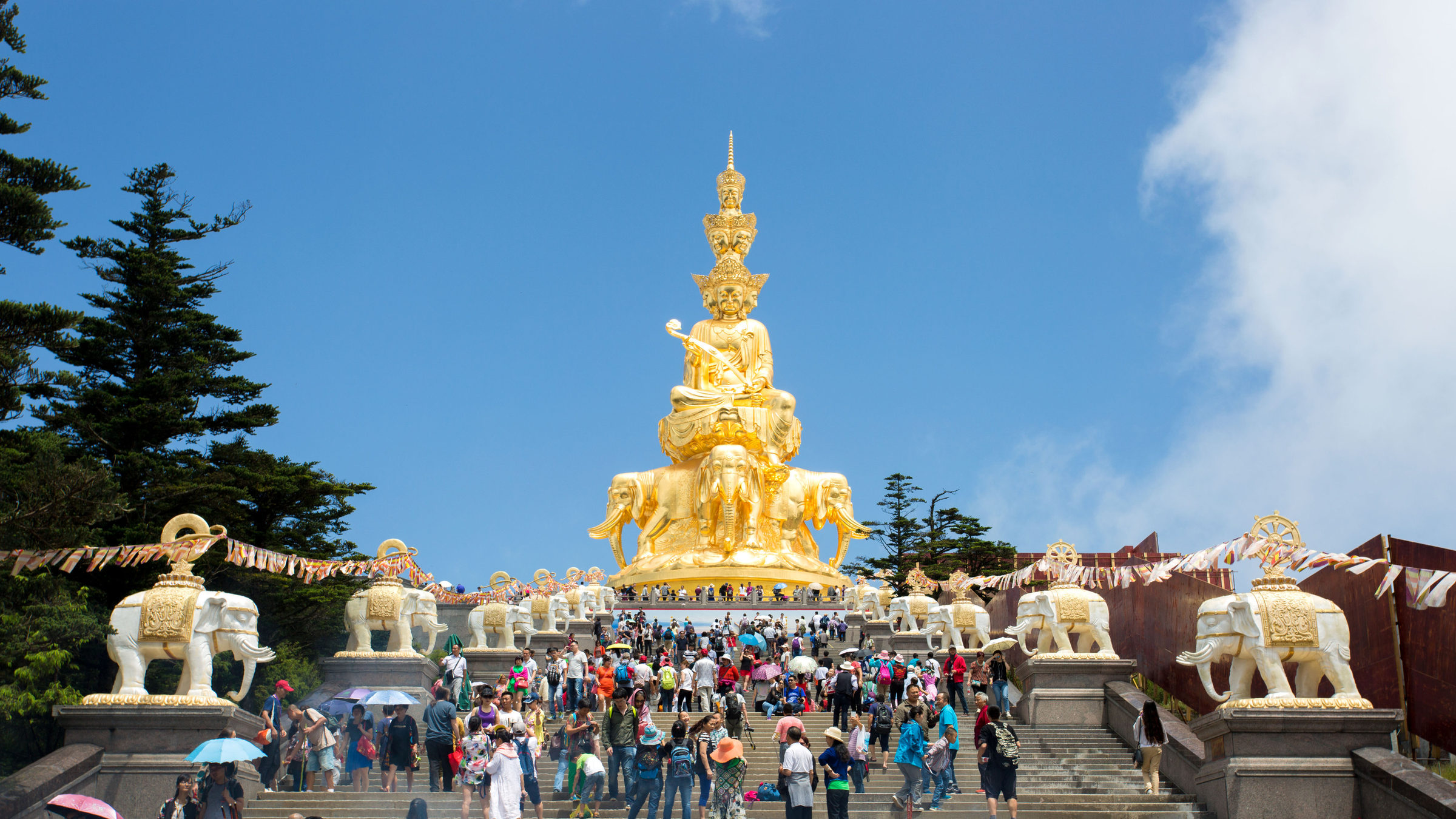
Ten-Directions Samantabhadra · Golden Summit, Mount Emei
SichuanSamantabhadraGreat Practice
Samantabhadra, called Puxian in Chinese, embodies Great Practice: turning wisdom and compassionate intentions into sustained action. His Ten Great Vows include honouring the Buddhas, learning from their teachings and dedicating the benefits of practice to all beings. Buddhist tradition regards Mount Emei as his abode and sacred seat of practice. The gilded Ten-Directions statue on the Golden Summit gives these ideals visible form through its multiple faces and elephant imagery.
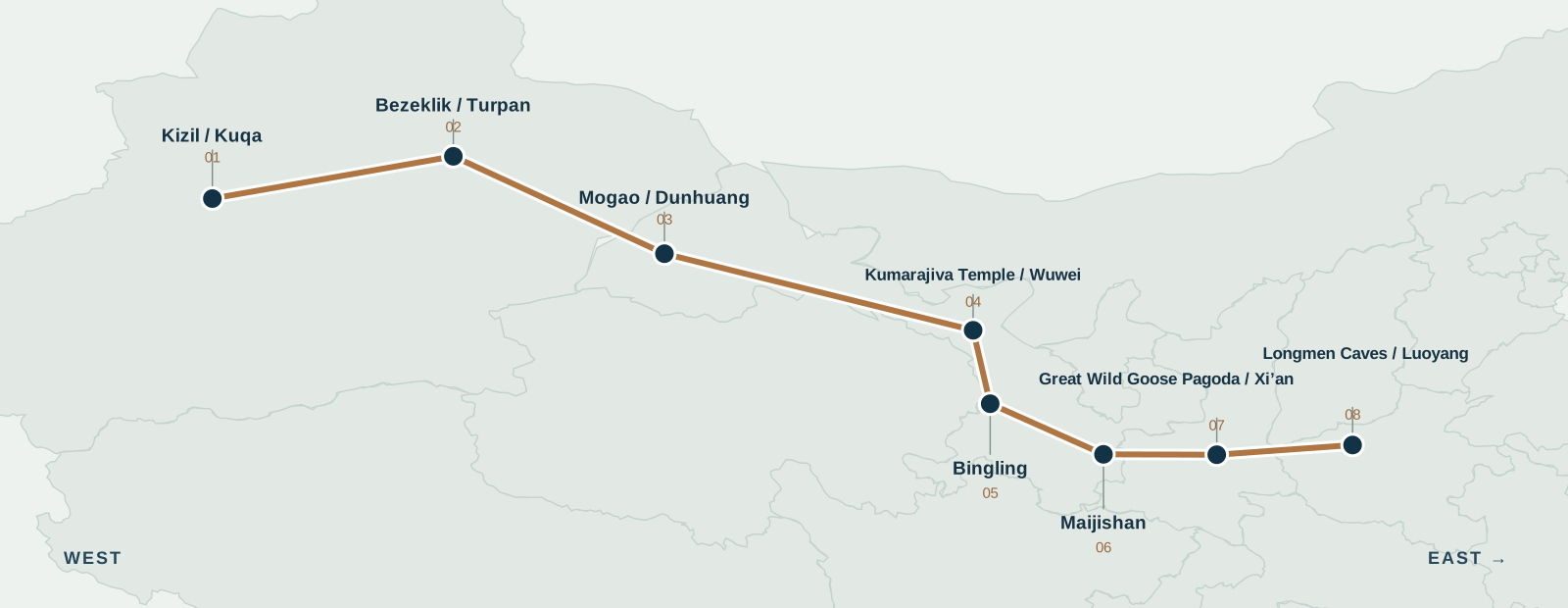
Follow one Buddhist-art thread through a much wider Silk Roads story: from the oasis caves around Kuqa and Turpan to Dunhuang, Gansu’s grottoes and translation sites, and the old capitals of Xi’an and Luoyang. Trade, languages, food and many other faiths also moved through these changing networks. Explore the broader Silk Roads guide alongside this specialist journey.
Modern visitor route · distances, transport and cave access are confirmed for your dates.
01
Kizil · Kuqa
Early Buddhist cave art in the former Kucha region.
02
Bezeklik · Turpan
Cave paintings in a different oasis setting.
03
Mogao · Dunhuang
A major archive of Silk Road Buddhist art.
04
Wuwei
A place to discuss Kumārajīva and translation.
05
Bingling · Maijishan
Two Gansu grotto landscapes, reached on separate days.
06
Xi’an · Luoyang
Scripture translation, Longmen sculpture and White Horse Temple.
One main itinerary through places associated with the six patriarchs, inspired by Bill Porter’s Zen Baggage and arranged around practical travel connections.

 Qixia TempleNanjing · Jiangsu
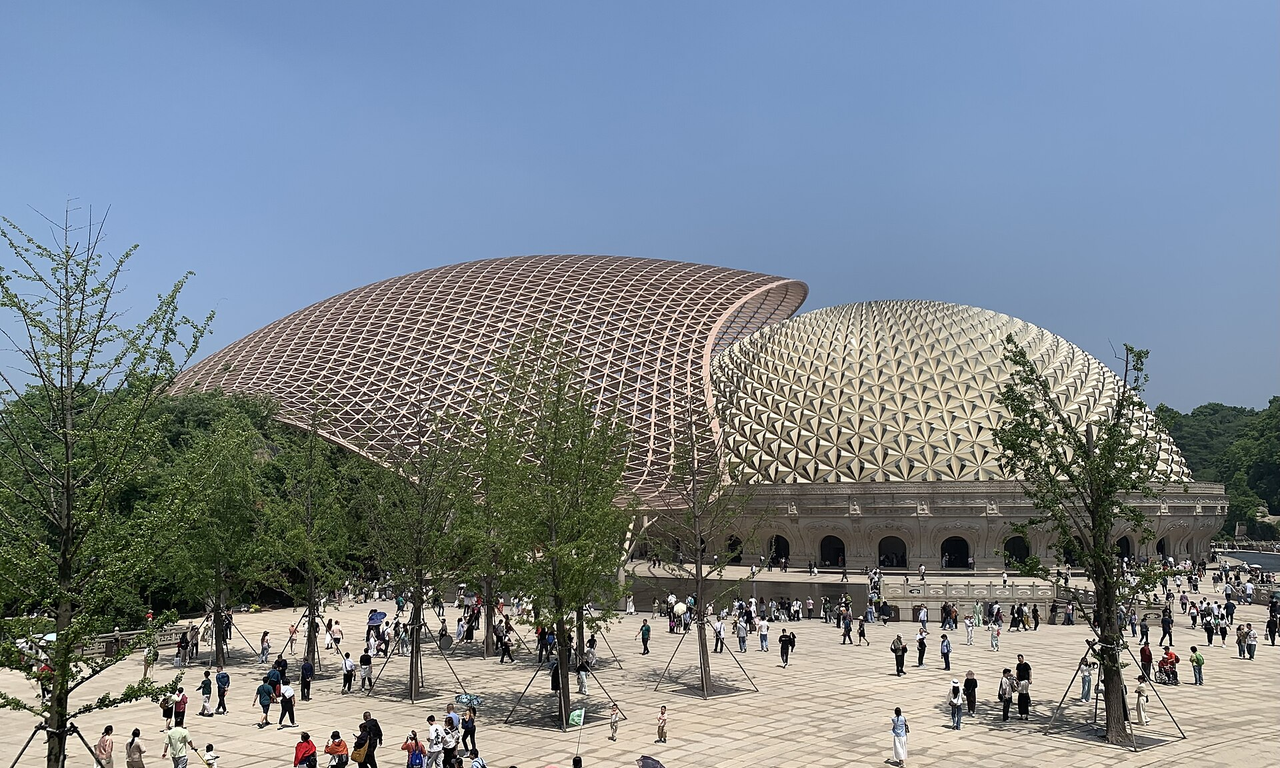 Niushoushan Cultural Tourism ZoneNanjing · Jiangsu
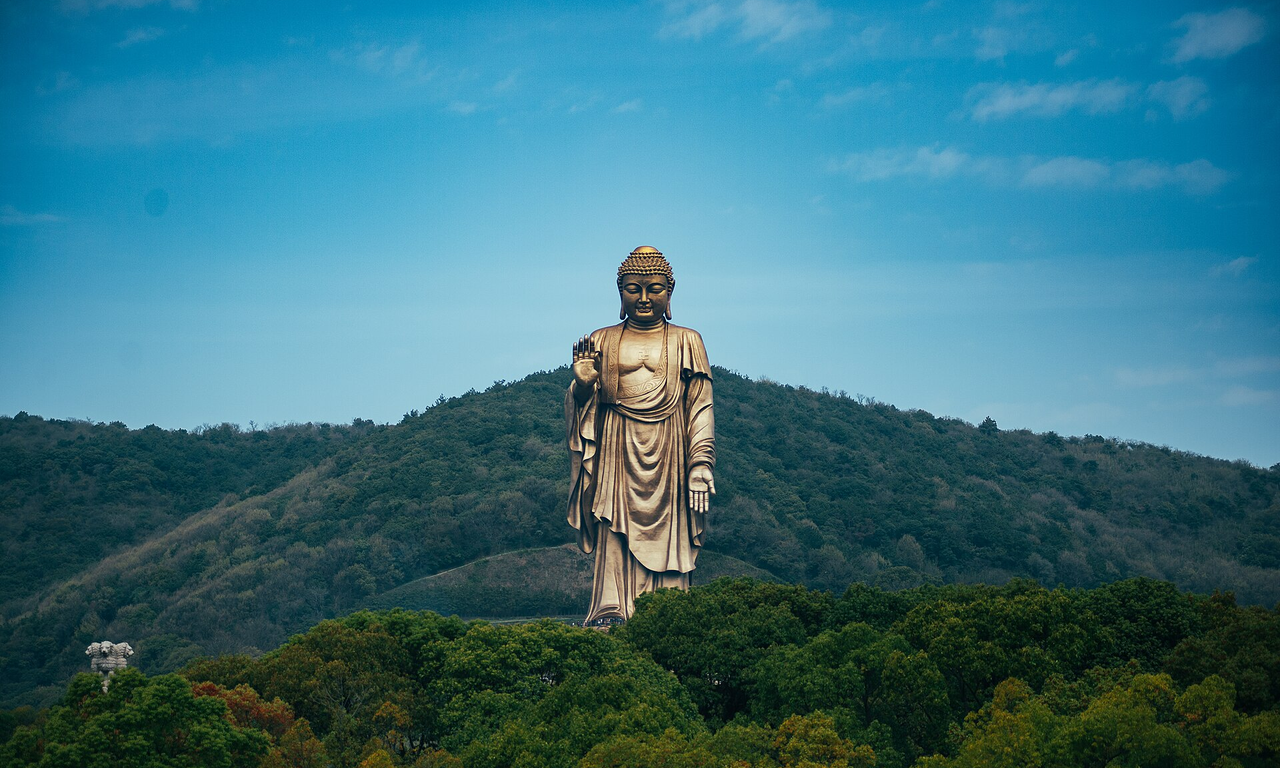 Lingshan Grand BuddhaWuxi · Jiangsu
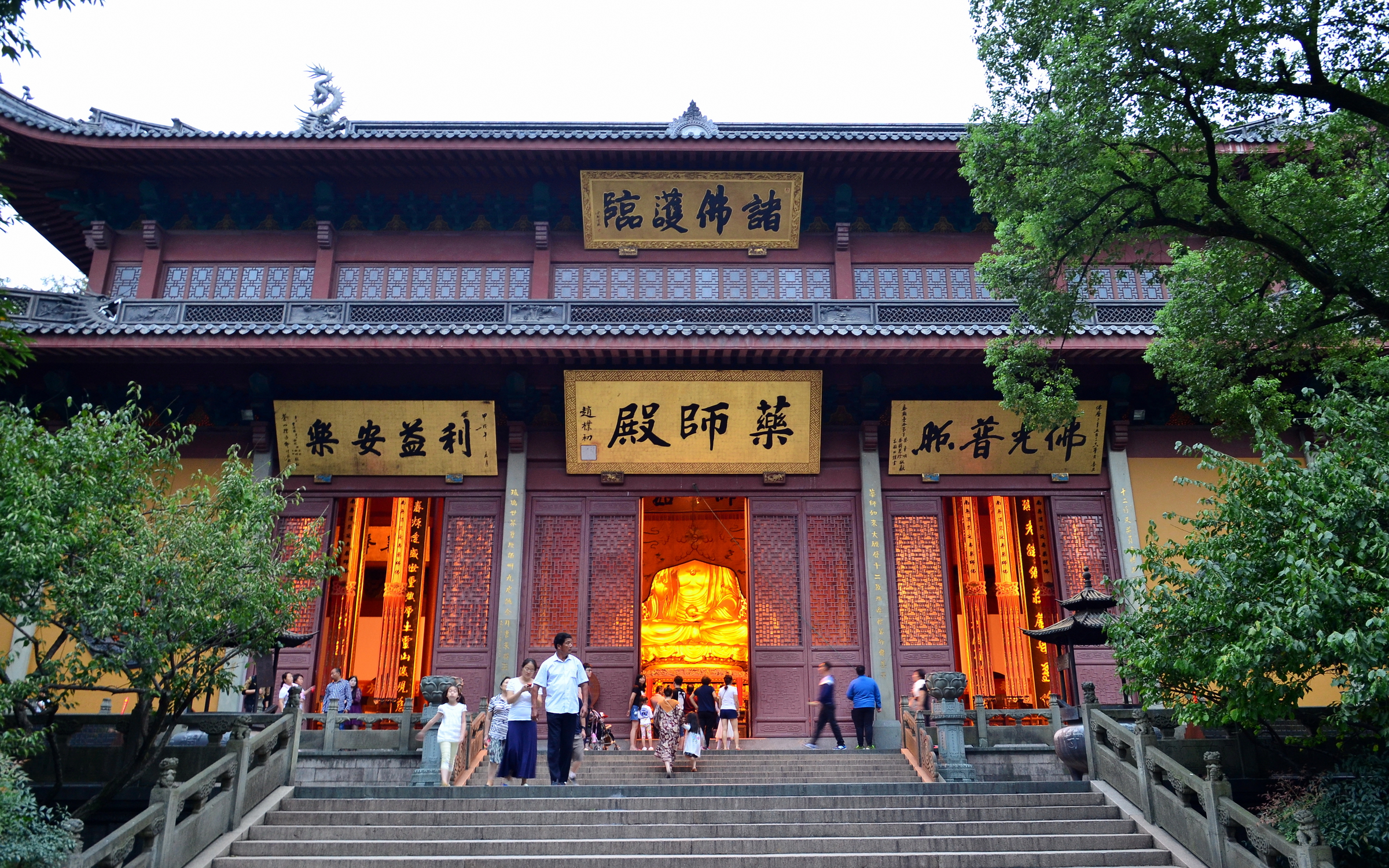 Lingyin TempleHangzhou · Zhejiang
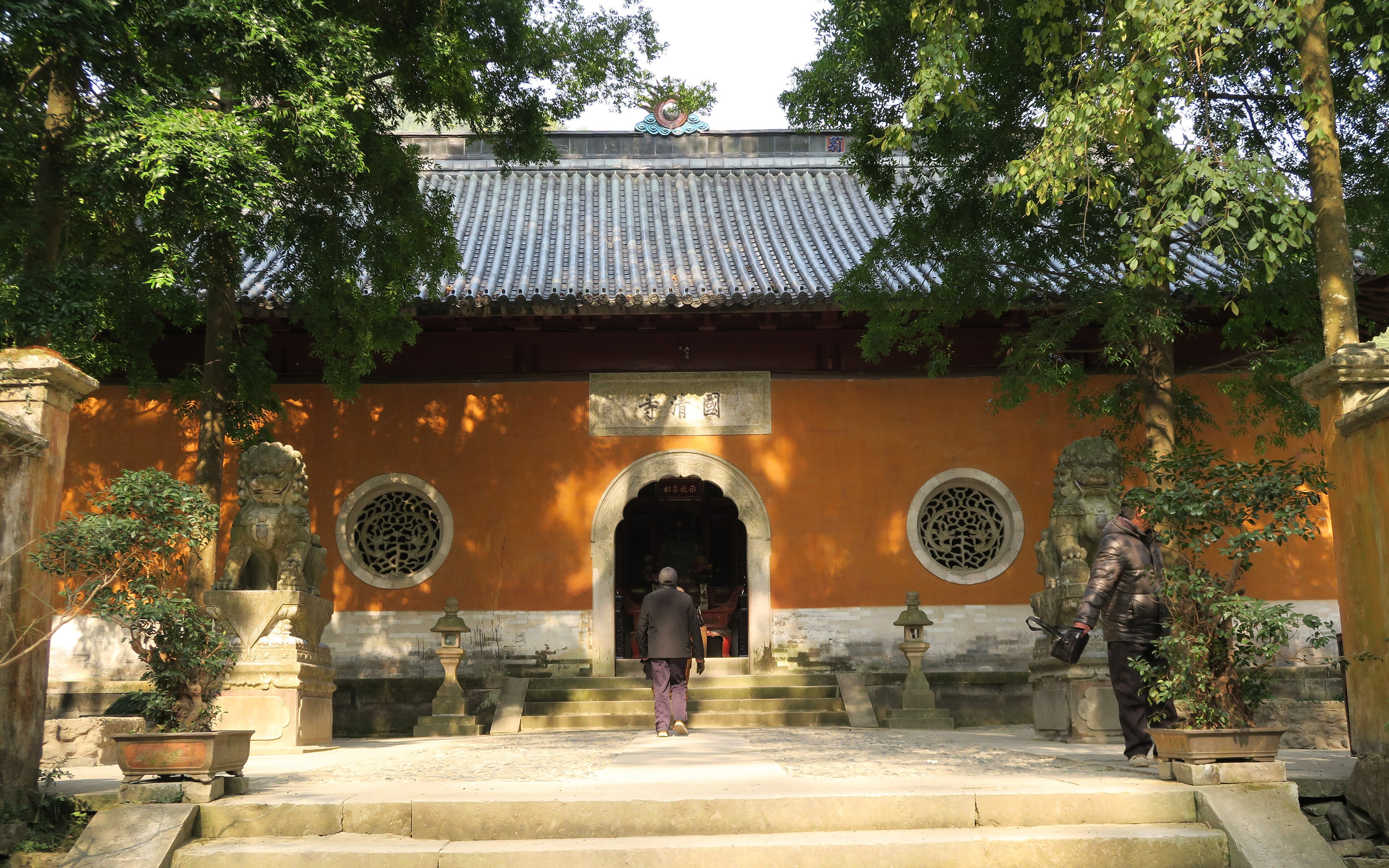 Guoqing TempleTaizhou · Tiantai · Zhejiang
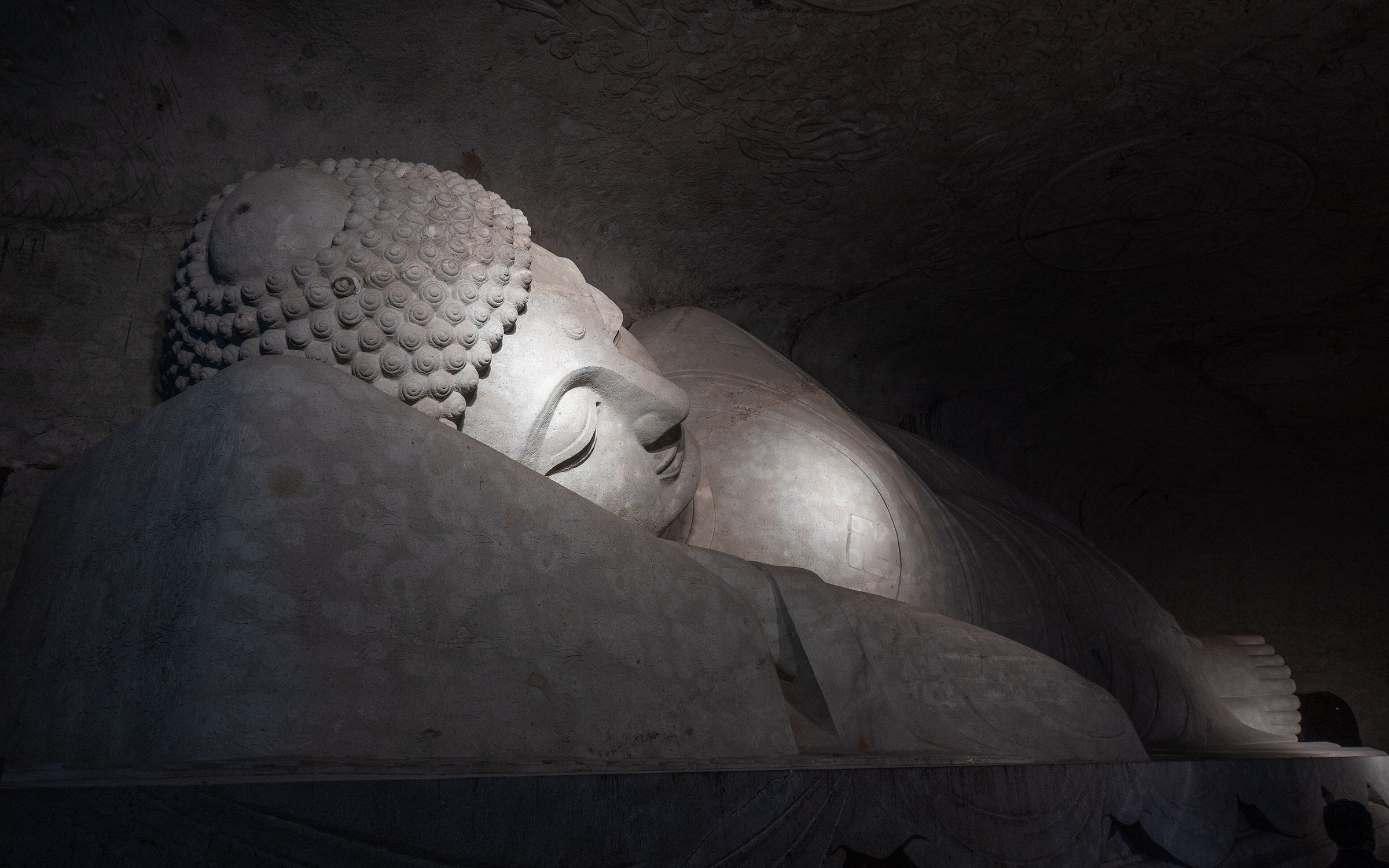 Dafo TempleShaoxing · Xinchang · Zhejiang
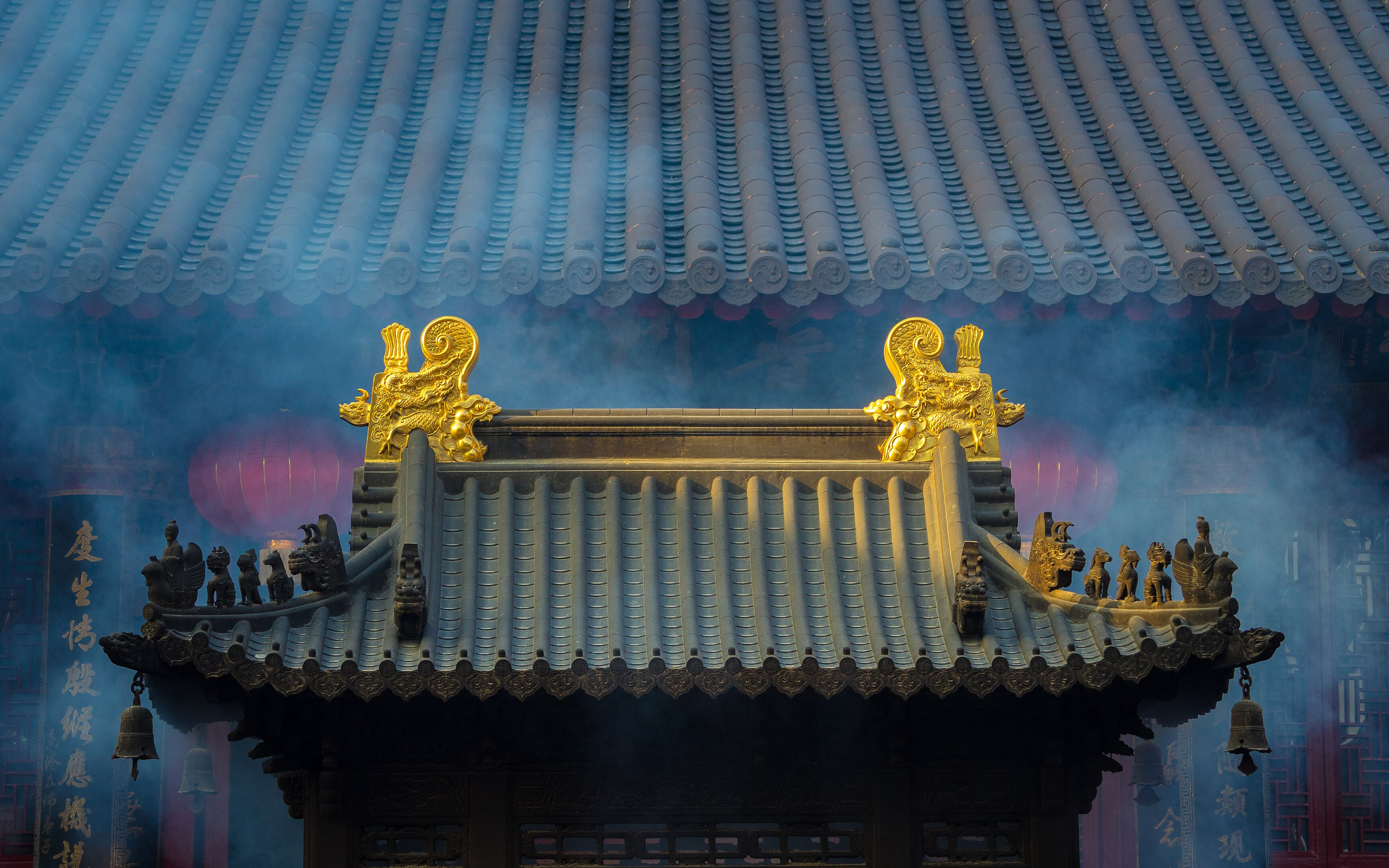 Mount PutuoZhoushan · Zhejiang
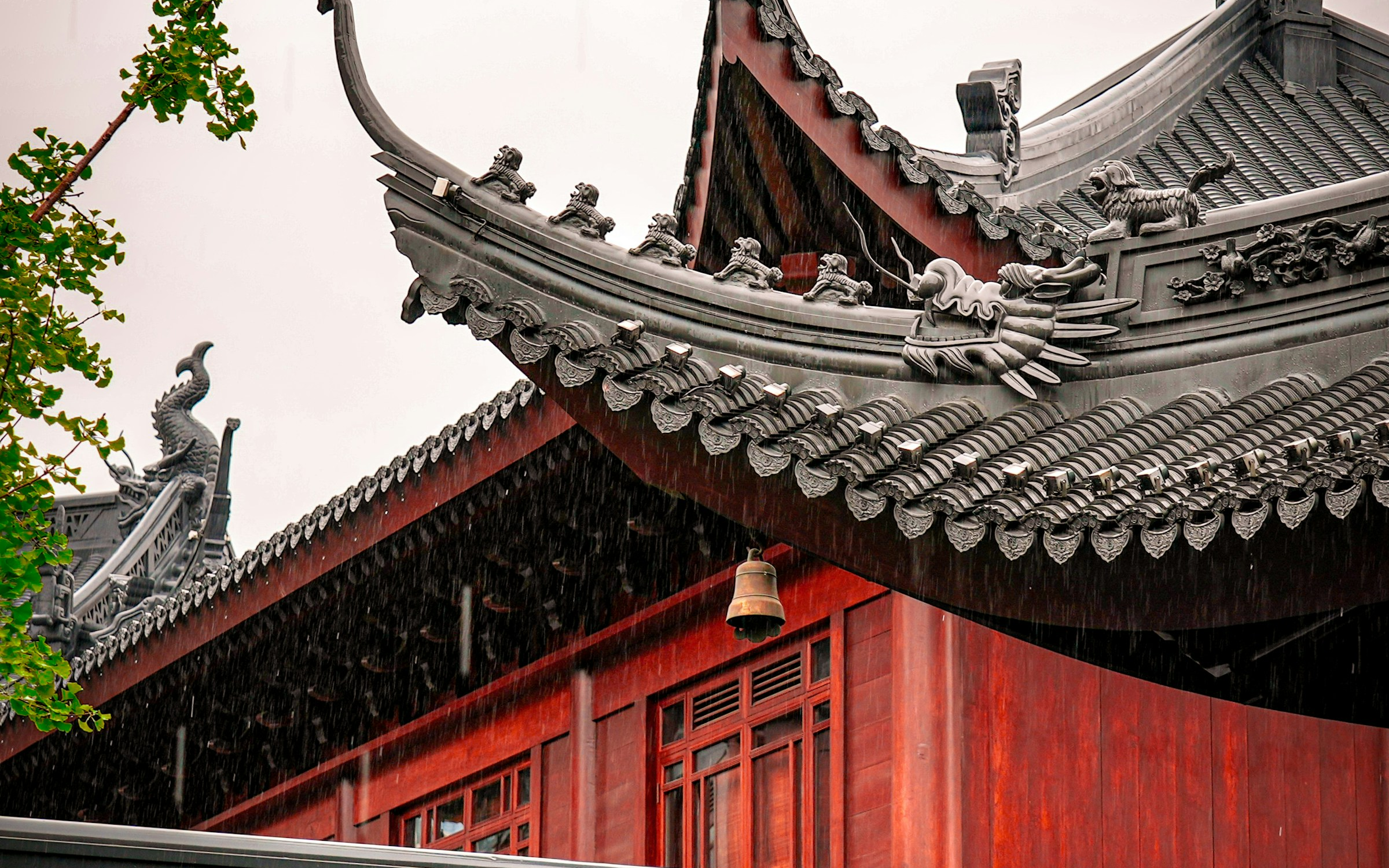 Jade Buddha TempleShanghai · Shanghai
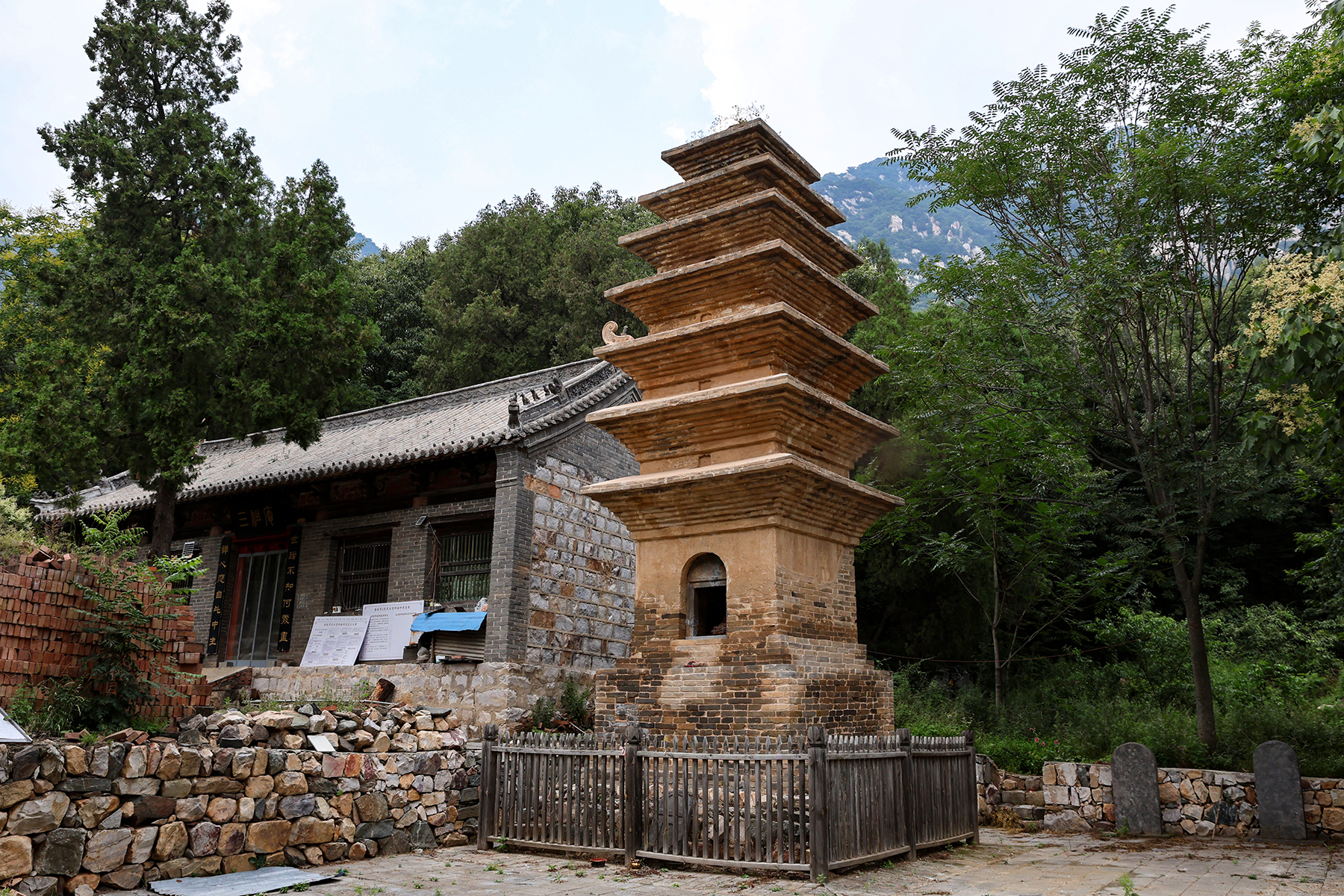 Sanzu TempleAnqing · Qianshan · Anhui
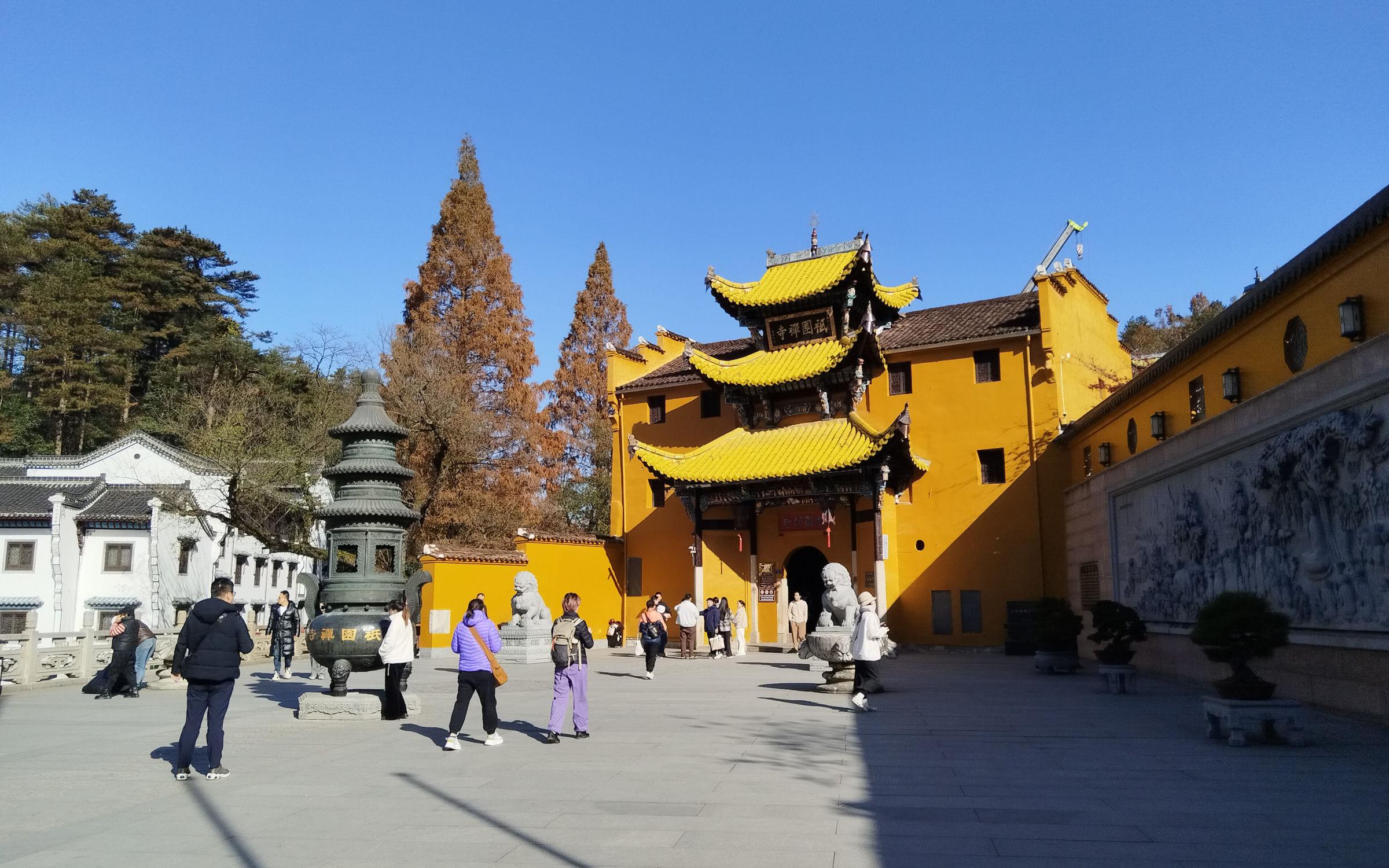 Mount JiuhuaChizhou · Anhui
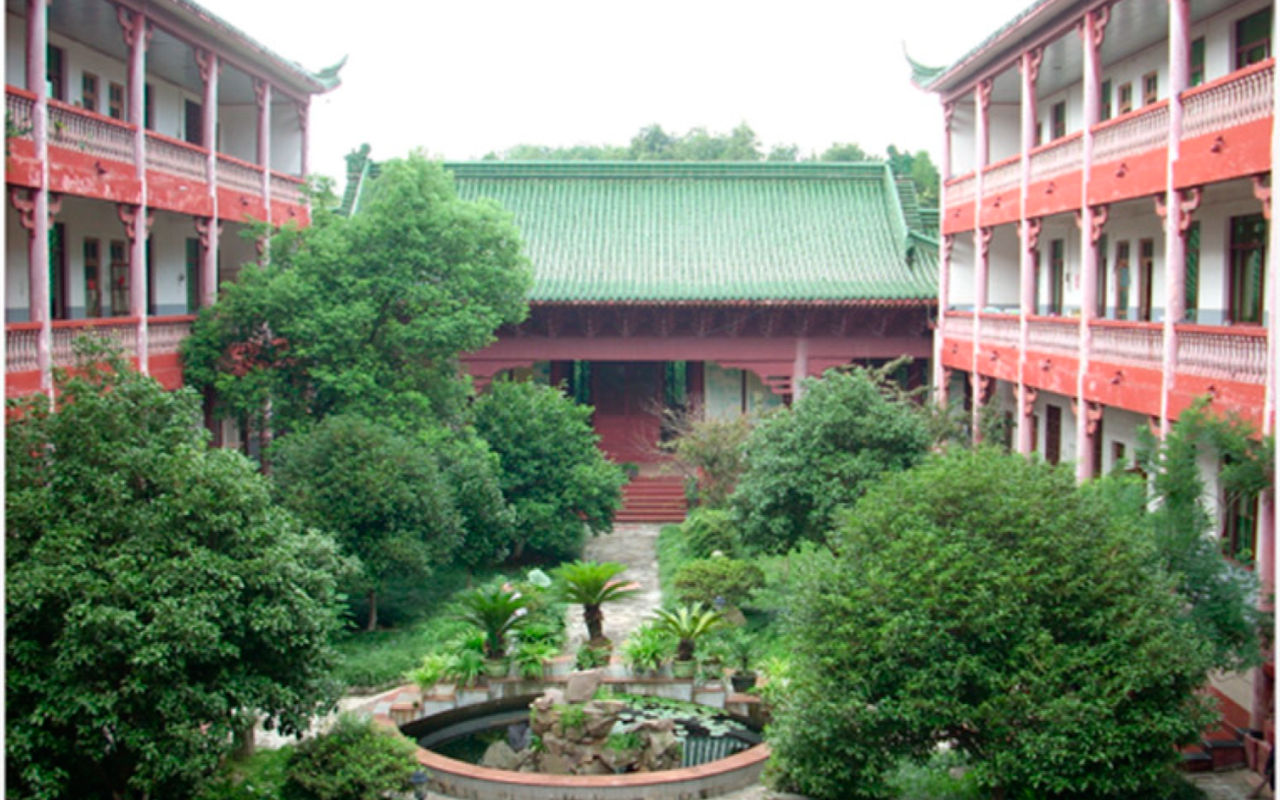 Dajinshan TempleFuzhou · Linchuan · Jiangxi
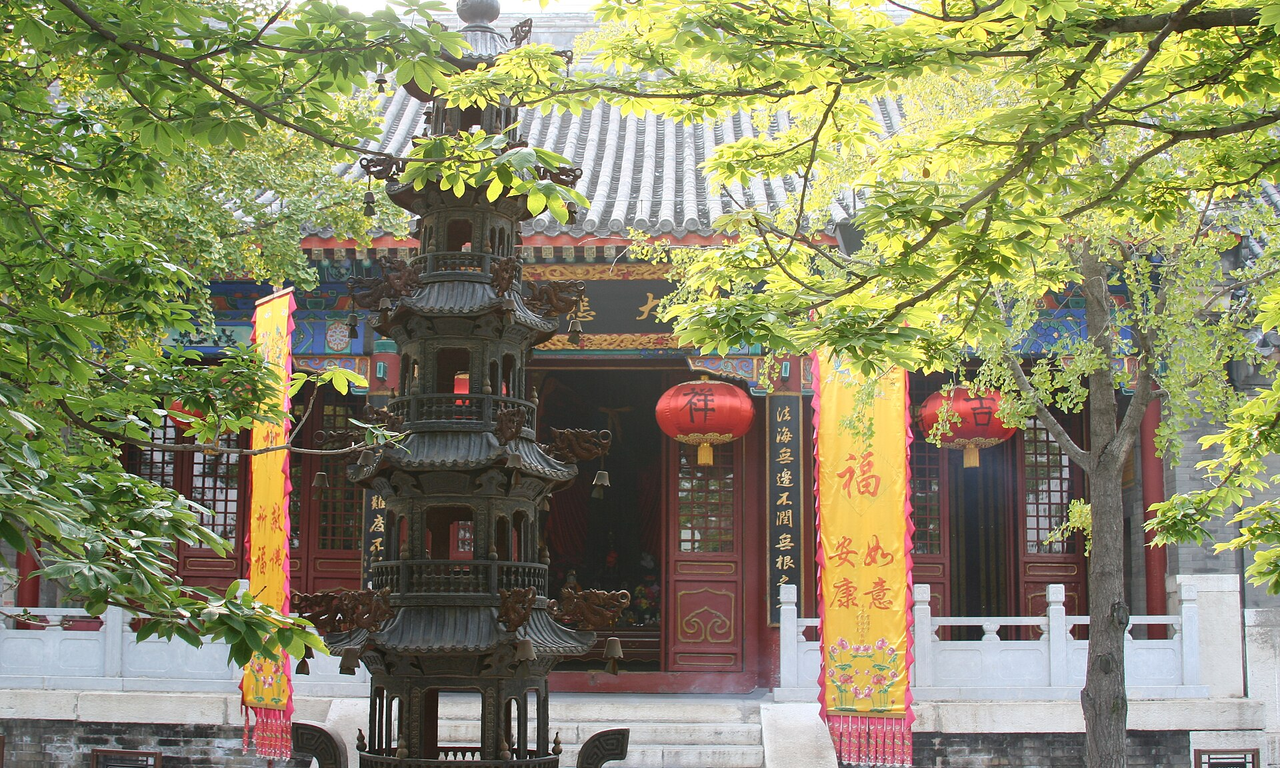 Yunju TempleBeijing · Fangshan · Beijing
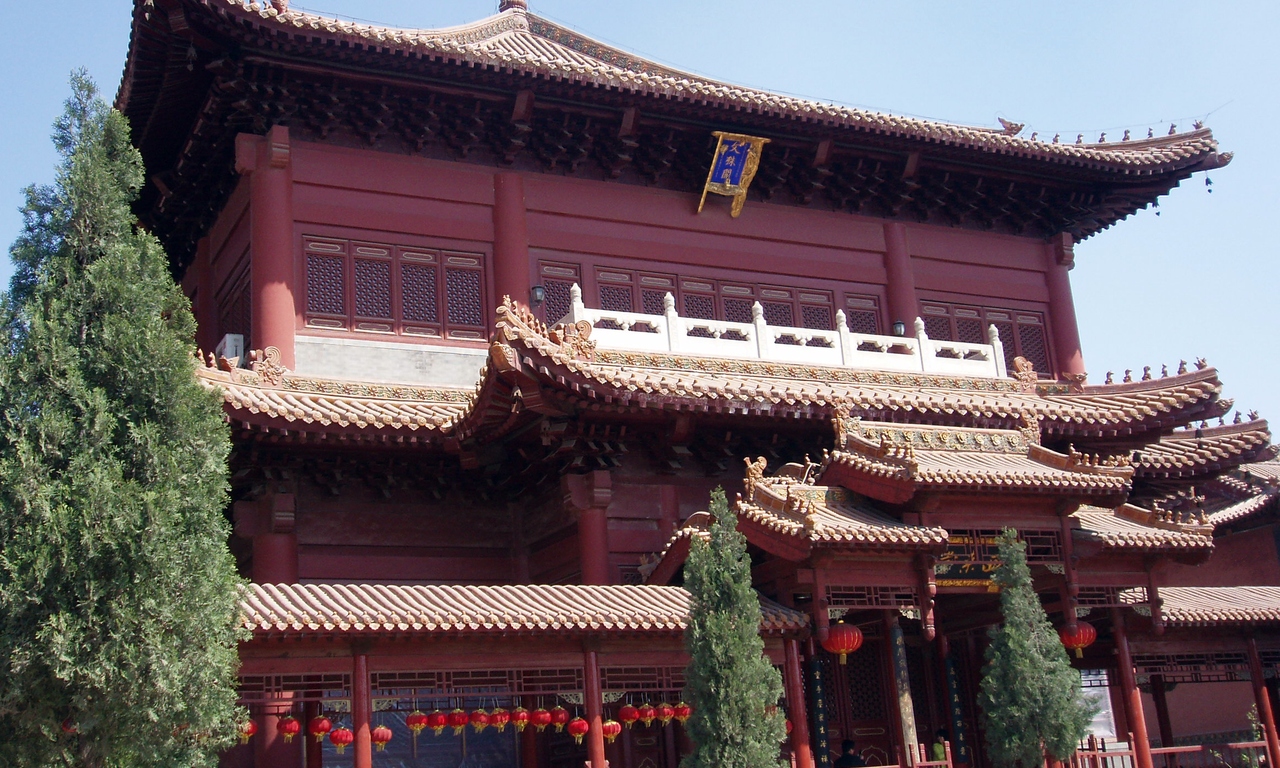 Bailin TempleShijiazhuang · Zhao County · Hebei
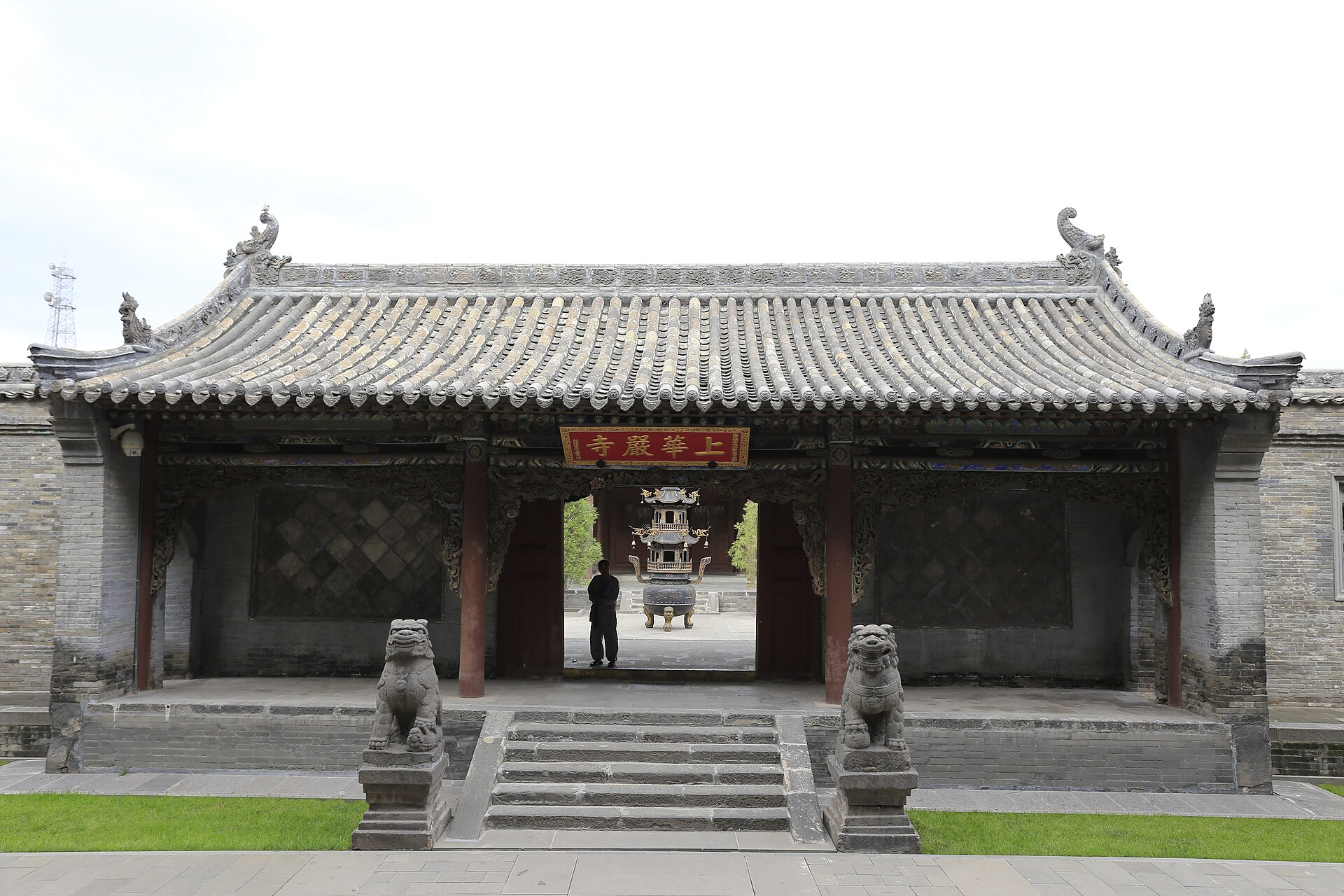 Huayan TempleDatong · Shanxi
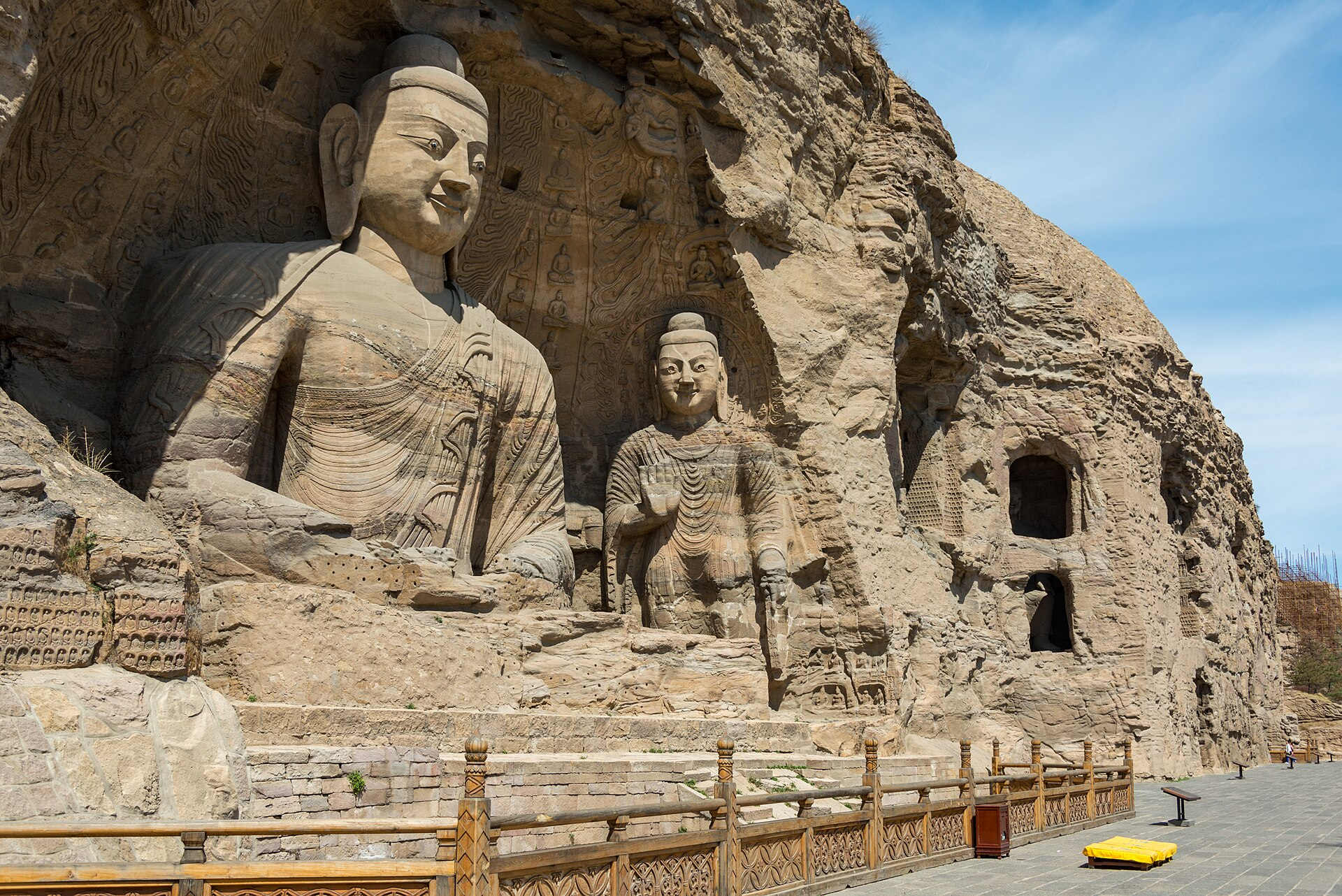 Yungang GrottoesDatong · Shanxi
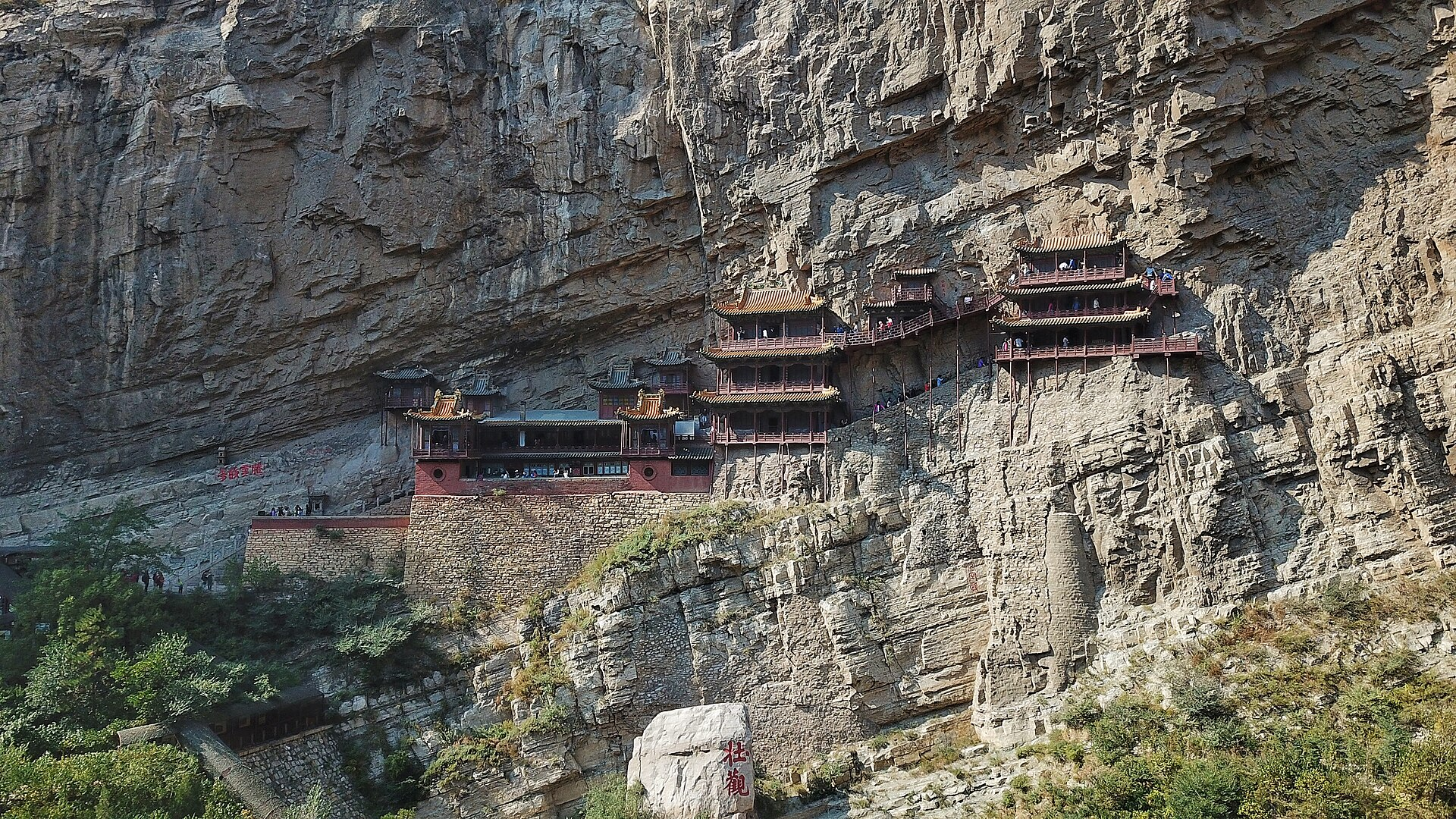 Hanging TempleDatong · Shanxi
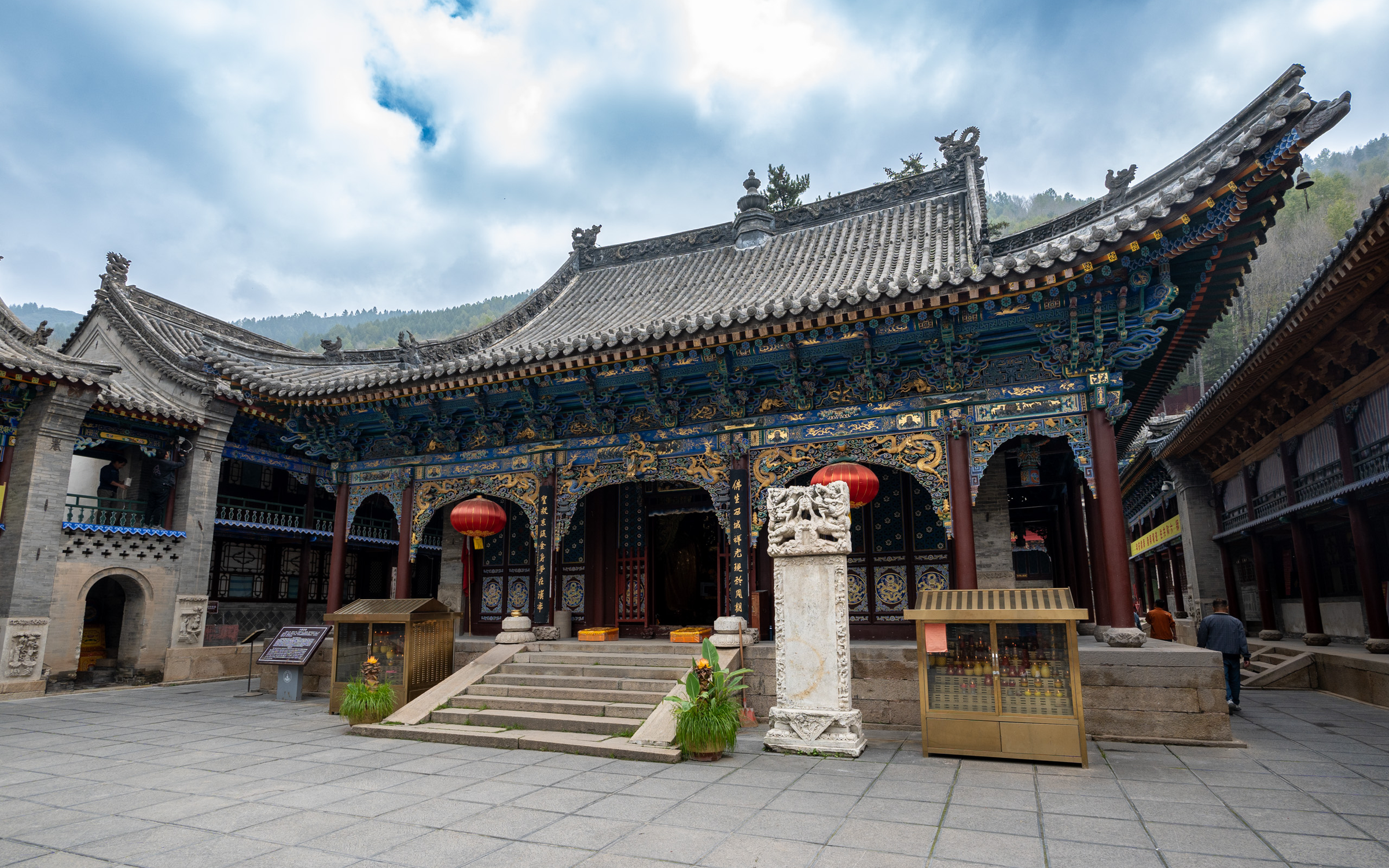 Mount Wutai templesXinzhou · Wutai · Shanxi
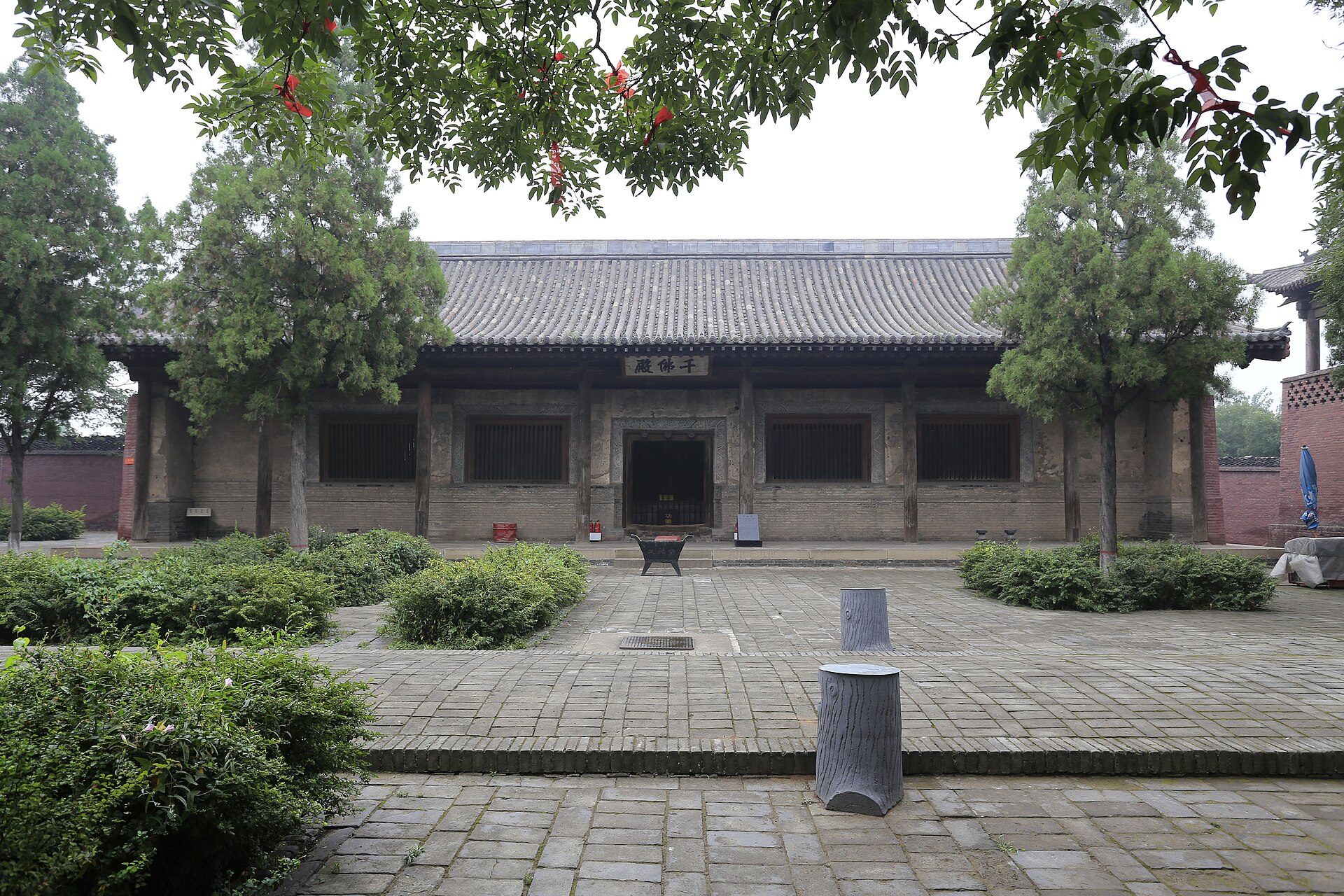 Shuanglin TempleJinzhong · Pingyao · Shanxi
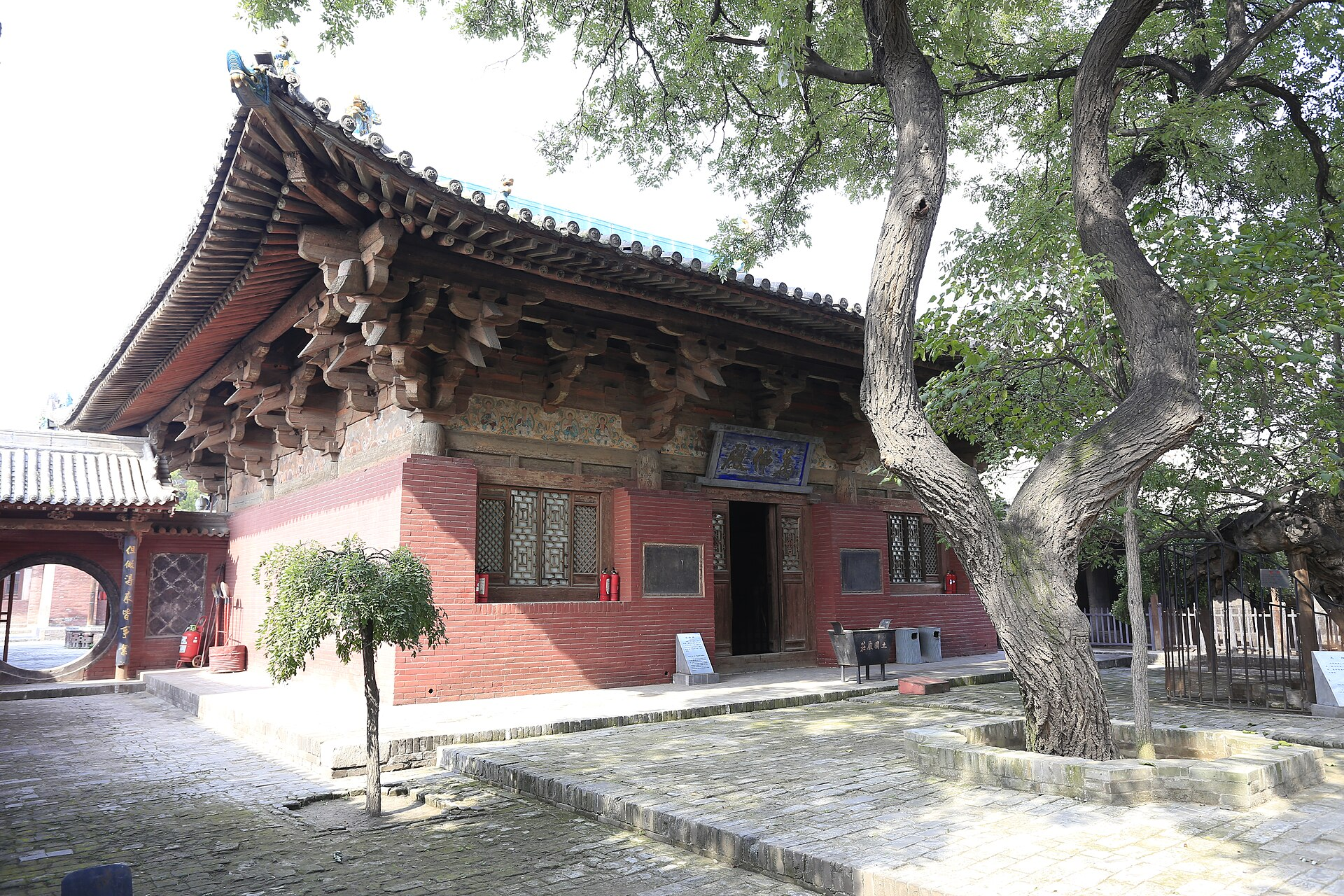 Zhenguo TempleJinzhong · Pingyao · Shanxi
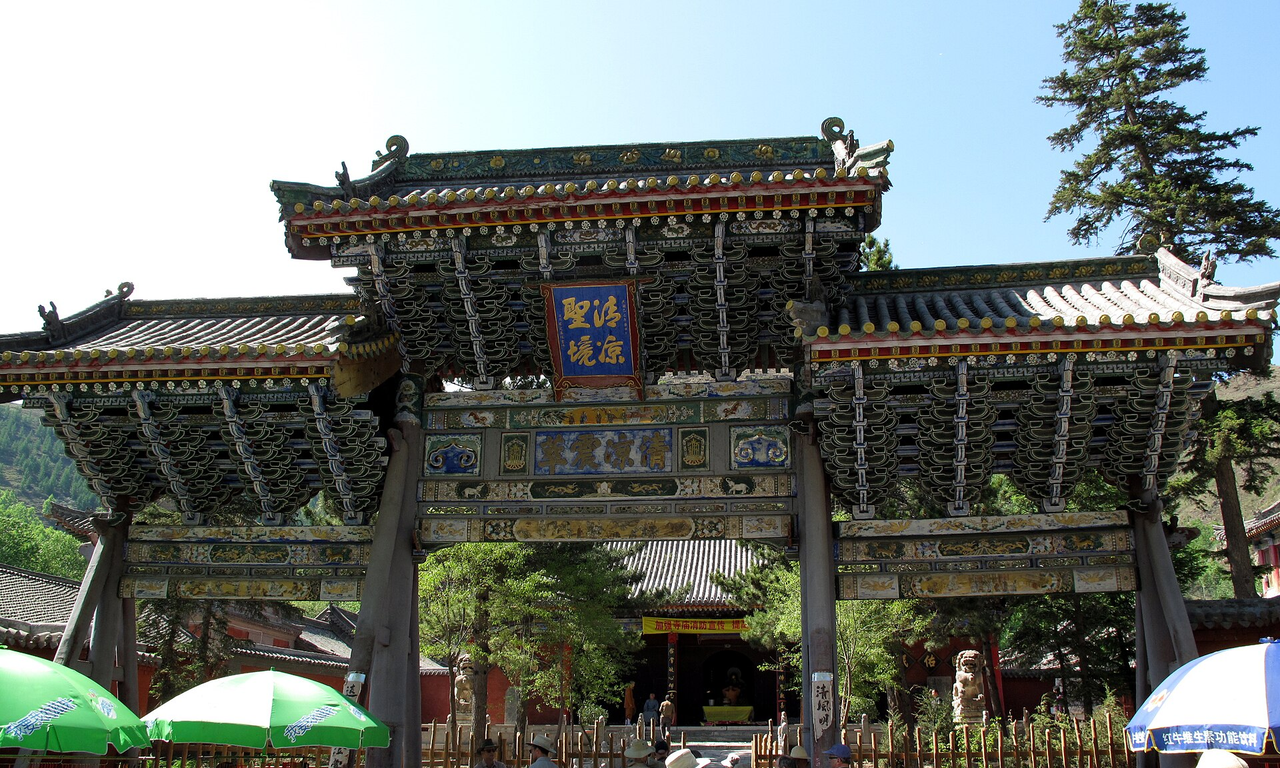 Bishan TempleXinzhou · Wutai · Shanxi
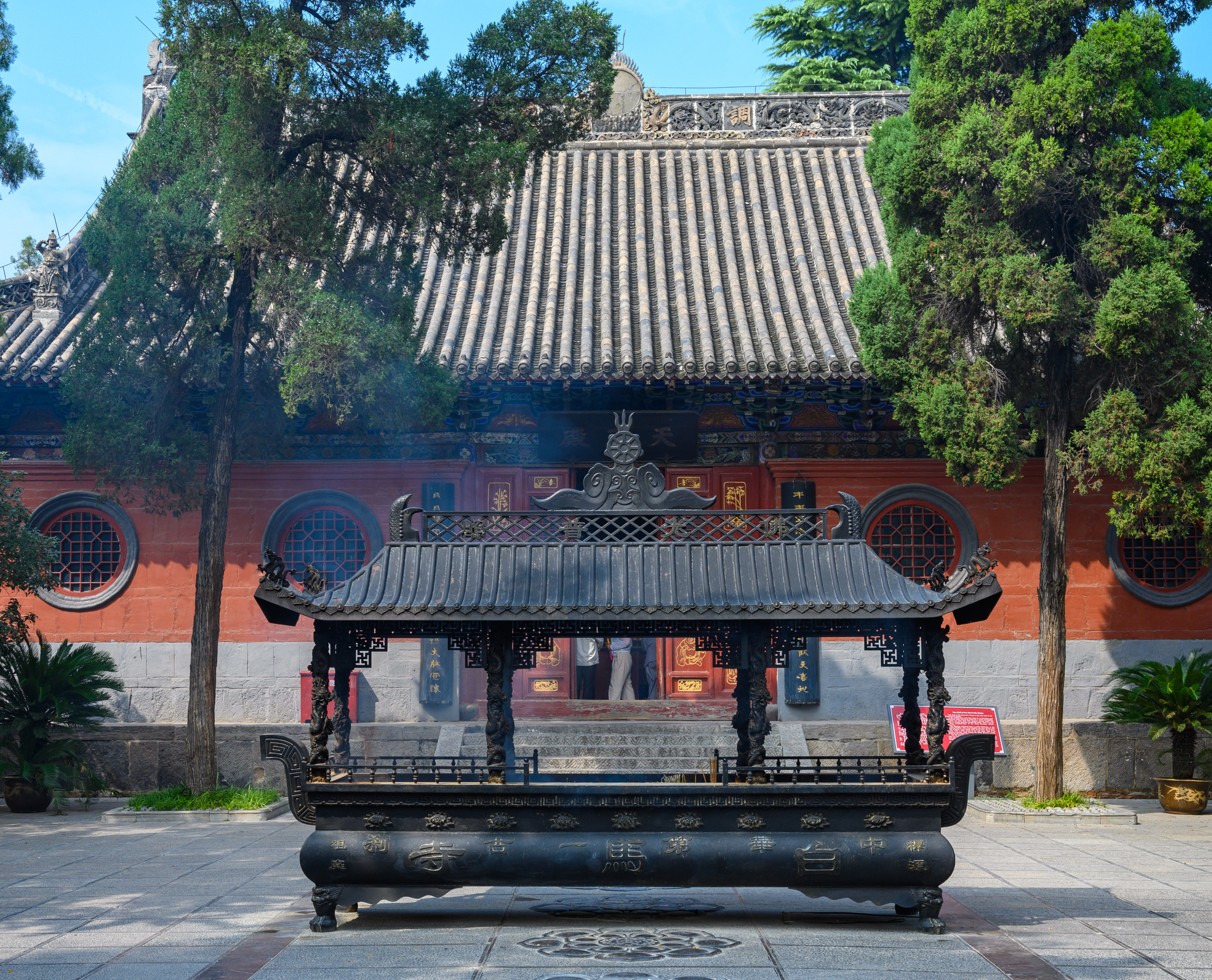 White Horse TempleLuoyang · Henan
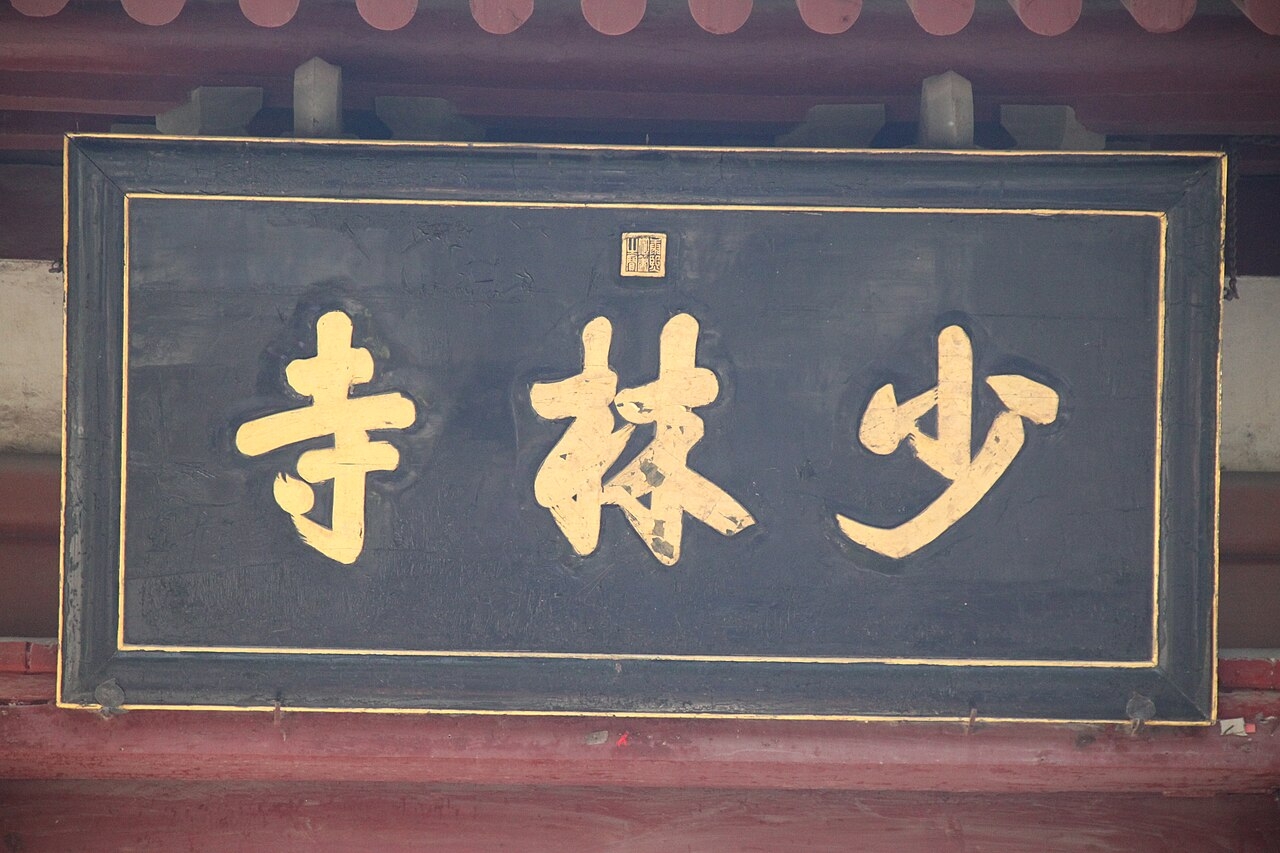 Shaolin TempleZhengzhou · Dengfeng · Henan
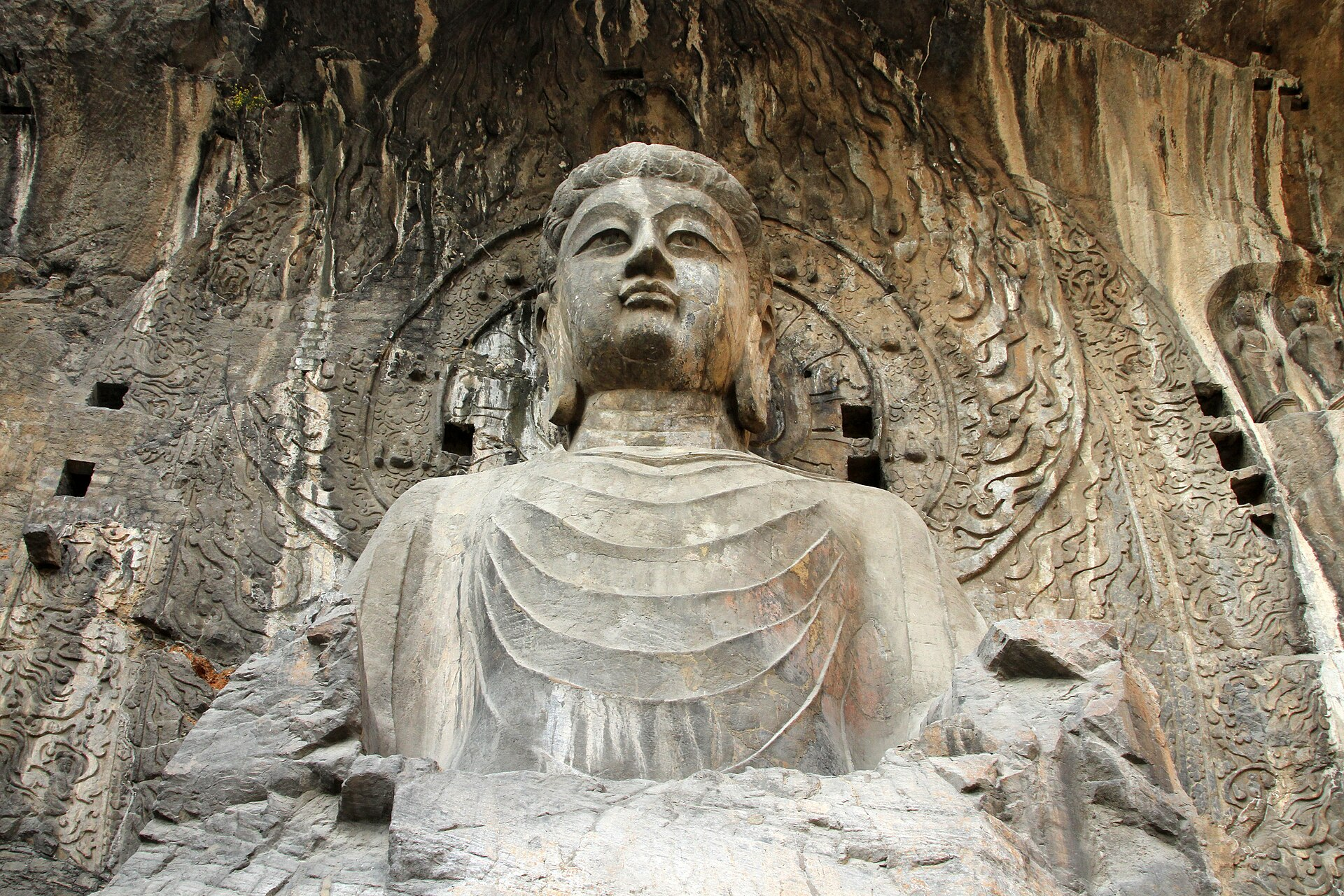 Longmen GrottoesLuoyang · Henan
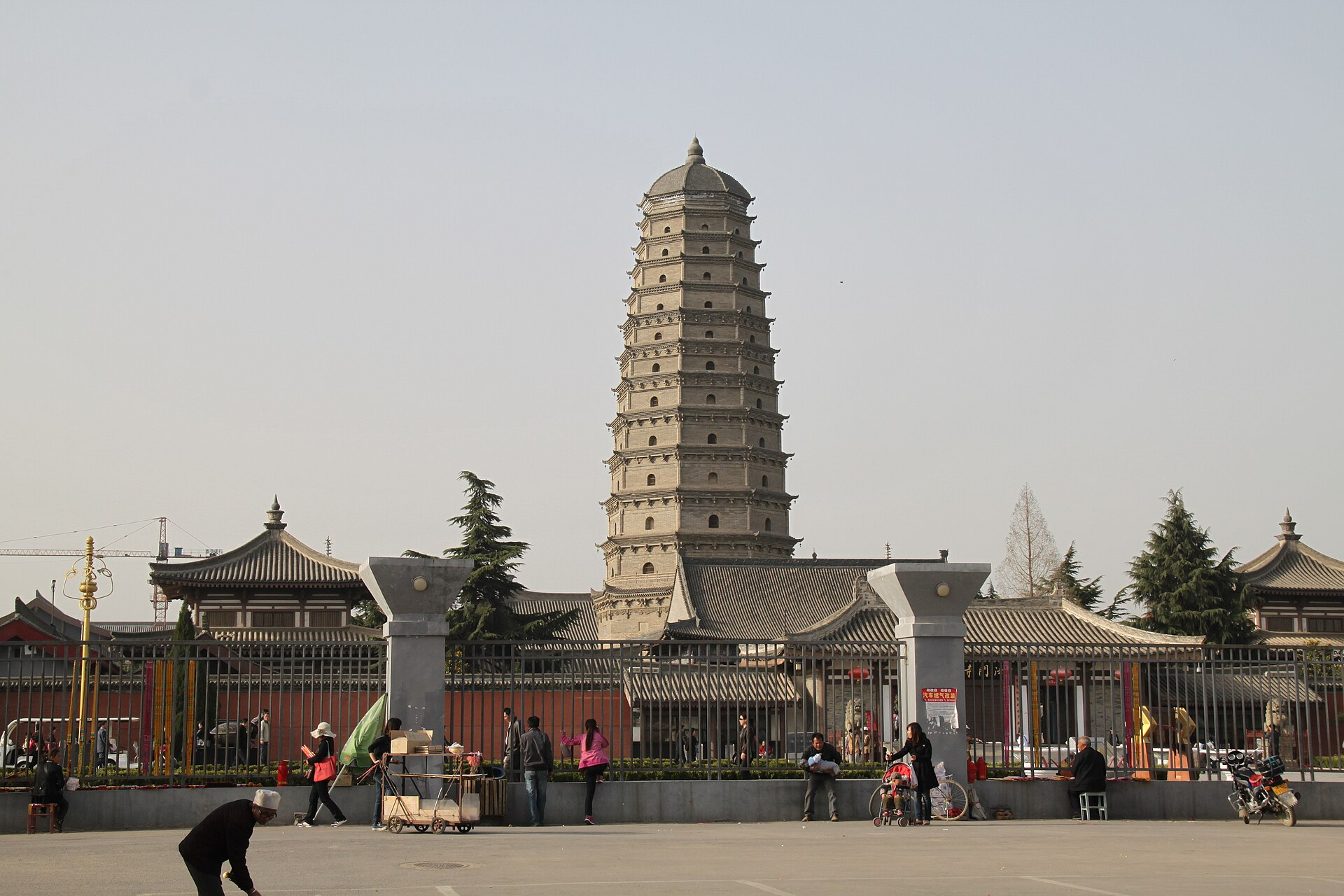 Famen TempleBaoji · Shaanxi
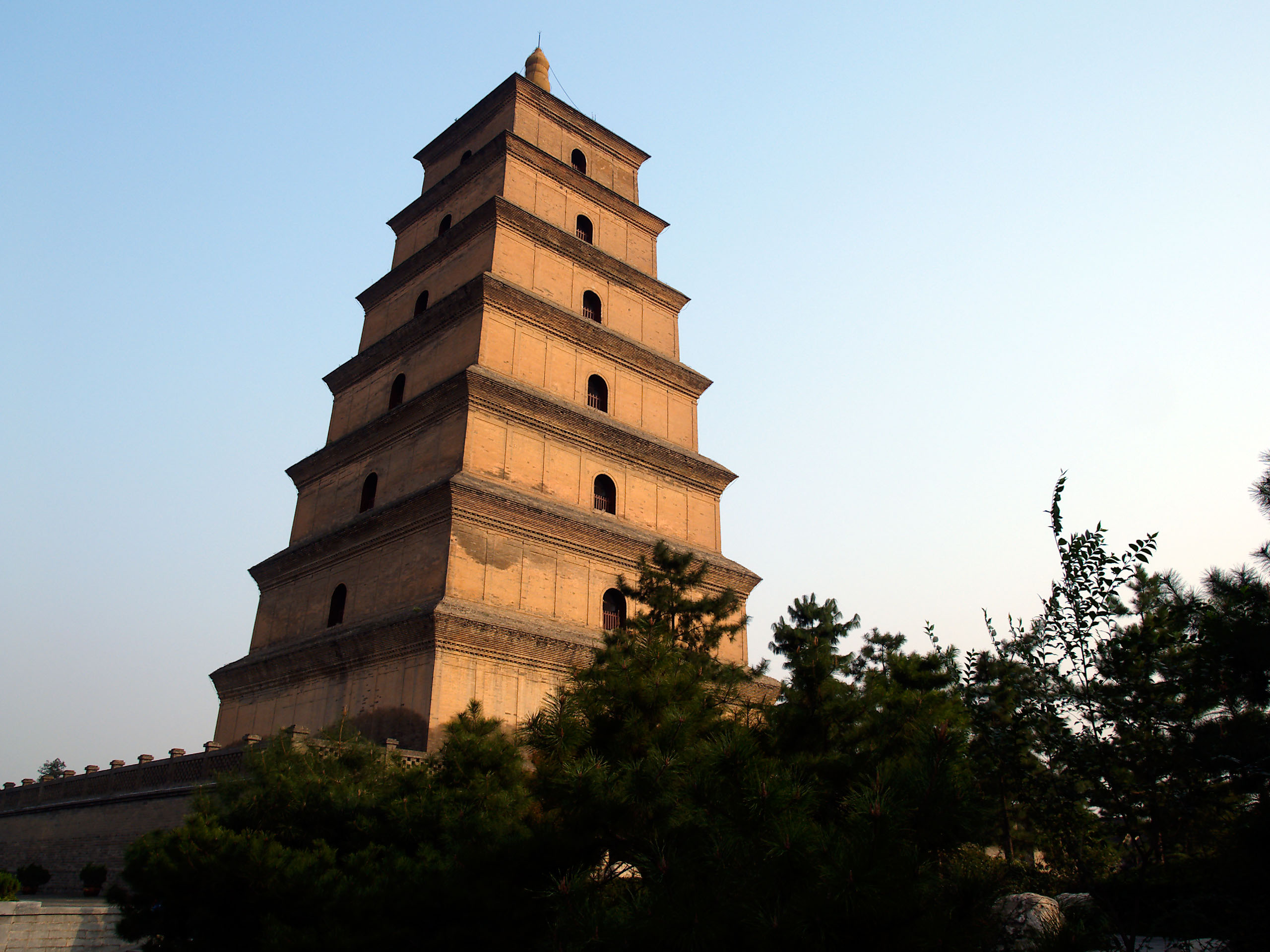 Giant Wild Goose PagodaXi’an · Shaanxi
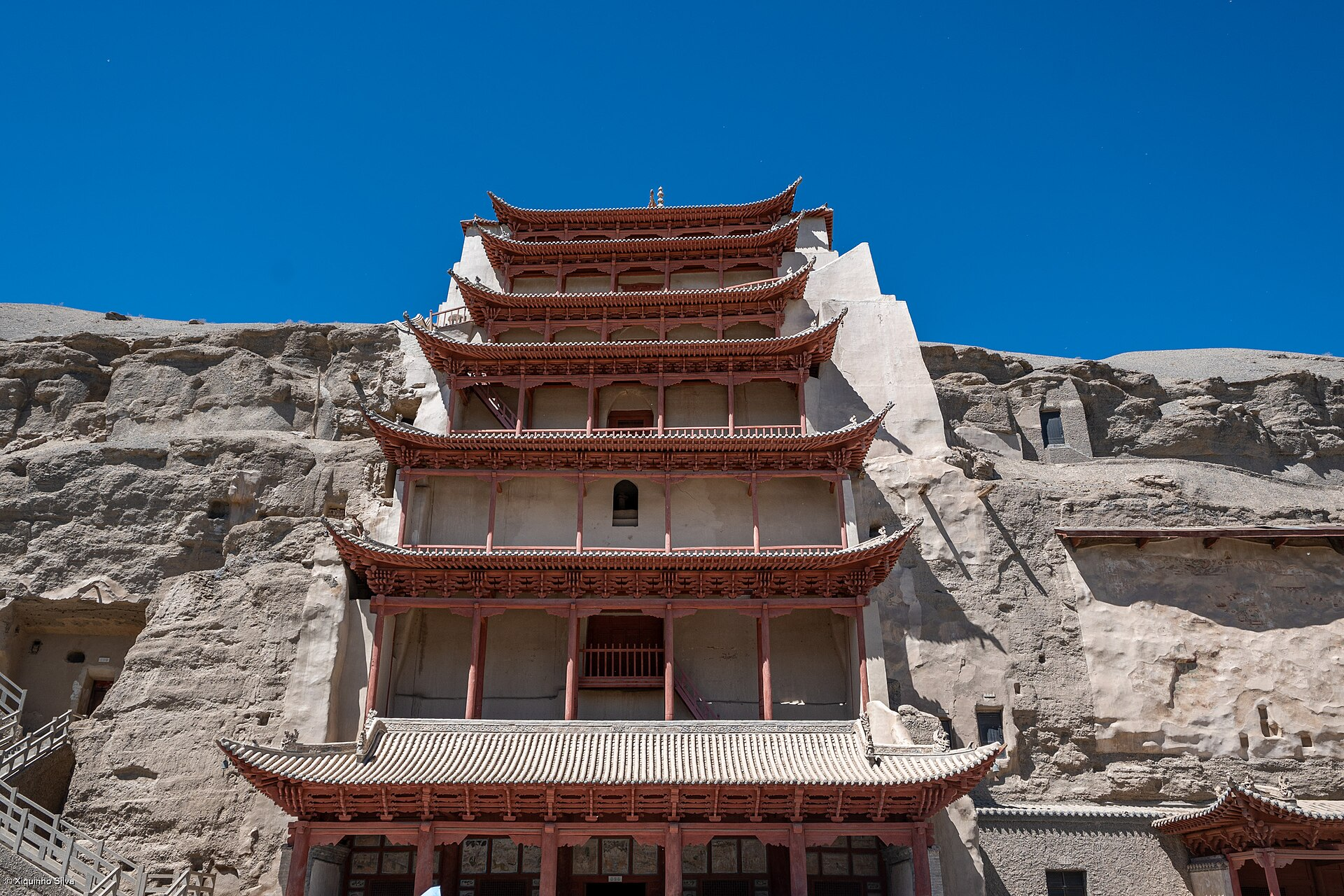 Mogao CavesDunhuang · Gansu
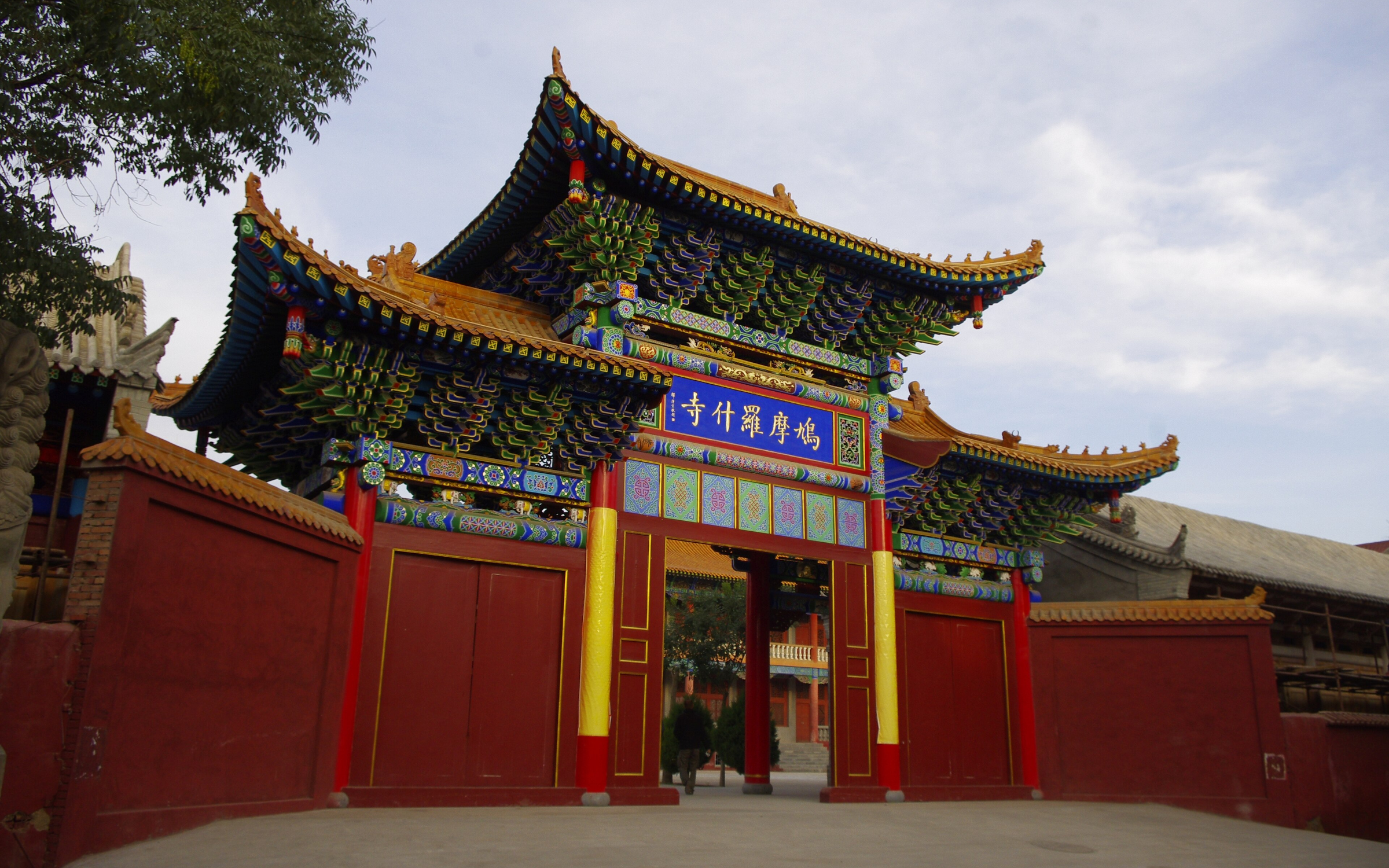 Kumarajiva TempleWuwei · Gansu
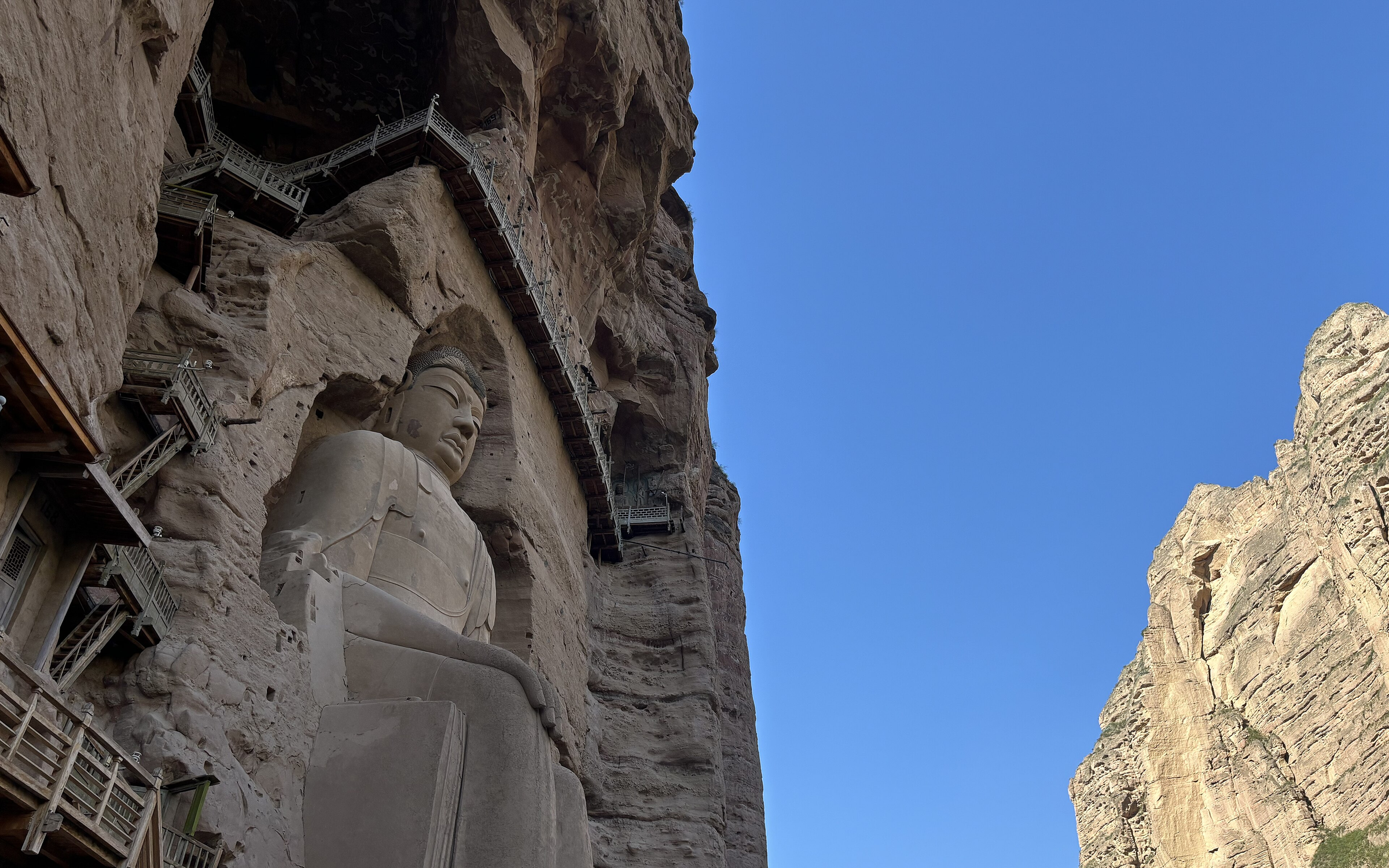 Bingling Temple GrottoesLinxia · Gansu
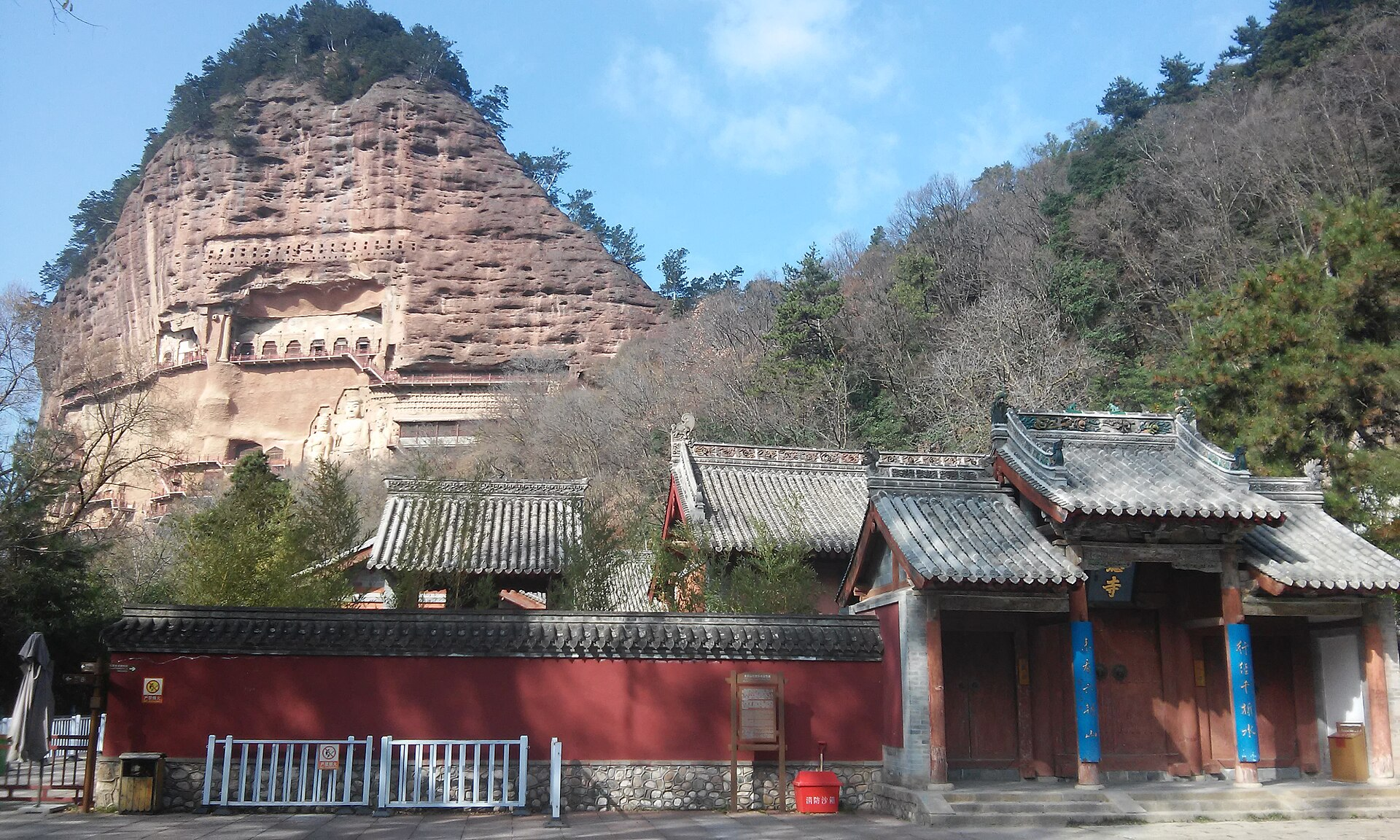 Maijishan GrottoesTianshui · Gansu
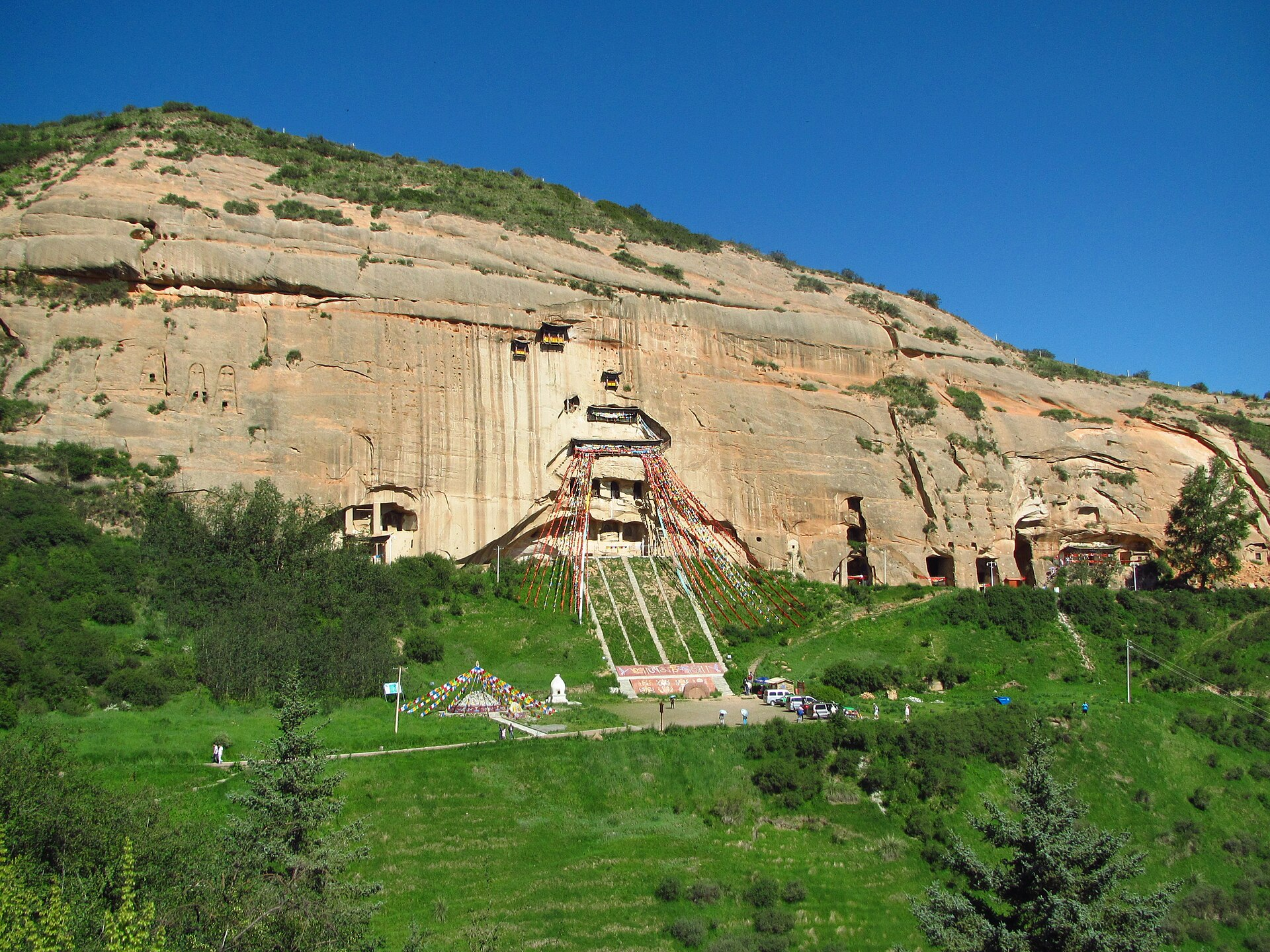 Mati Temple GrottoesZhangye · Gansu
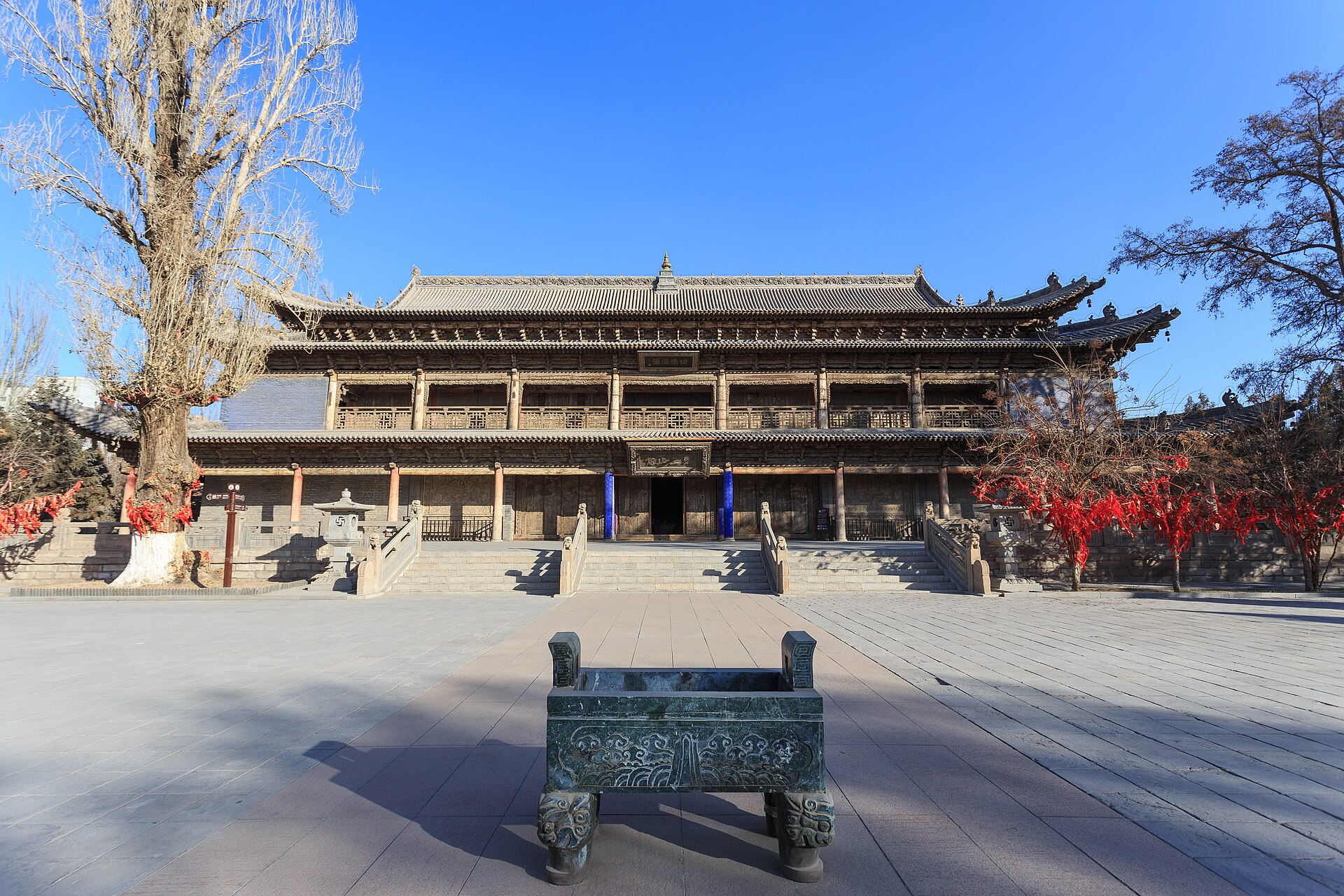 Giant Buddha TempleZhangye · Gansu
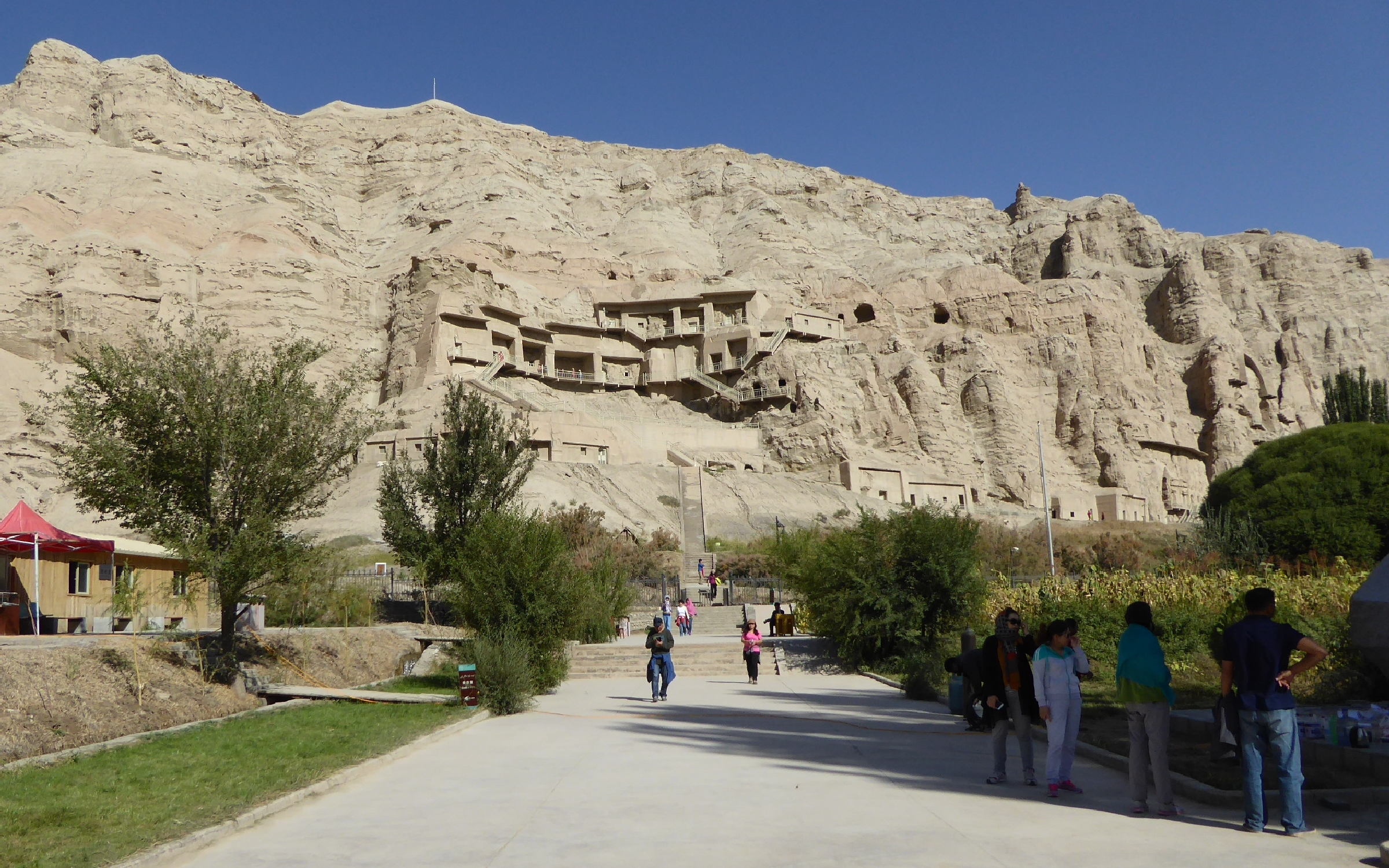 Kizil CavesKuqa · Xinjiang
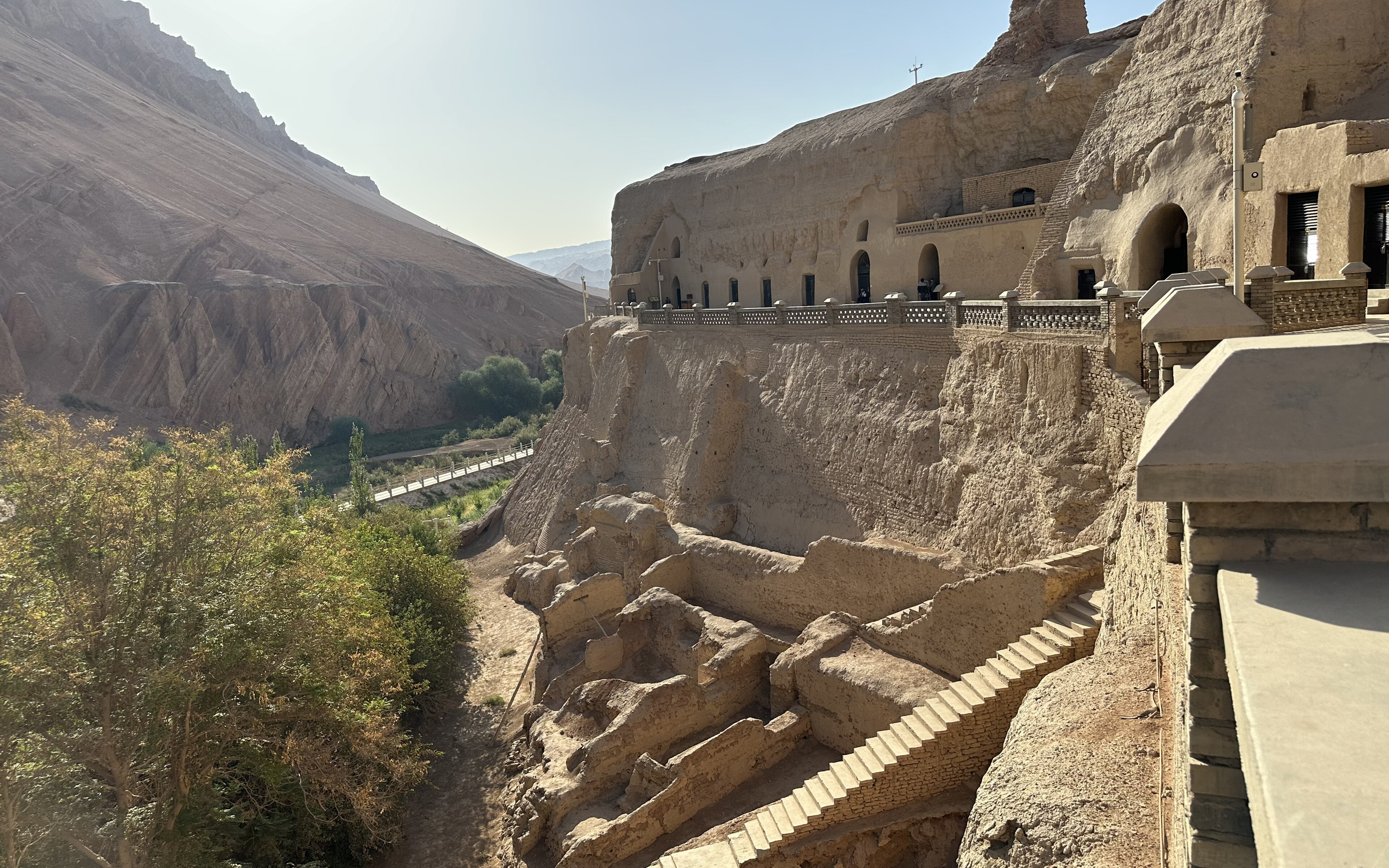 Bezeklik CavesTurpan · Xinjiang
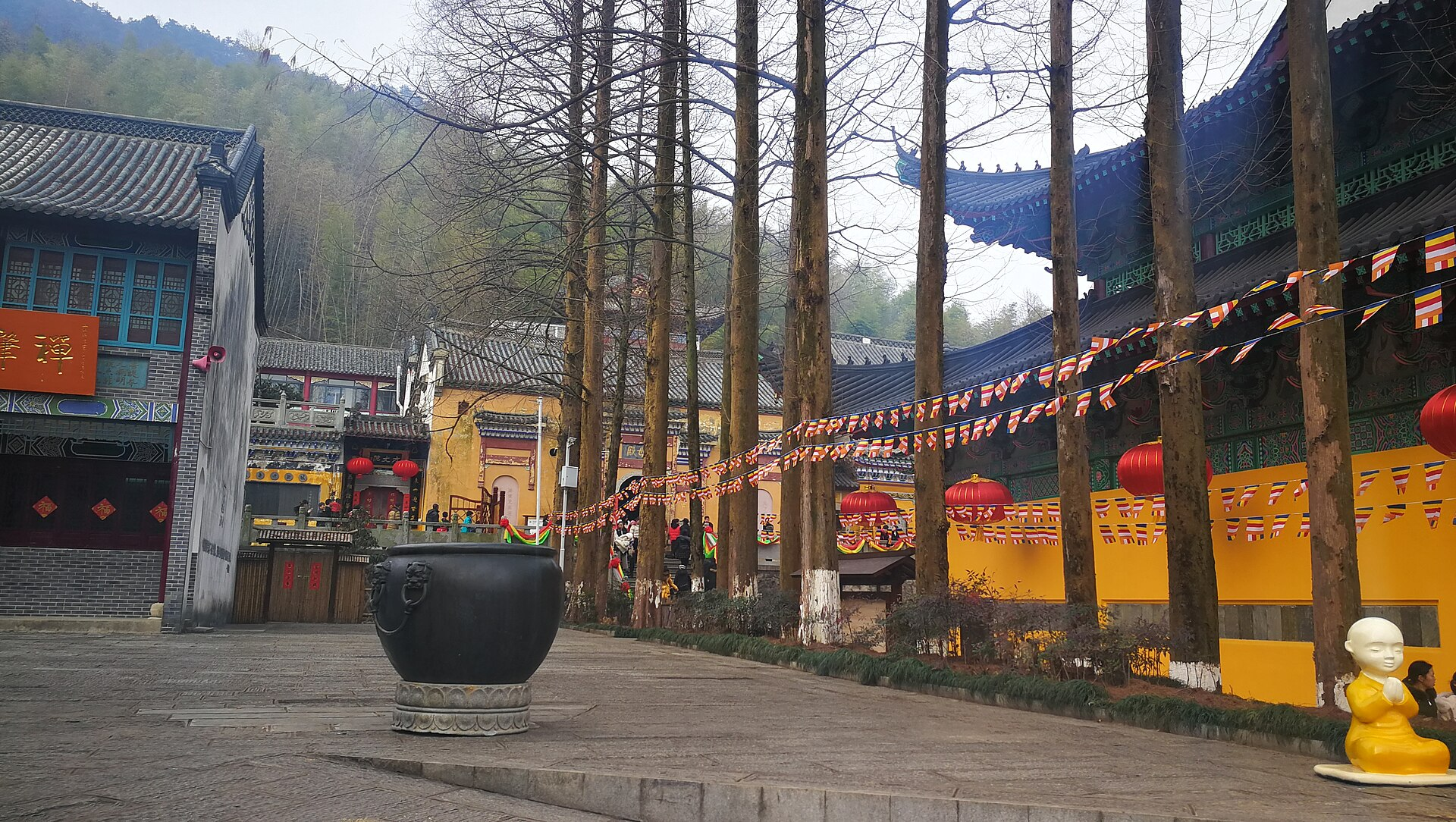 Wuzu TempleHuanggang · Huangmei · Hubei
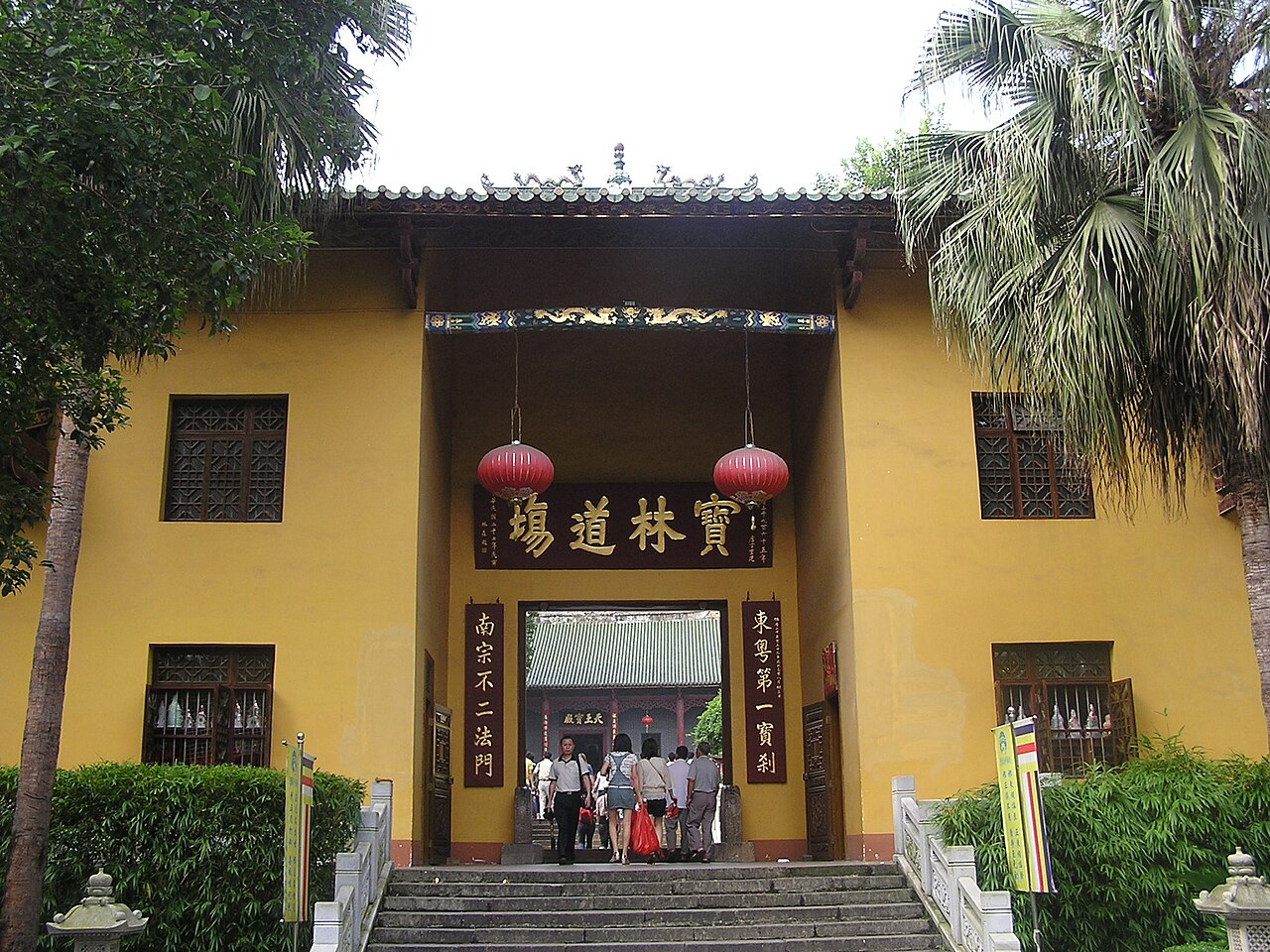 Nanhua TempleShaoguan · Guangdong
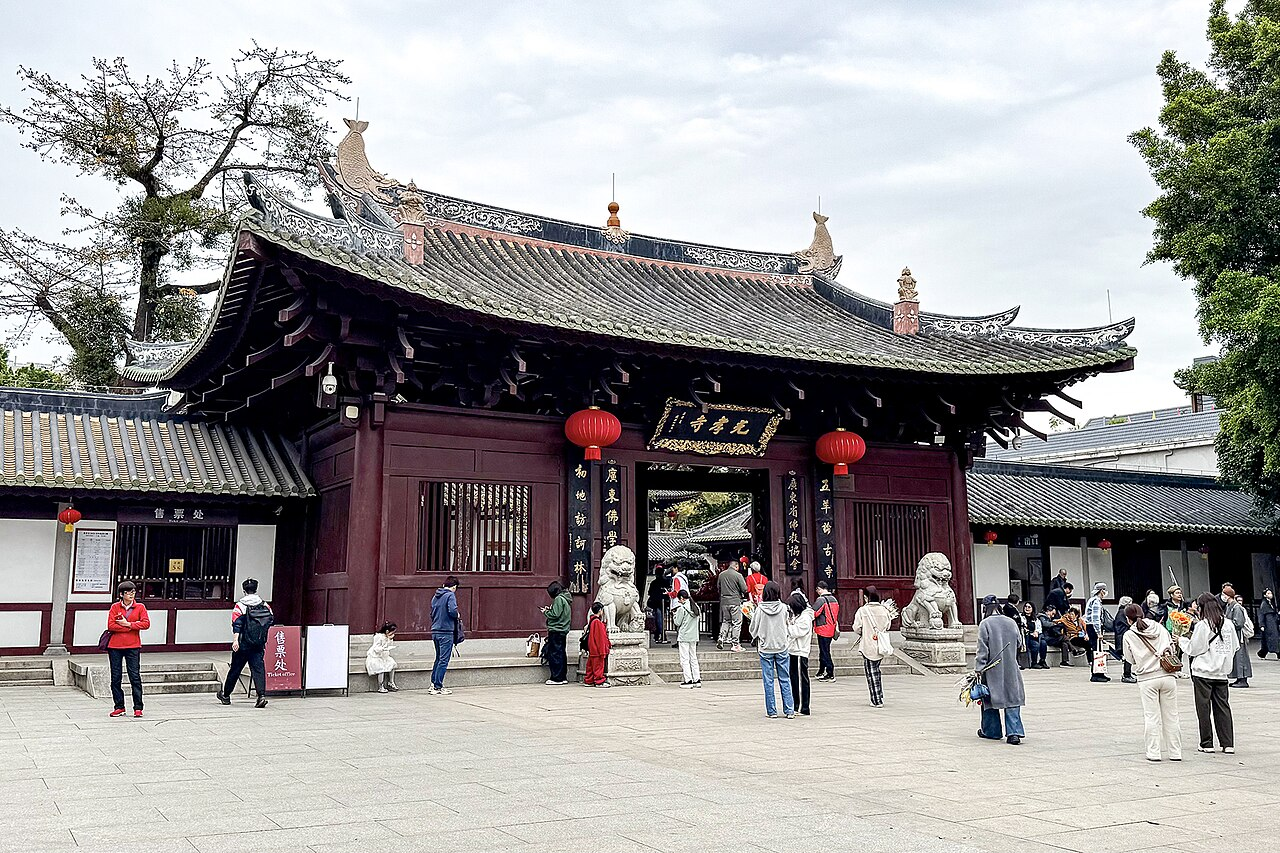 Guangxiao TempleGuangzhou · Guangdong
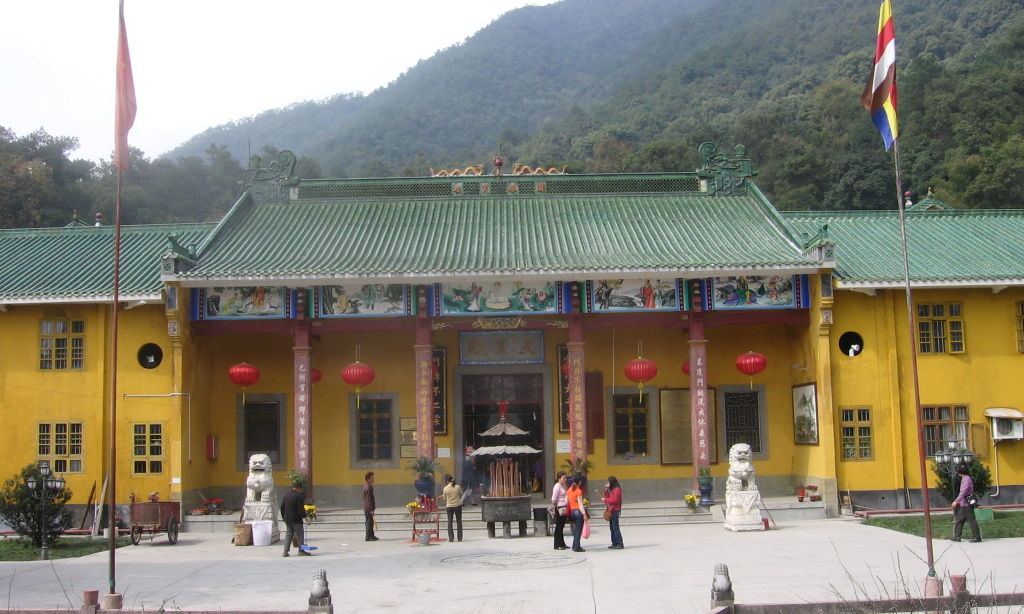 Yunmen TempleShaoguan · Ruyuan · Guangdong
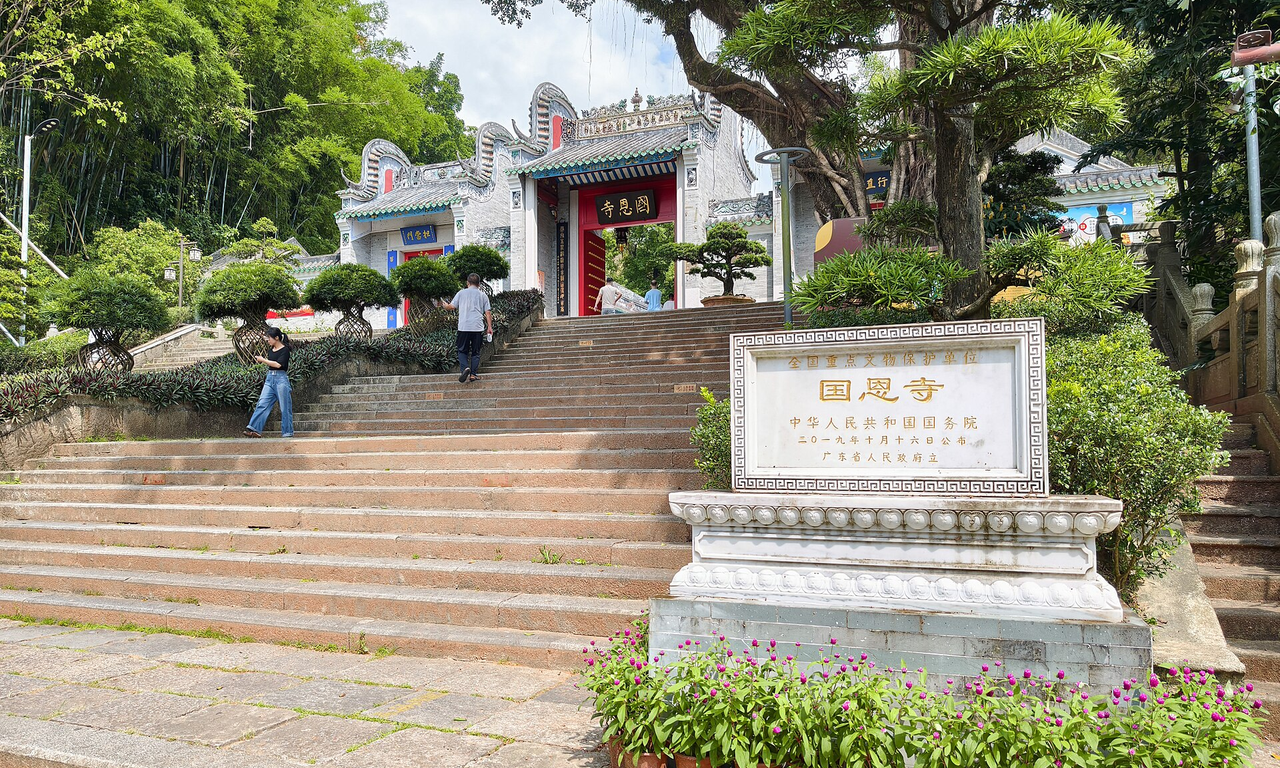 Guoen TempleYunfu · Xinxing · Guangdong
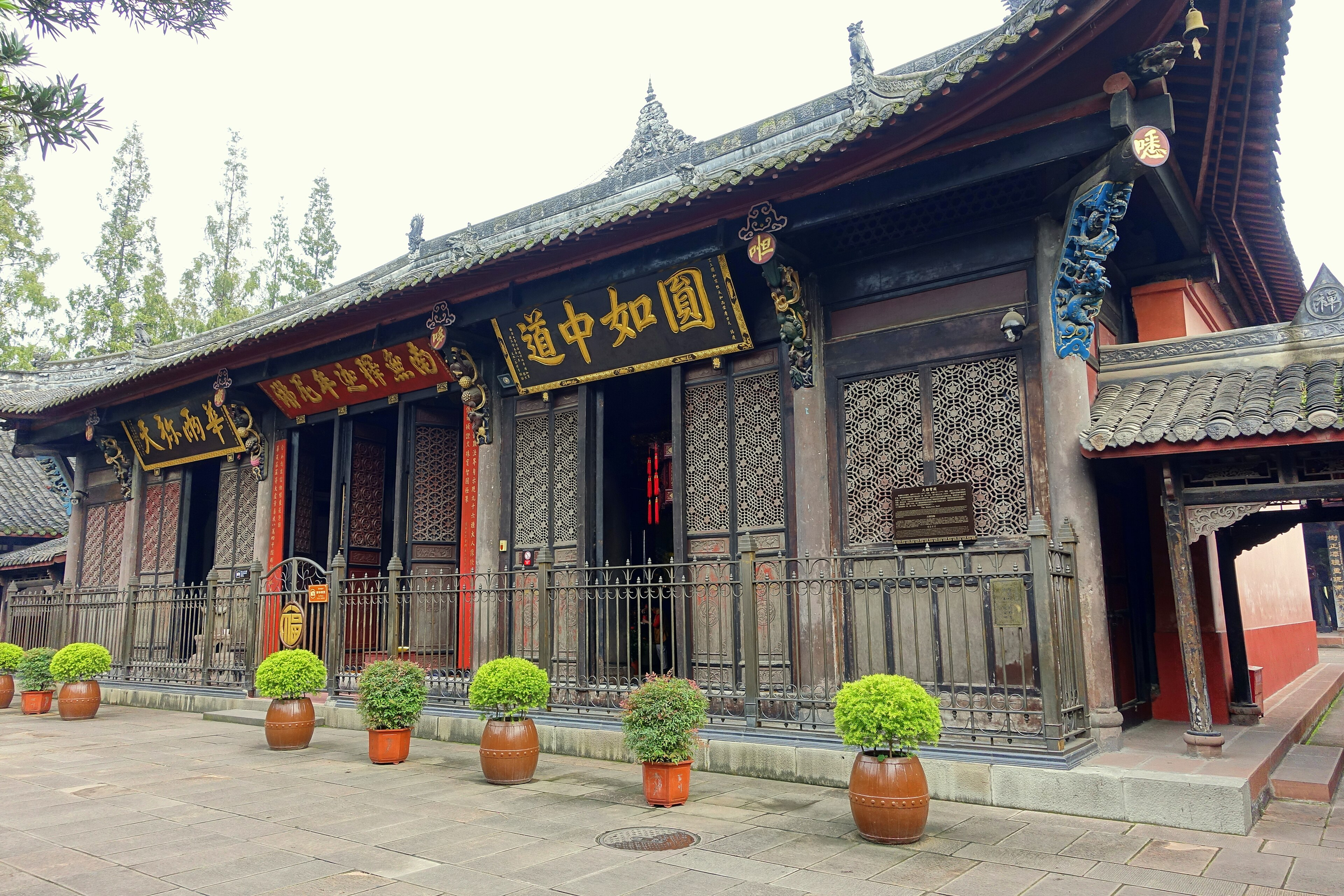 Wenshu MonasteryChengdu · Sichuan
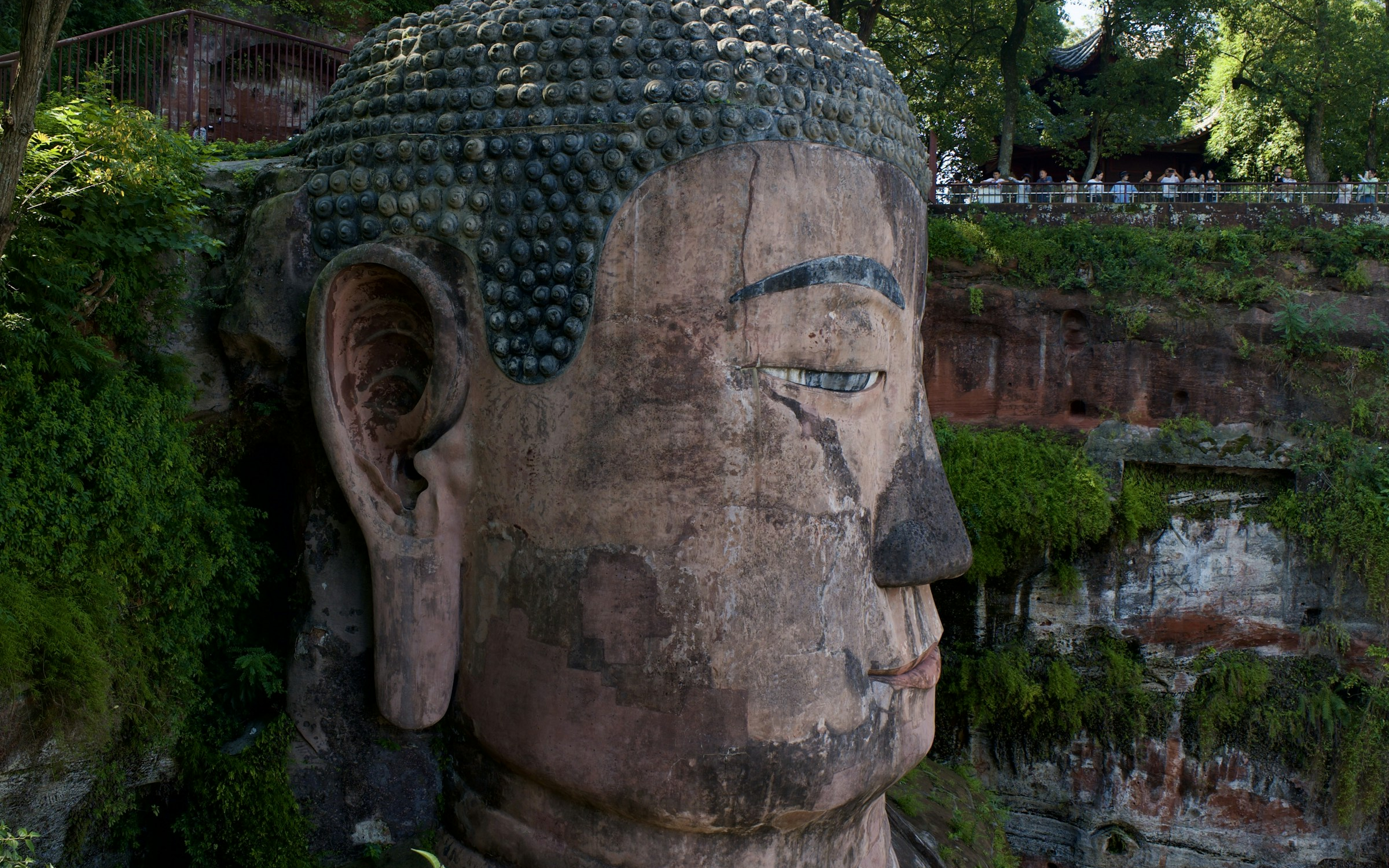 Leshan Giant BuddhaLeshan · Sichuan
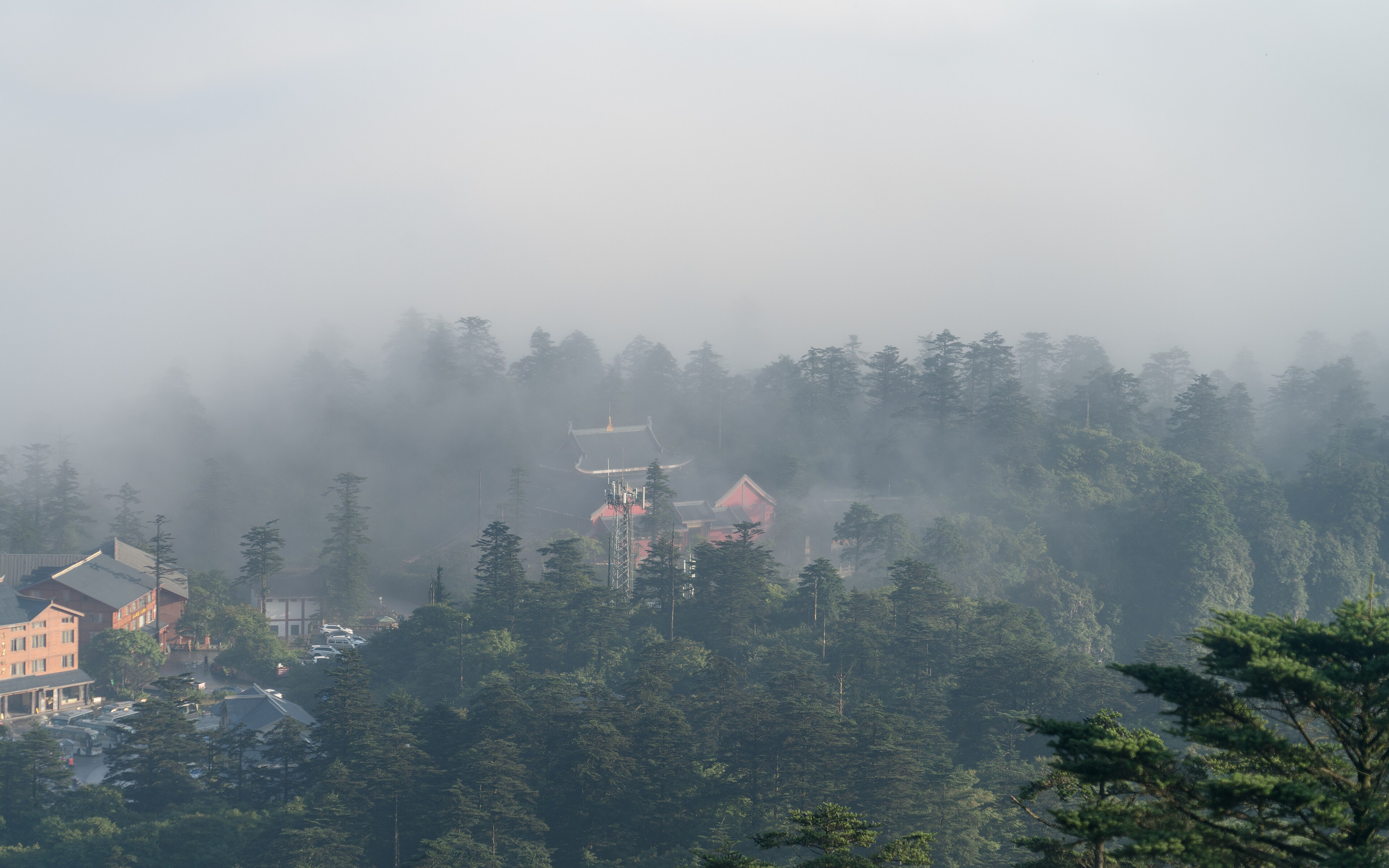 Mount EmeiLeshan · Emeishan · Sichuan
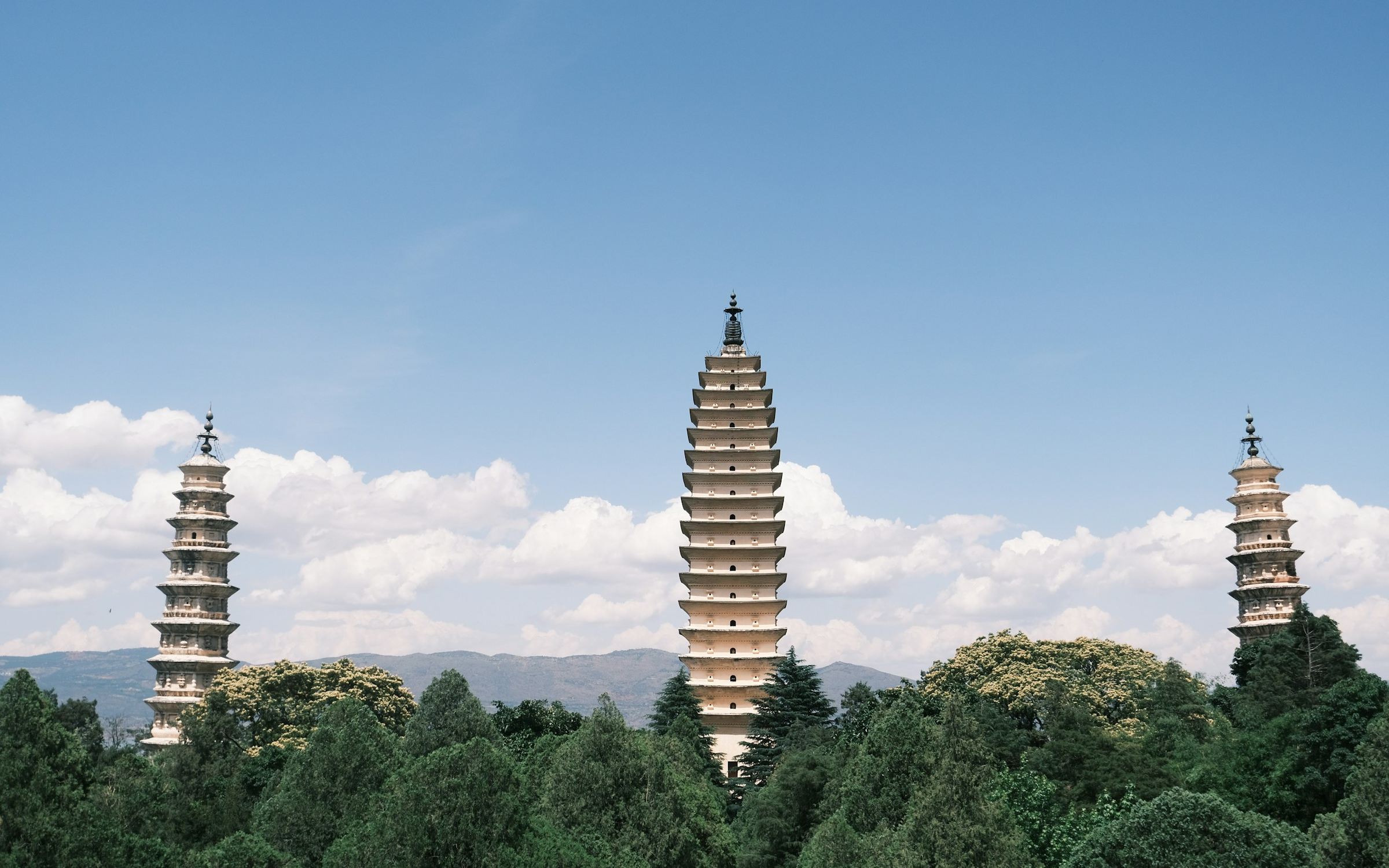 Chongsheng Temple & Three PagodasDali · Yunnan
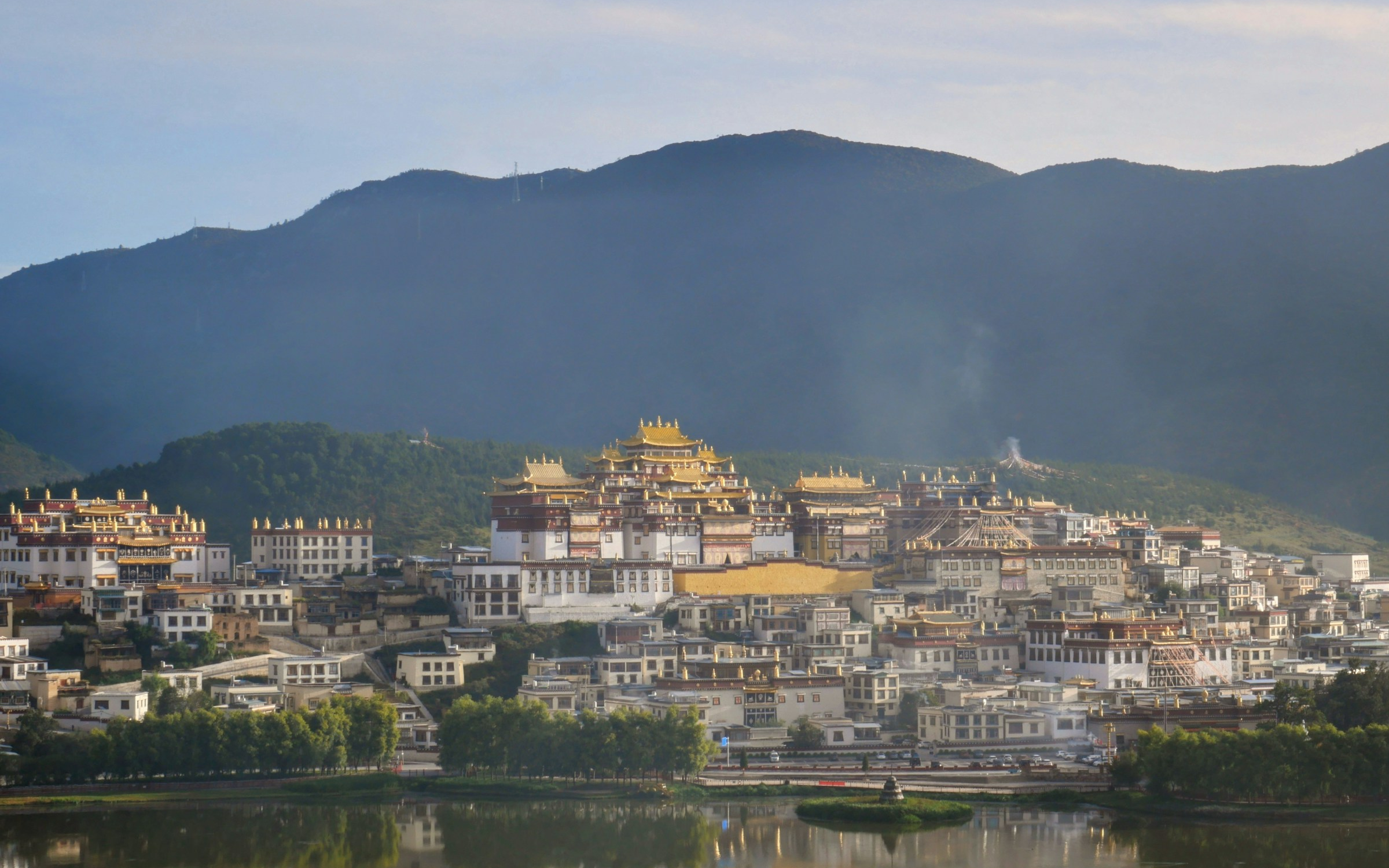 Songzanlin MonasteryDiqing · Shangri-La · Yunnan
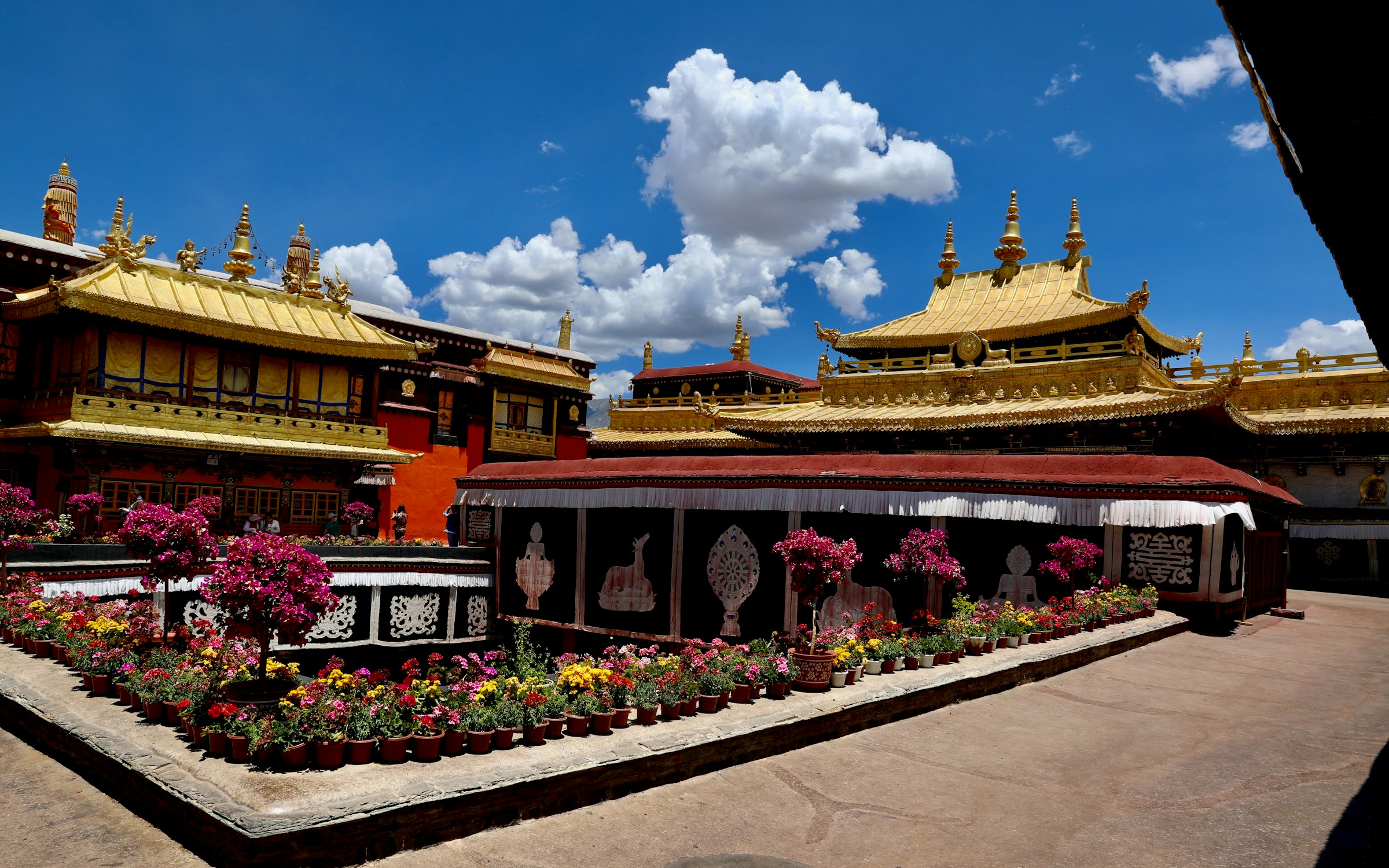 Jokhang TempleLhasa · Tibet
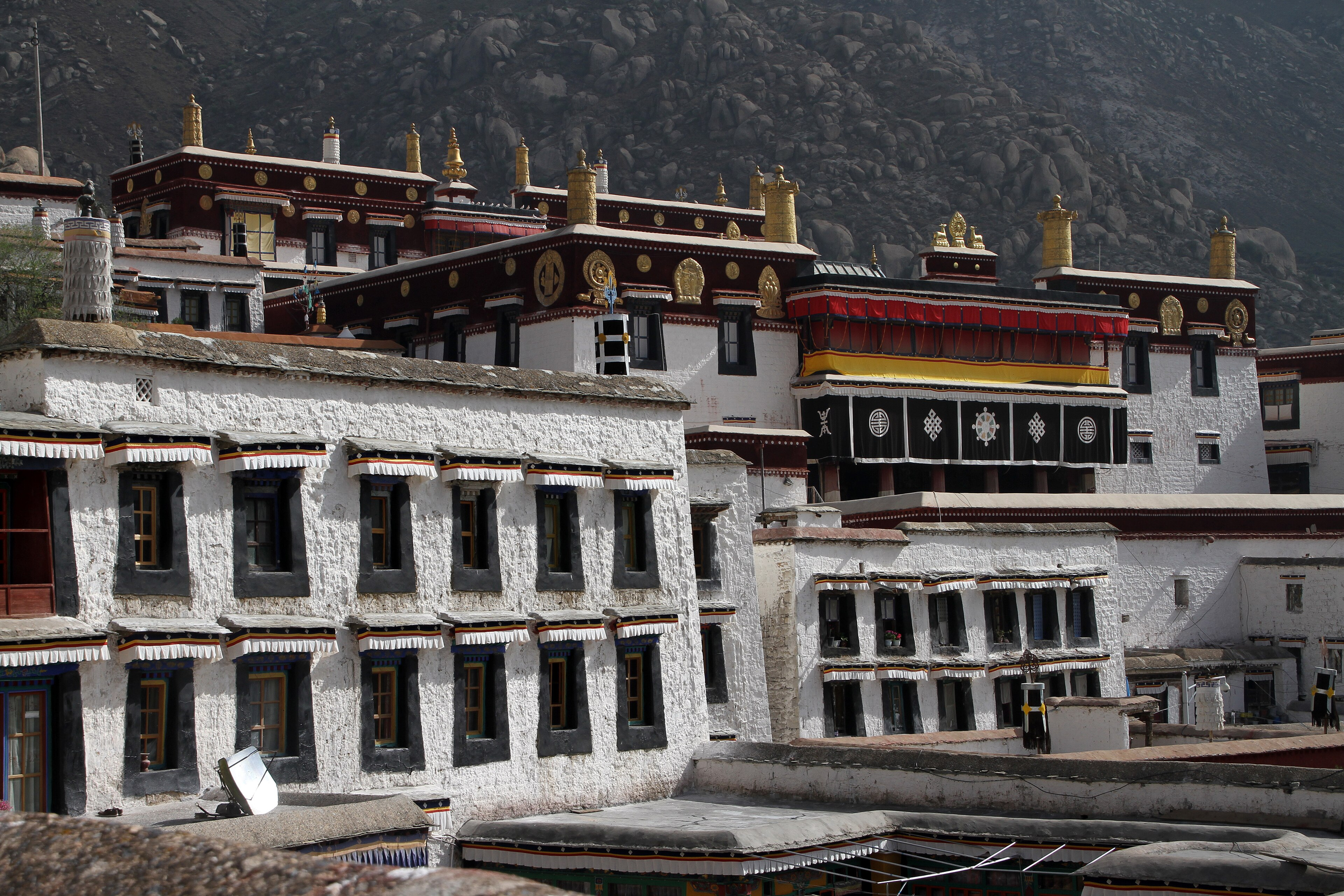 Drepung MonasteryLhasa · Tibet
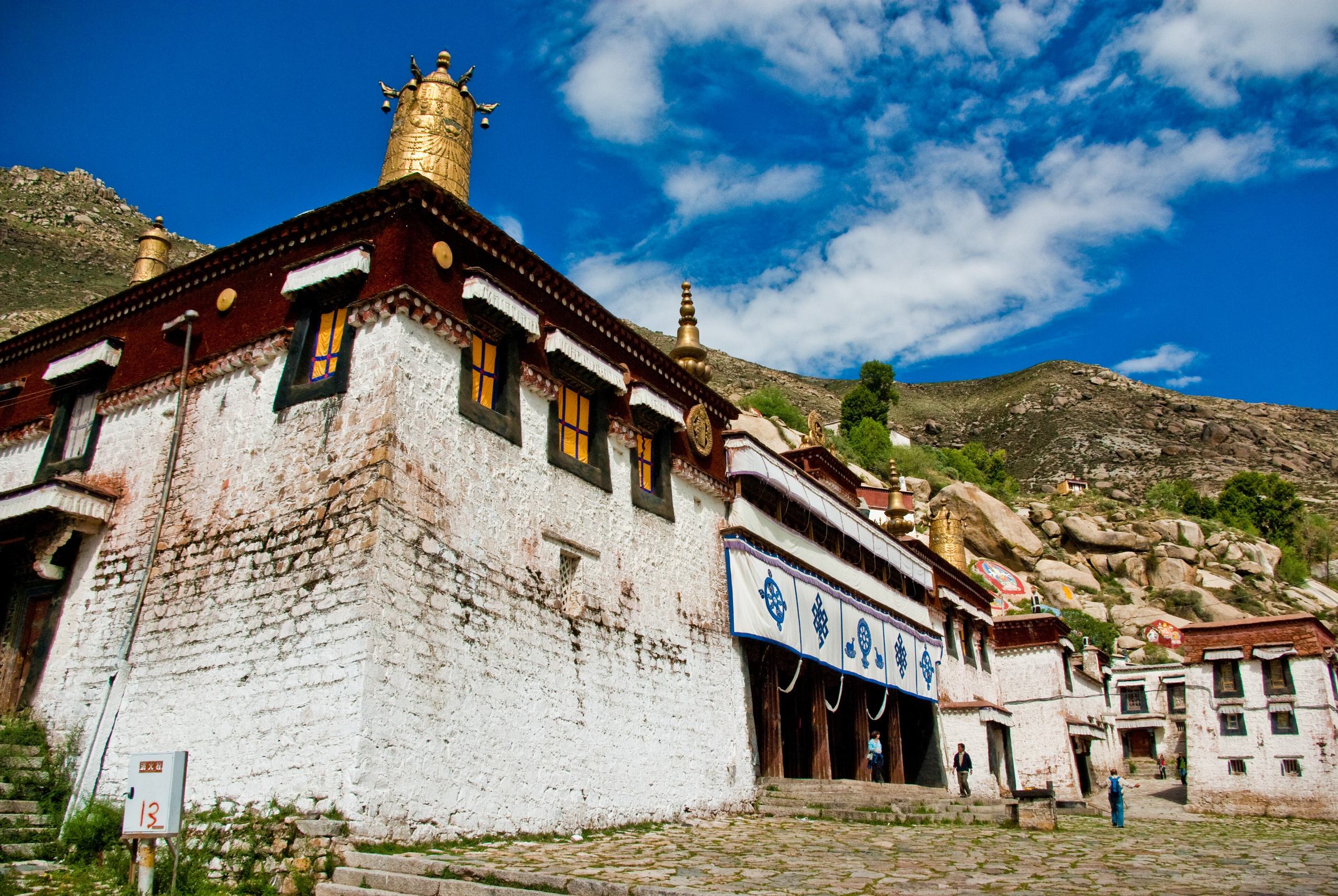 Sera MonasteryLhasa · Tibet
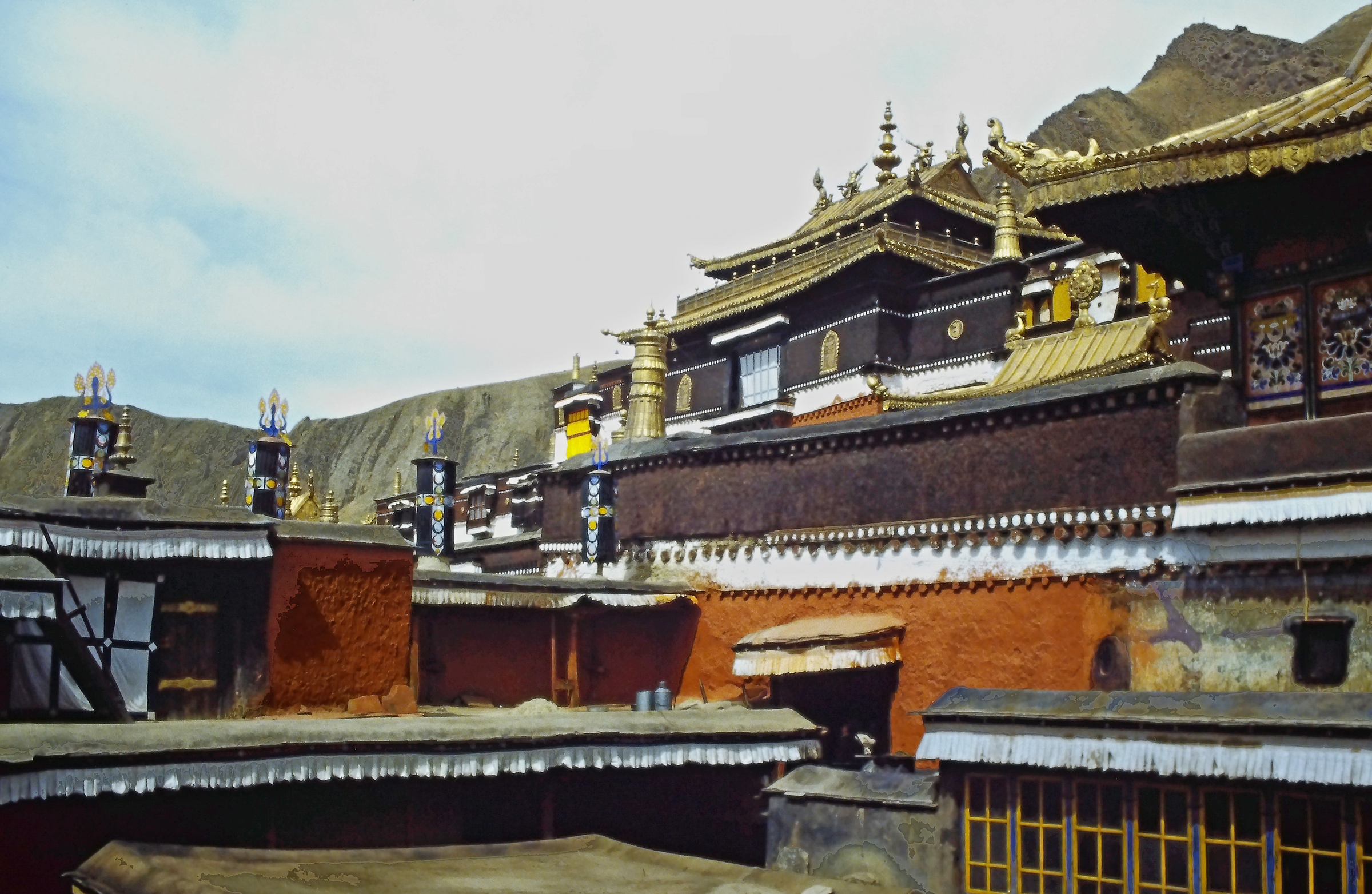 Tashilhunpo MonasteryShigatse · Tibet
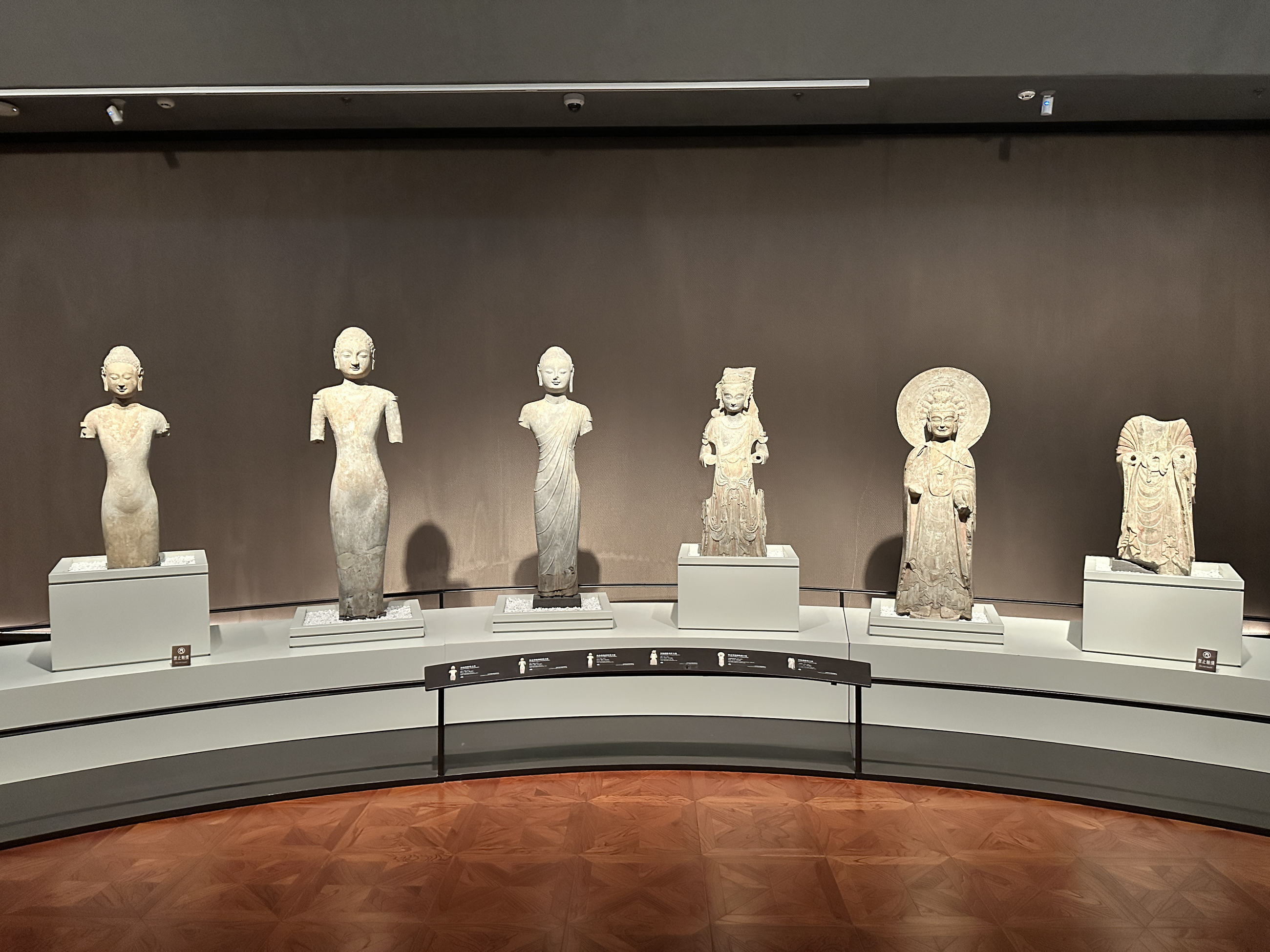 Qingzhou Museum · The Qingzhou SmileQingzhou · Shandong
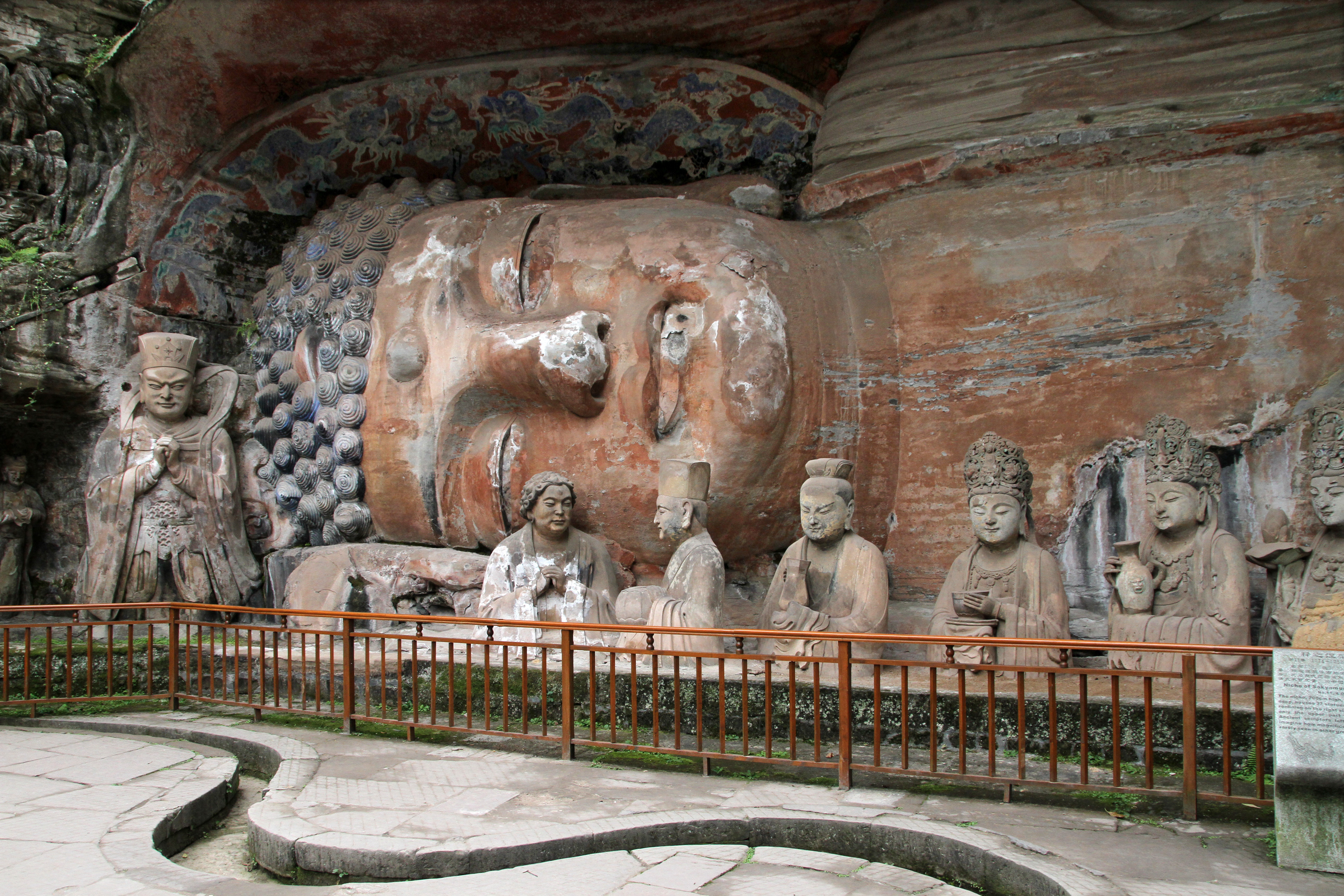 Dazu Rock Carvings · BaodingshanDazu · Chongqing
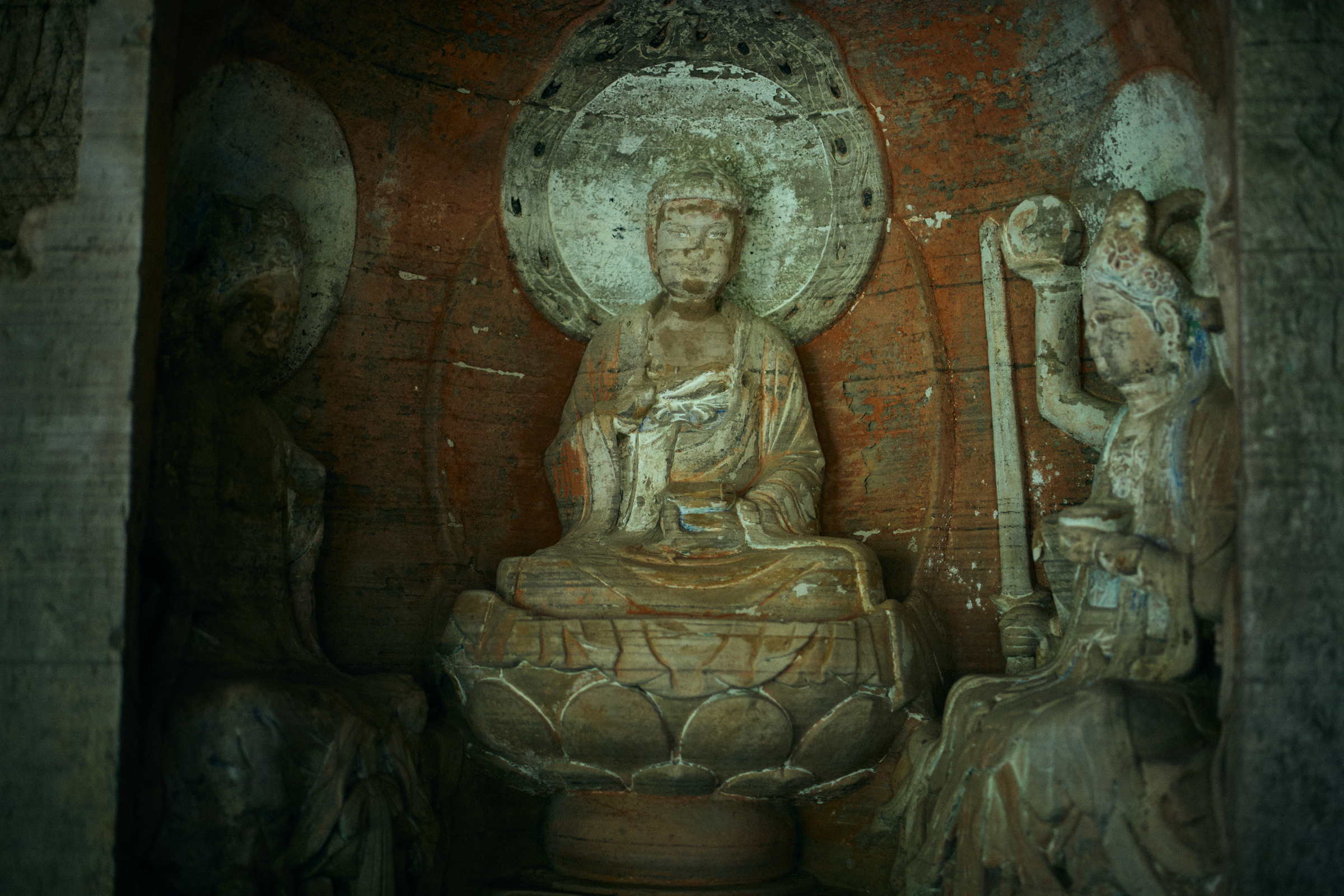 Dazu Rock Carvings · BeishanDazu · Chongqing
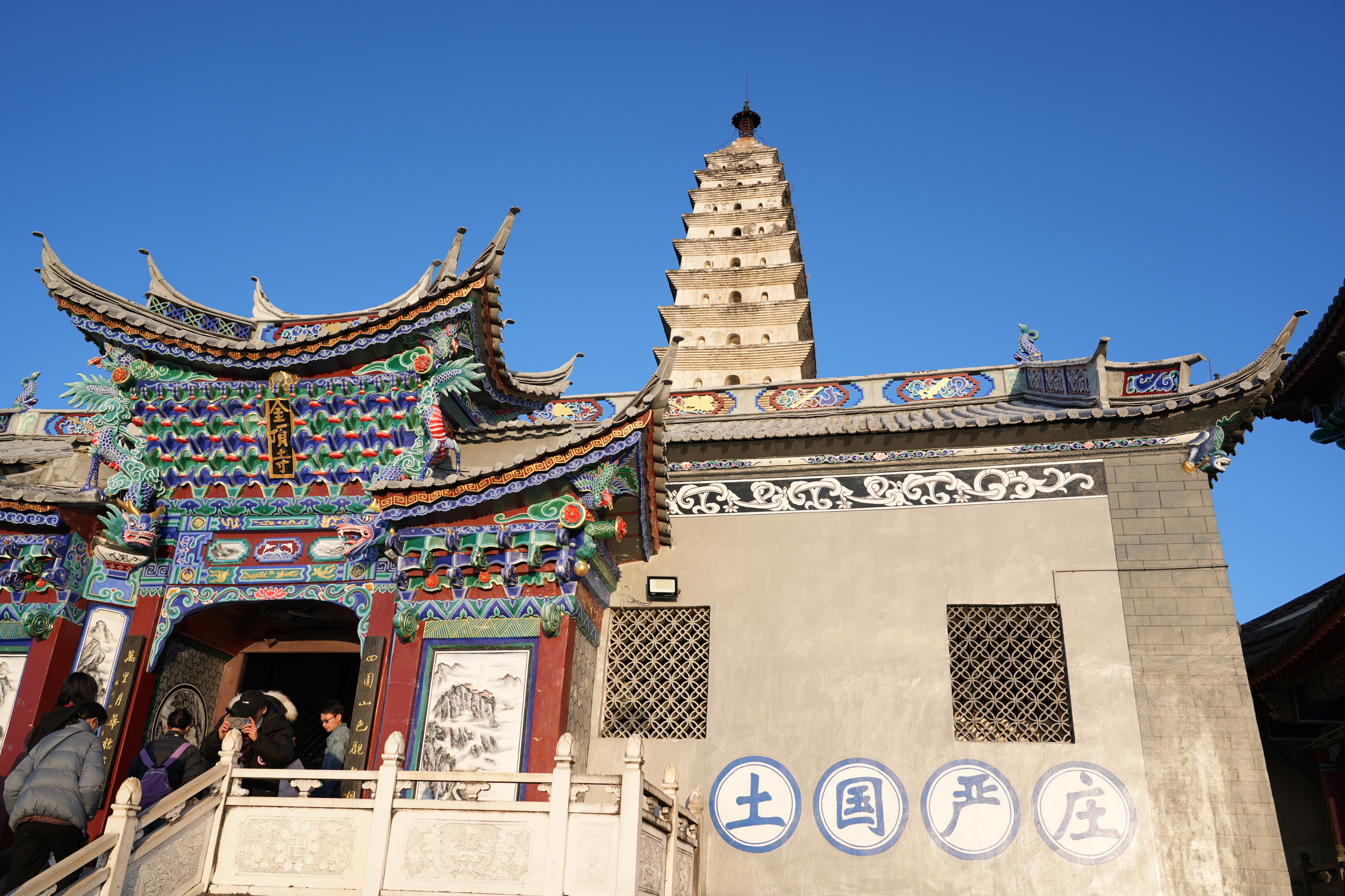 Jizu ShanBinchuan · Dali · Yunnan
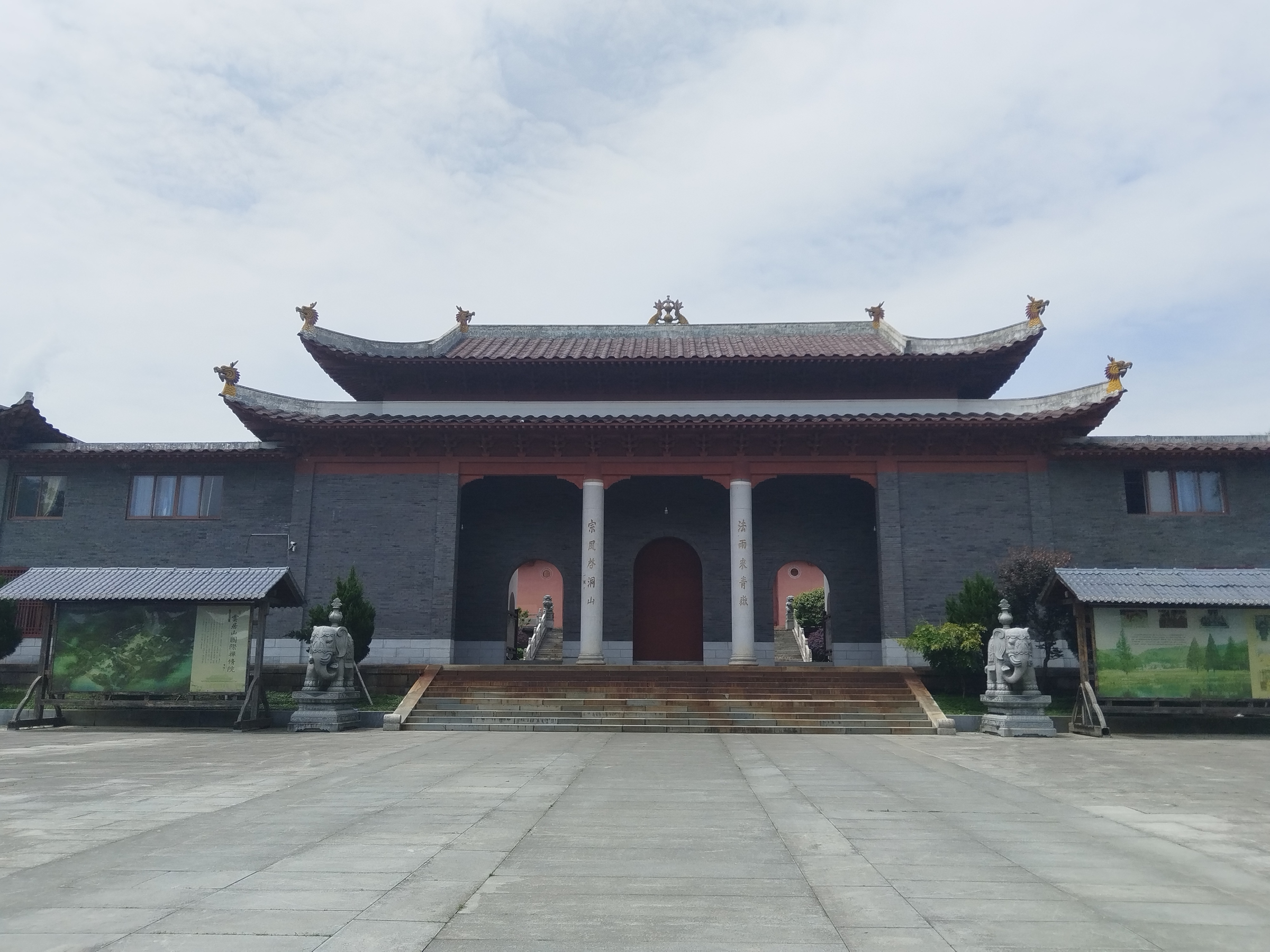 Yunju Shan & Zhenru TempleYongxiu · Jiujiang · Jiangxi