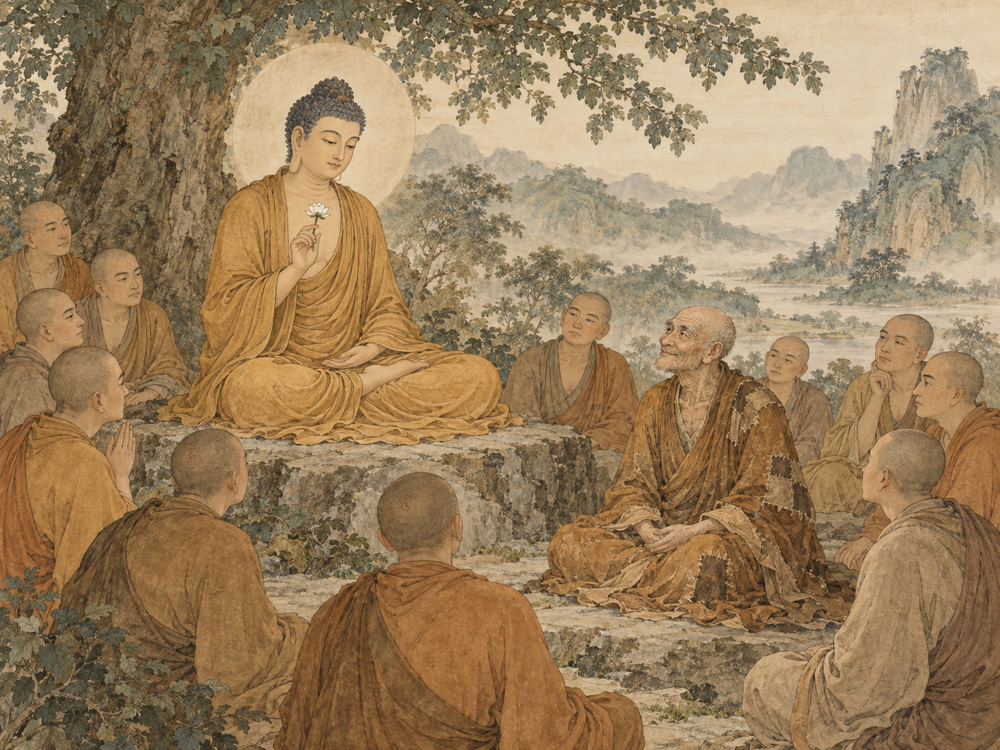
Contemporary illustration of the Flower Sermon at Vulture Peak.
BEFORE BODHIDHARMA / THE ORIGIN STORY
A flower. A smile.
At Vulture Peak in India, the Buddha raises a flower before the assembly and says nothing. Everyone remains silent. Mahākāśyapa smiles.
According to Chan tradition, the Buddha recognises this wordless understanding and entrusts the teaching to him. Known as the Flower Sermon, or 拈花微笑, the story places Mahākāśyapa at the beginning of the Indian patriarchal lineage: an understanding passed from mind to mind.
That remembered succession runs through twenty-eight patriarchs to Bodhidharma, who is also the first patriarch of Chan in China. It is a sacred genealogy preserved in later Chan literature, rather than a continuous historical record of dated meetings.
FOLLOW THE STORY INTO YUNNAN
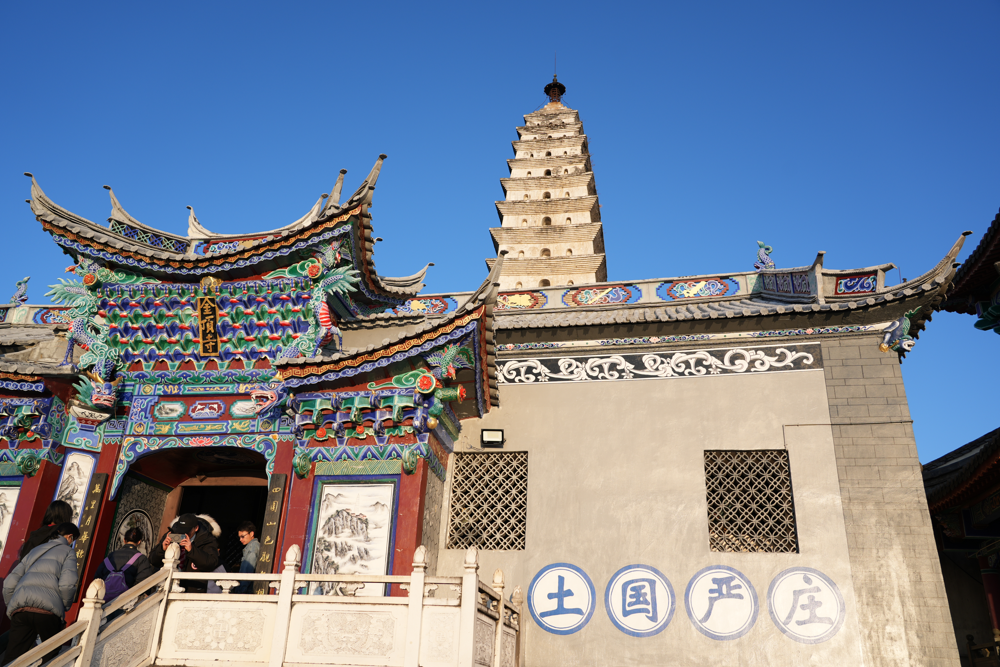
On Jizu Shan, local Buddhist belief places Mahākāśyapa at Huashou Gate, safeguarding the Buddha’s robe while awaiting Maitreya. The mountain offers a living landscape through which to explore this wider story.
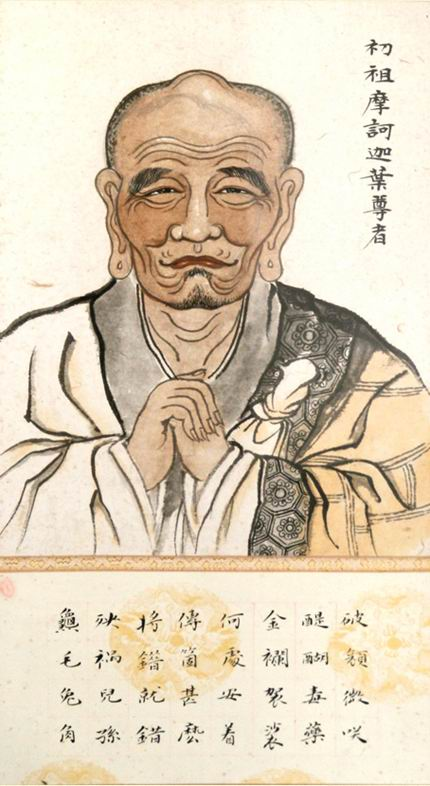
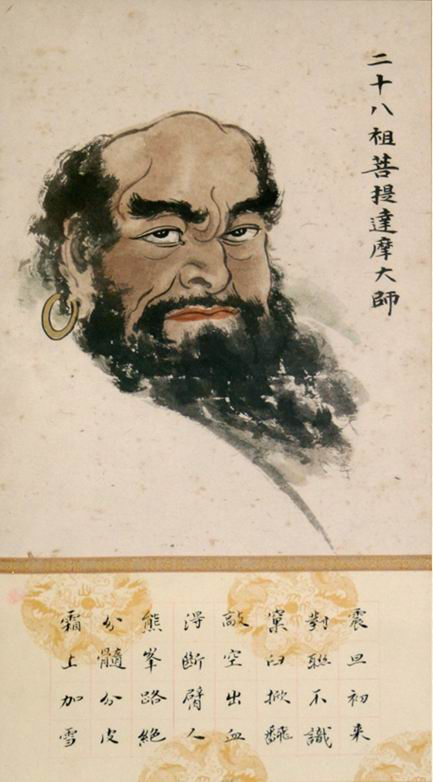
Explore the traditional succession through twenty-eight colour portraits, from Mahākāśyapa to Bodhidharma. Swipe through the portraits to follow their stories and the teaching passed onward.
01Mahākāśyapa摩诃迦叶
01 / 28 · THE INDIAN PATRIARCHS
Mahākāśyapa
摩诃迦叶
The first smile
The Buddha’s disciple is remembered as the first patriarch in the traditional Indian lineage. The Flower Sermon places his wordless recognition at its beginning; Jizu Shan in Yunnan carries the separate belief that he safeguards the Buddha’s robe while awaiting Maitreya.
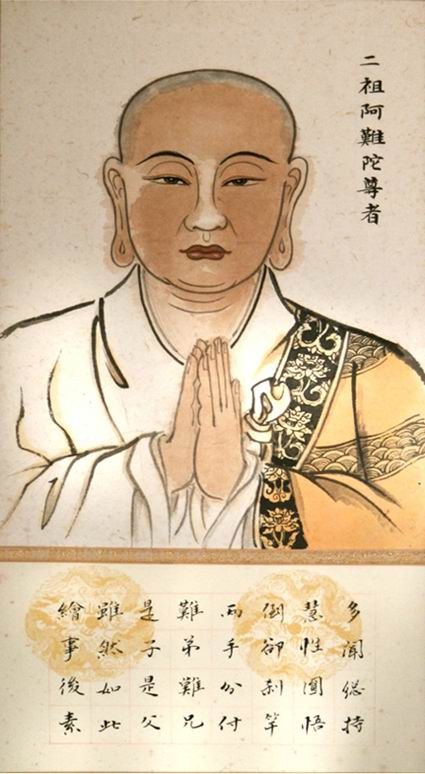
The Buddha’s attendant is remembered for hearing and retaining his teachings. In the patriarchal account, Mahākāśyapa entrusts the transmission to him, and he passes it to Śāṇavāsa.
03Śāṇavāsa商那和修
03 / 28 · THE INDIAN PATRIARCHS
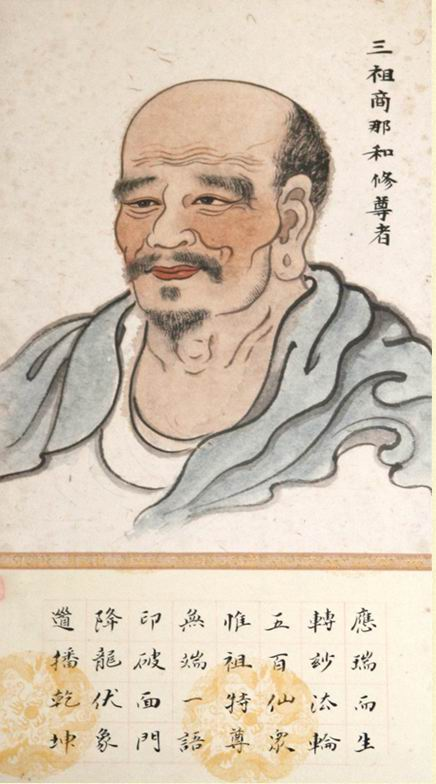
Śāṇavāsa
商那和修
Age and understanding
His encounter with the young Upagupta turns on a question: does a person’s age describe their body or their true nature? The exchange becomes a story about recognising understanding beyond outward appearances.
04Upagupta优波鞠多
04 / 28 · THE INDIAN PATRIARCHS
Upagupta
优波鞠多
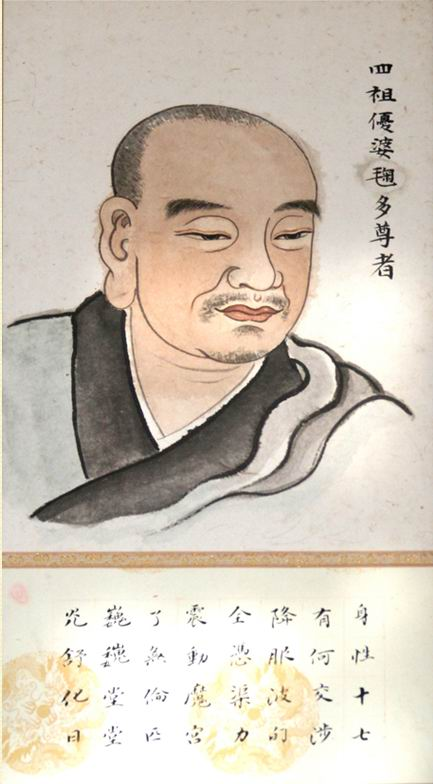
A teacher and Māra
Stories remember a teacher who guides many disciples and overcomes Māra through Buddhist teaching. In the lineage, his successor is Dhṛtaka.
05Dhṛtaka提多迦
05 / 28 · THE INDIAN PATRIARCHS
Dhṛtaka
提多迦
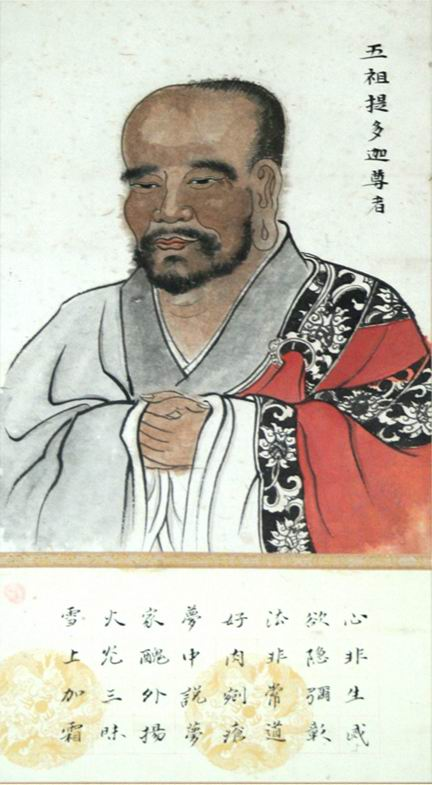
Leaving home inwardly
Asked whether leaving home concerns the body or the mind, he answers beyond that distinction. The account later has him welcome Miccaka and his followers into Buddhist practice.
06Miccaka弥遮迦
06 / 28 · THE INDIAN PATRIARCHS
Miccaka
弥遮迦
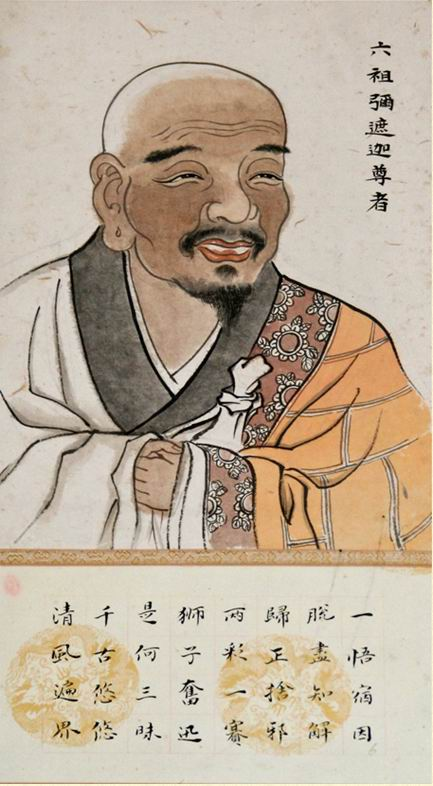
An unexpected meeting
A meeting with Vasumitra, carrying a drinking vessel, becomes the turning point in this chapter. The outwardly unconventional traveller is recognised as the next bearer of the teaching.
07Vasumitra婆须密
07 / 28 · THE INDIAN PATRIARCHS
Vasumitra
婆须密
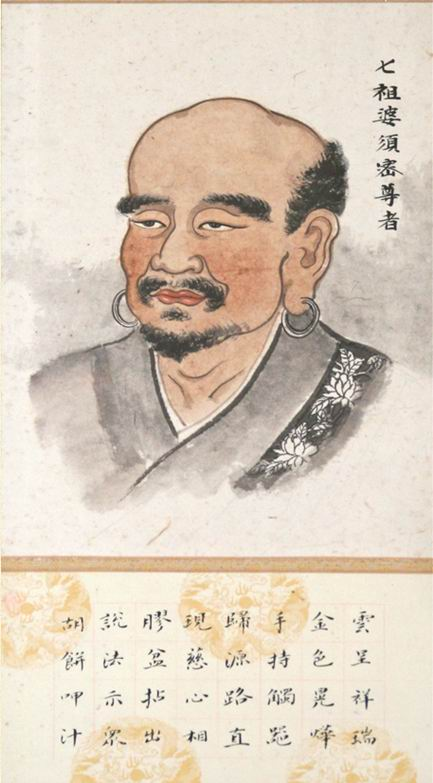
Beyond winning an argument
His dialogue with Buddhanandi questions whether debate alone reaches the meaning of the teaching. The encounter ends in a request to practise and receive transmission.
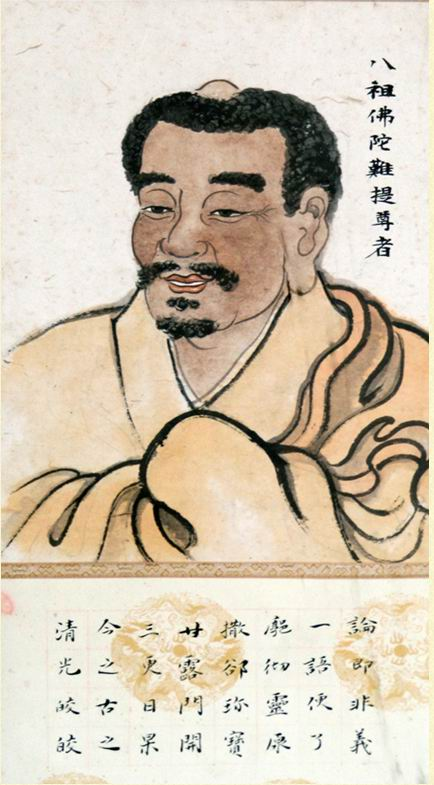
08Buddhanandi佛陀难提
08 / 28 · THE INDIAN PATRIARCHS
Buddhanandi
佛陀难提
Recognising a quiet disciple
The traditional life tells of recognising Buddhamitra’s capacity for practice when those around him see only silence. He becomes the ninth patriarch.
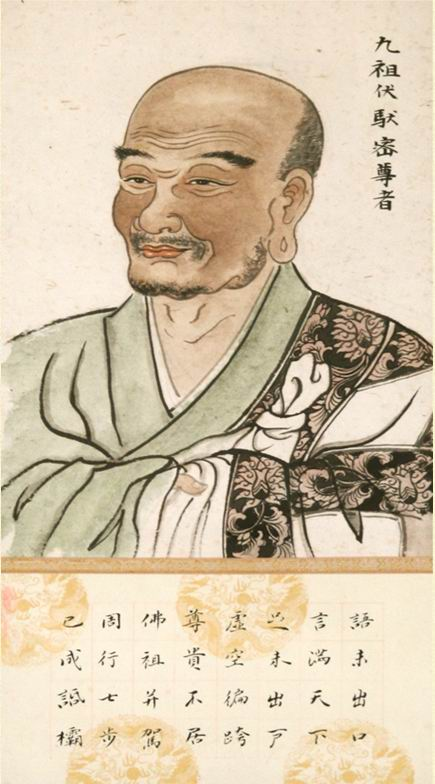
09Buddhamitra伏驮蜜多
09 / 28 · THE INDIAN PATRIARCHS
Buddhamitra
伏驮蜜多
Passing on the teaching
The narrative turns toward the ordination and dedicated practice of Pārśva. Buddhamitra entrusts him with the teaching, continuing the remembered succession.
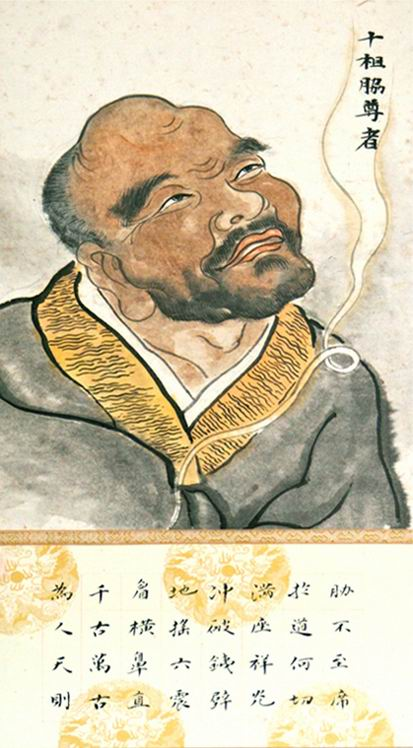
10Pārśva胁尊者
10 / 28 · THE INDIAN PATRIARCHS
Pārśva
胁尊者
Unflagging practice
His Chinese name recalls the tradition that he practised so diligently that his side never touched a sleeping mat. His exchange with Puṇyayaśas explores a mind beyond coming, going and fixed dwelling.
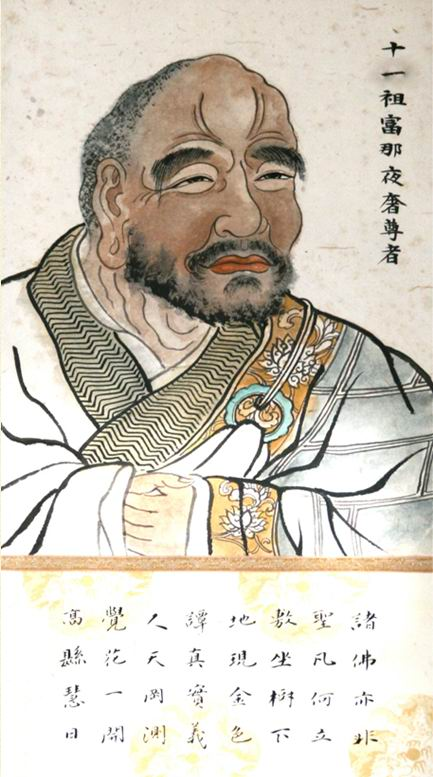
11Puṇyayaśas富那夜奢
11 / 28 · THE INDIAN PATRIARCHS
Puṇyayaśas
富那夜奢
Meeting Aśvaghoṣa
His chapter centres on recognising Aśvaghoṣa and welcoming him as a disciple. The story links teaching with a change of understanding, rather than with worldly status.
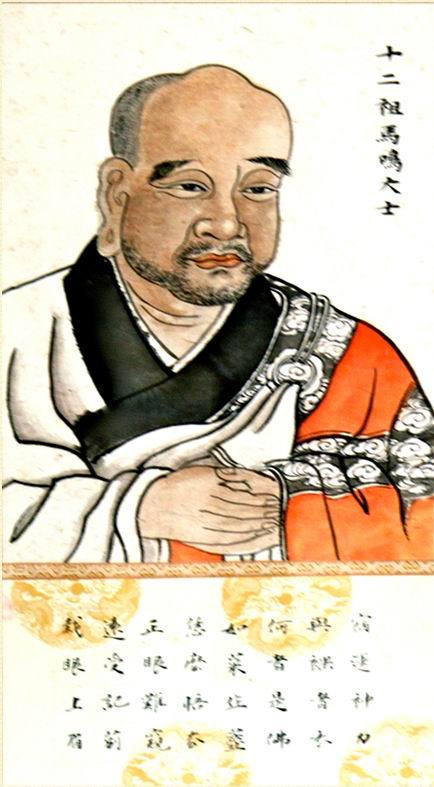
12Aśvaghoṣa马鸣
12 / 28 · THE INDIAN PATRIARCHS
Aśvaghoṣa
马鸣
Power and insight
A dramatic tale has Kapimala display supernatural power before him. Aśvaghoṣa directs the encounter toward insight into the mind, and Kapimala asks to enter Buddhist practice.
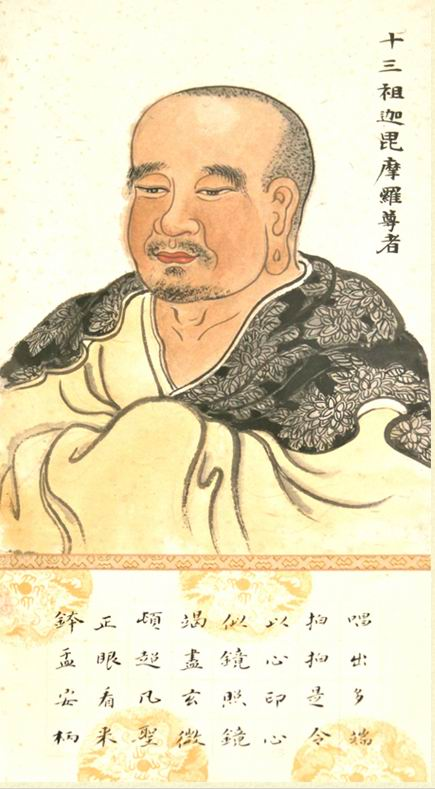
13Kapimala迦毗摩罗
13 / 28 · THE INDIAN PATRIARCHS
Kapimala
迦毗摩罗
The teacher beneath the tree
The narrative brings him to a great tree, where he encounters Nāgārjuna teaching a gathering associated with dragons. The meeting prepares the next chapter of the lineage.
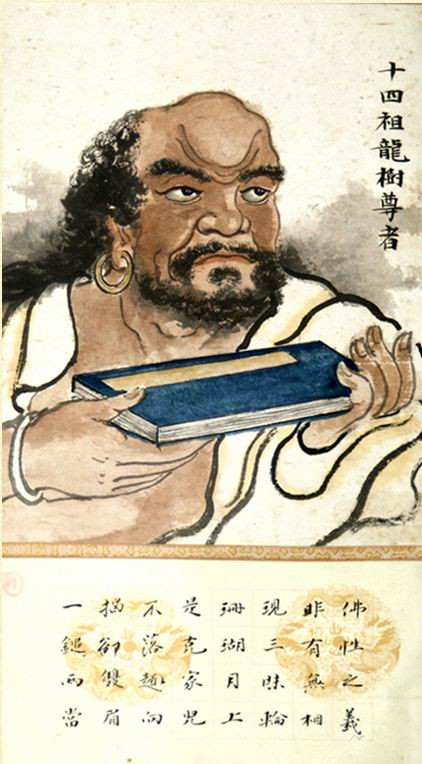
14Nāgārjuna龙树
14 / 28 · THE INDIAN PATRIARCHS
Nāgārjuna
龙树
The image of a full moon
In the patriarchal story, a moonlike manifestation conveys the teaching without a long explanation. Kāṇadeva recognises its meaning and becomes his successor.
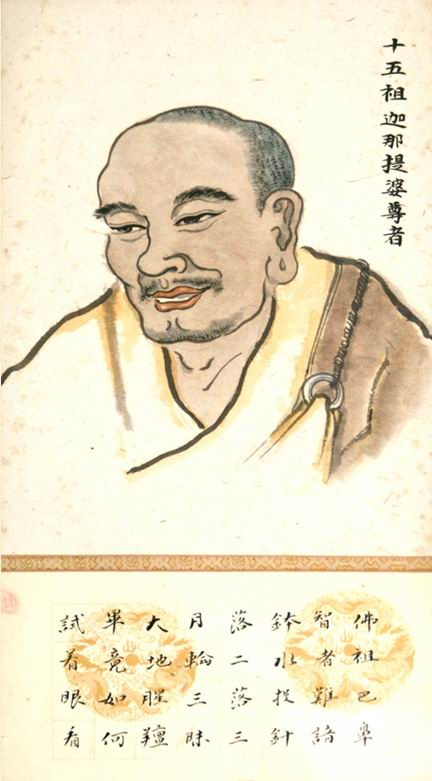
15Kāṇadeva迦那提婆
15 / 28 · THE INDIAN PATRIARCHS
Kāṇadeva
迦那提婆
A needle in a full bowl
A bowl filled with water and a needle placed within it become the gestures of recognition between Nāgārjuna and Kāṇadeva. Later, Kāṇadeva receives Rāhulata as a disciple.
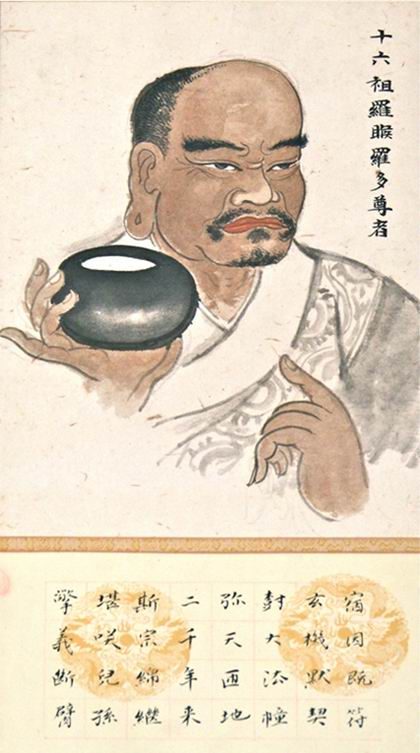
16Rāhulata罗睺罗多
16 / 28 · THE INDIAN PATRIARCHS
Rāhulata
罗睺罗多
Stillness without confinement
His conversation with Saṅghanandi asks whether meditation belongs to the body or the mind. It points toward steadiness without treating awareness as something confined or possessed.
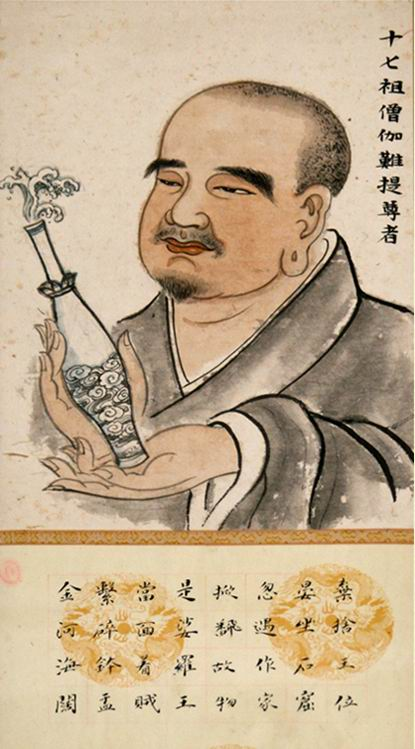
17Saṅghanandi僧伽难提
17 / 28 · THE INDIAN PATRIARCHS
Saṅghanandi
僧伽难提
A mirror and recognition
Remembered as a prince who turns toward monastic life, he later encounters the young Gayāśata carrying a mirror. Their dialogue makes the mirror an image of shared, unobstructed understanding.
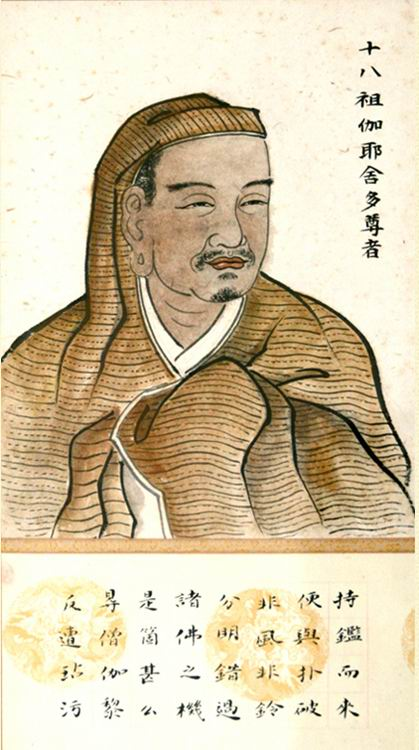
18Gayāśata伽耶舍多
18 / 28 · THE INDIAN PATRIARCHS
Gayāśata
伽耶舍多
Who answers an empty house?
A closed door gives this chapter its memorable exchange. Kumāralāta says the house is empty; Gayāśata asks who has answered, opening a meeting that leads to transmission.
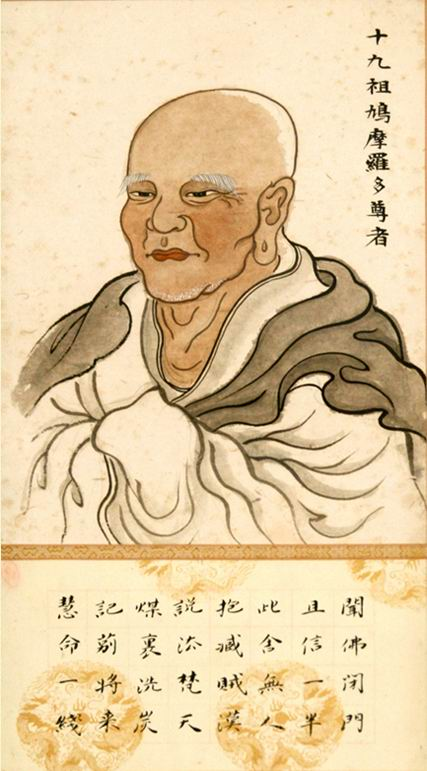
19Kumāralāta鸠摩罗多
19 / 28 · THE INDIAN PATRIARCHS
Kumāralāta
鸠摩罗多
Questions about suffering
Jayata comes to him puzzled by the suffering of a devout family and the apparent good fortune of others. The narrative explores karma, confusion and the deeper nature of mind.
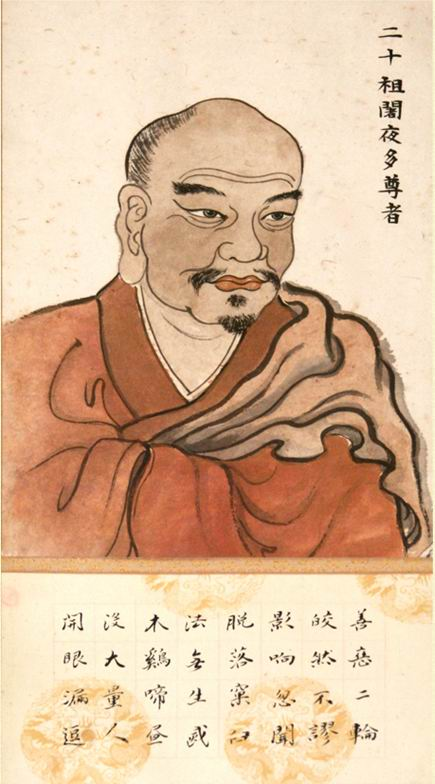
20Jayata阇夜多
20 / 28 · THE INDIAN PATRIARCHS
Jayata
阇夜多
Looking beyond austerity
His encounter with Vasubandhu challenges reliance on severe ascetic practice alone. The remembered teaching turns attention toward understanding rather than attachment to a method.
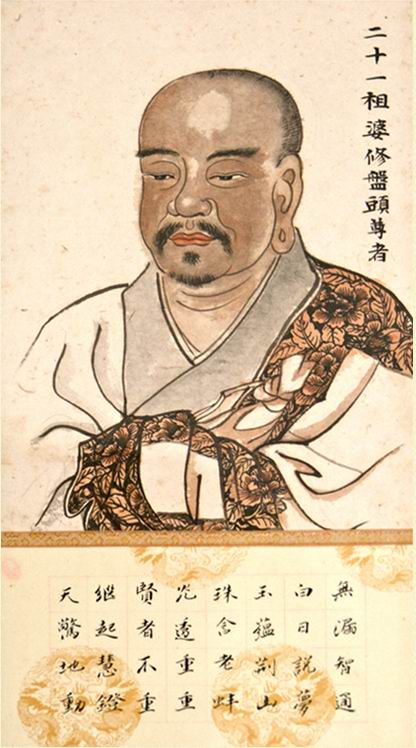
21Vasubandhu婆修盘头
21 / 28 · THE INDIAN PATRIARCHS
Vasubandhu
婆修盘头
A royal disciple
After receiving transmission from Jayata, he meets Manorhita, a king’s son who enters monastic life. This chapter joins an inherited teaching with the decision to leave royal privilege.
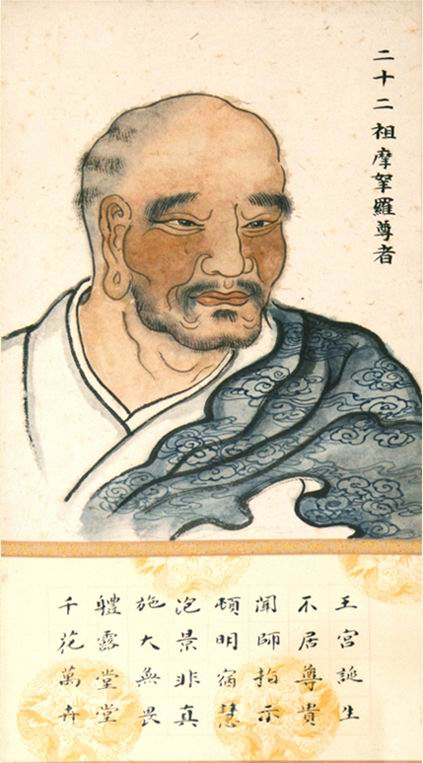
22Manorhita摩拏罗
22 / 28 · THE INDIAN PATRIARCHS
Manorhita
摩拏罗
Following the cranes
A flock of cranes accompanies Haklena in this traditional account. Manorhita explains their connection through a story of former lives and teaches a verse through which they are said to find release.
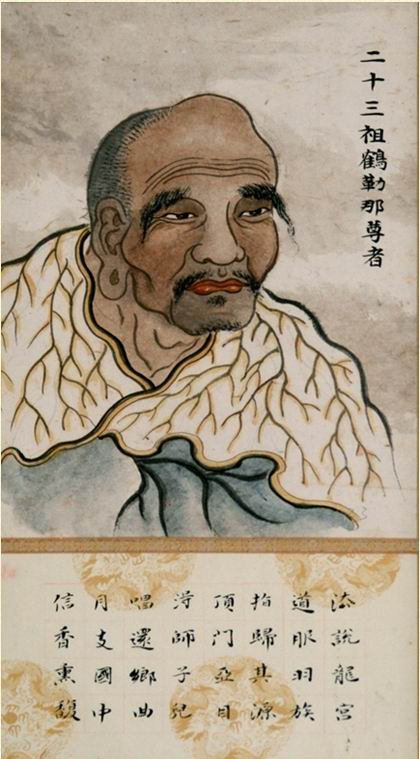
23Haklena鹤勒那
23 / 28 · THE INDIAN PATRIARCHS
Haklena
鹤勒那
The mind that does not grasp
Siṃha asks how to apply the mind in seeking the way. Their exchange questions deliberate grasping, and Siṃha is recognised as the next bearer of the teaching.
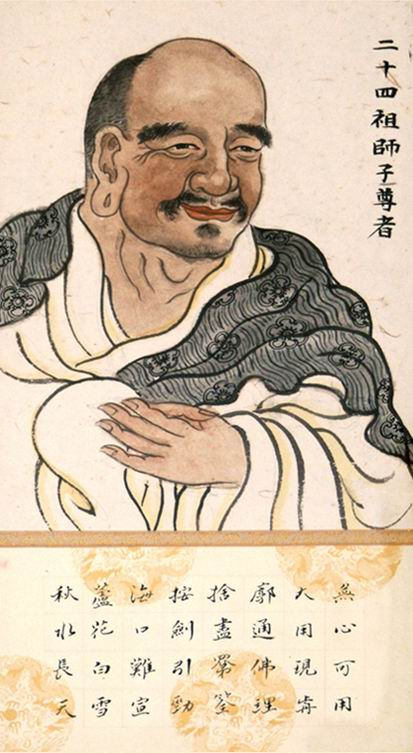
24Siṃha师子尊者
24 / 28 · THE INDIAN PATRIARCHS
Siṃha
师子尊者
A jewel returned
A child’s tightly closed hand opens to reveal a jewel when Siṃha asks for its return. The story identifies that child, Vasiasita, as his future disciple and successor.
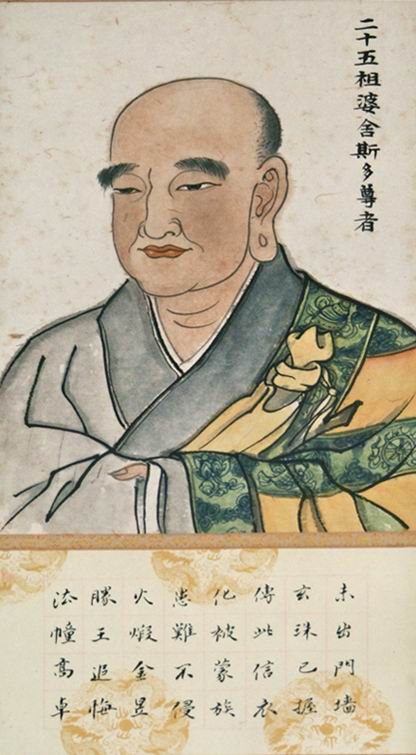
25Vasiasita婆舍斯多
25 / 28 · THE INDIAN PATRIARCHS
Vasiasita
婆舍斯多
The cooling spring
His traditional life includes a hot spring, a spirit and an act of reconciliation. The story portrays a teacher bringing relief through the Dharma; his successor is Puṇyamitra.
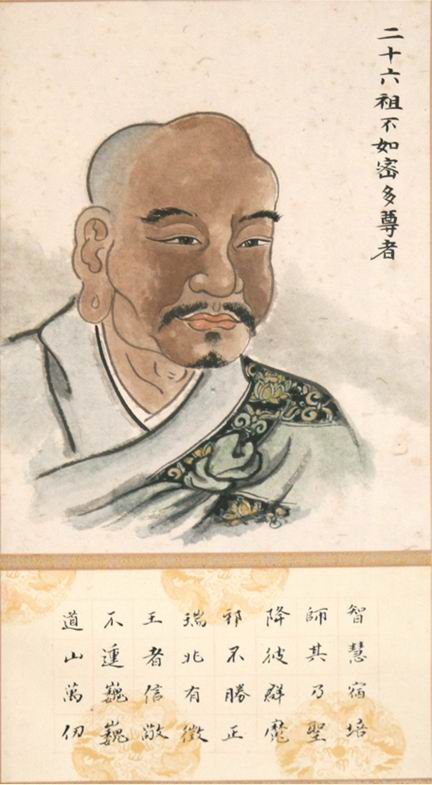
26Puṇyamitra不如蜜多
26 / 28 · THE INDIAN PATRIARCHS
Puṇyamitra
不如蜜多
Teaching beyond the robe
Remembered as a royal son who becomes a monk, he receives transmission from Vasiasita. Their account distinguishes the teaching itself from the robe that sometimes serves as its outward sign.
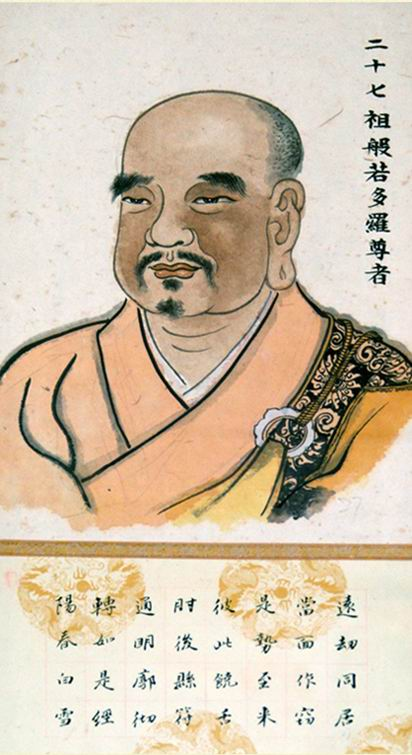
27Prajñātāra般若多罗
27 / 28 · THE INDIAN PATRIARCHS
Prajñātāra
般若多罗
A jewel and the light of wisdom
A precious jewel becomes the subject of an exchange with the young Bodhidharma. His answer places the treasure of the Dharma and the light of wisdom above material brilliance.
28Bodhidharma菩提达摩
28 / 28 · THE INDIAN PATRIARCHS
Bodhidharma
菩提达摩
One patriarch, two beginnings
The twenty-eighth patriarch of the traditional Indian succession is also the first patriarch in China. His remembered sea journey, meeting with the Liang emperor and association with Shaolin connect the Indian origin story with the Chinese Chan tradition.
The two lineages meet in one figure. Bodhidharma is remembered as the twenty-eighth Indian patriarch and the first patriarch of Chan in China. Early sources associate him with meditation and the teaching transmitted to Huike.
In the best-known account he travels from southern India by sea, reaches southern China, encounters Emperor Wu of Liang and continues north towards Shaolin. The single-reed crossing belongs to the story of the Yangtze, not the ocean voyage. His exact origin and arrival date remain uncertain.
Hualin Temple in Guangzhou, Dingshan Temple near Nanjing and Shaolin on Mount Song preserve different chapters of this remembered journey. Follow them on the map below.
The traditional succession from Bodhidharma to Huike, Sengcan, Daoxin, Hongren and Huineng is a way Chan communities remember their origins. The evidence for each life is uneven, and later biographies shaped the continuous lineage familiar today. Treat the stories as part of the tradition while asking what their sources can establish.
From the fourth and fifth patriarchs’ larger communities in the Huangmei area to the traditions surrounding Huineng in Guangdong, Chan developed within Chinese Buddhist practice and language. Its later branches spread through teachers, monasteries and texts rather than a single traveller’s route. The map and family tree below show those distinct layers; the Chan Journey brings the route map and daily itinerary together in a practical travel order.
A VOYAGE REMEMBERED · A LINEAGE ACROSS CHINA
Watch a tradition take shape.
An approximate origin, not a known port
The place of departure is unknown
Later accounts describe Bodhidharma as coming from southern India, while the early biographical sources differ. No reliable departure harbor or sailing date is known.
The three-year sea crossing belongs to later Chan storytelling; it is not a verified voyage duration or a known number of days. The line on this map is schematic, not a reconstructed shipping course.
Later Chan accounts place a conversation with Emperor Wu of Liang here. “Crossing the Yangtze on a reed” is a symbolic legend of his onward journey, not a record of the sea crossing.
Shaolin is linked to Bodhidharma’s meditation and the transmission to Huike, the second patriarch. “Nine years facing a wall” belongs to the tradition, not a verified duration.
Mount Sikong is associated with Huike’s later life and the meeting with Sengcan. From this point the map follows Chan transmission, not Bodhidharma’s own travels.
The cartoon and route are editorial illustrations of traditional accounts. Southern India is only an approximate origin; the port, sea path and duration are unverified. “One reed” refers to a Yangtze legend. Read the historical background ↗ · Read the research on disputed dates ↗
THE CHAN LINEAGE · AT A GLANCE
One line becomes many branches.
Read from Bodhidharma to Huineng across the top. The tradition then branches through Nanyue and Qingyuan towards the Five Houses; Huanglong and Yangqi are later branches of Linji, forming the familiar “Seven Schools” account.
This is a selected map of traditional affiliation, not every teacher or a verified chain of dated encounters. Some connections are debated by historians.
Mahākāśyapa’s sacred story, forest temples and Xuyun’s work at Zhusheng Temple add a distinct Yunnan exploration, with time for its own mountain setting.