
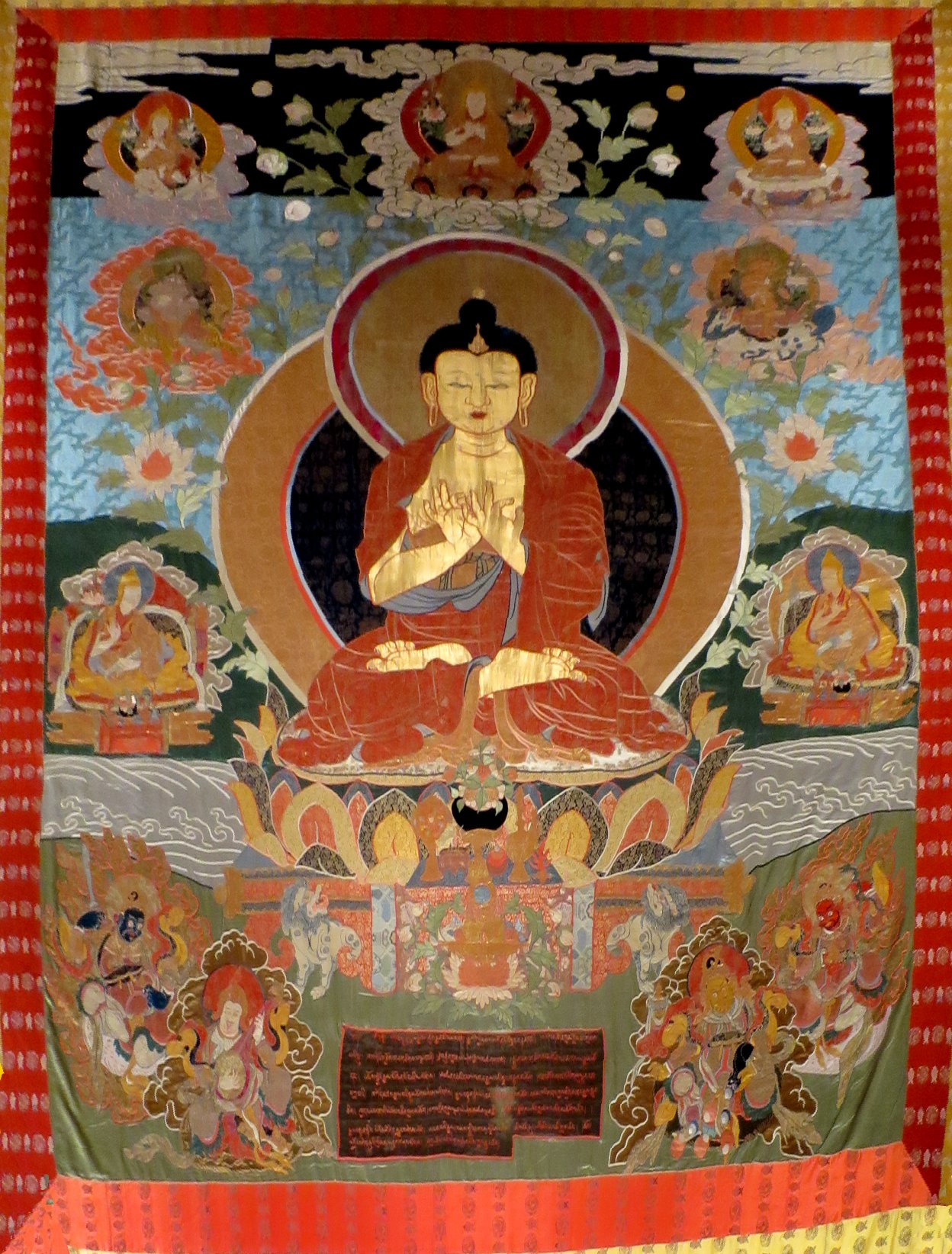
Lhasa Appliqué Thangka
Layered textiles give Lhasa's appliqué thangka a distinctive presence. Looking at the materials and construction offers insight into an art with religious and cultural meaning.
Here an image is built from layers of textile. Looking at how the pieces are assembled reveals a tradition distinct from painted thangka, with its own materials and religious meaning.
A closer encounter
- Discover the textile layers and construction of an appliqué image.
- Explore its cultural setting through respectful observation and explanation.
Tell us what interests you. We’ll shape the experience around your journey and confirm the arrangements in your personal proposal.
Include this in my journey ↗Explore Tibet ↗A tradition in context.
Lhasa’s fabric appliqué traditions connect cut textiles, stitching and religious imagery. A cultural introduction should respect the setting and the people who create and use the works.
Make time to understand.
Look at how layers of cloth, stitching and colour create a religious image, with interpretation of its use and setting. Workshop access and photography should be agreed with the makers; a cultural visit need not include making sacred imagery.
Pair the place with a living tradition
These are cultural pairings and possible travel extensions. Recognition of a tradition is separate from inscription of a World Heritage site.
Potala, Jokhang & Norbulingka ↗Recognition & cultural sources
Chinese ICH project record. This identifies the cultural tradition, not a certification of our visitor activity.