
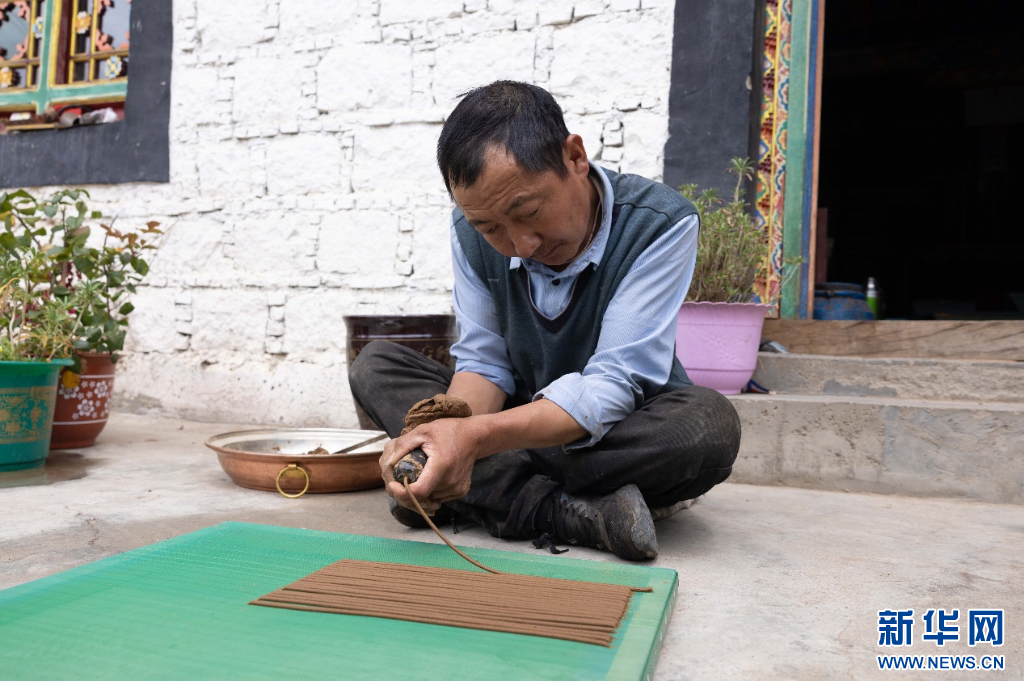
Nyemo Incense-Making
Follow Tibetan incense from water-ground wood to a hand-shaped stick. In Nyemo’s Thonpa area, the river, the workshop and the drying racks are all part of the story.
Along the Thon Chu river in Nyemo, water-driven mills grind cypress wood into a wet pulp. Makers dry and prepare the material, mix it with other ingredients and shape it into sticks before another drying stage. A small object used in Tibetan daily and devotional life carries the work of a whole sequence of hands and tools.
Watch the process, not just the finished bundle
Look for the change in the material: wood becomes pulp, prepared ingredients become a workable mixture, and shaped sticks are set out to dry. Not every stage will be running during a visit. Ask the host which work is taking place that day, and leave room for an explanation of the tools rather than expecting a complete production cycle.
Make room for Nyemo in the wider route
Nyemo is outside Lhasa and needs a separate road allowance within the agreed Tibet itinerary. Discuss the workshop, language support and any hands-on introduction in advance. A short participation session does not mean taking home freshly made incense: drying and the host’s working schedule determine what is possible.
A closer encounter
- Compare a water mill, prepared materials and finished incense where the host’s work allows.
- Discuss the craft’s place in local daily life without assuming medicinal benefits.
- Arrange observation or an appropriate short introduction; ask before photographing artisans and working spaces.
Nyemo is an excursion beyond Lhasa, to be considered within the wider Tibet route.
Tell us what interests you. We’ll shape the experience around your journey and confirm the arrangements in your personal proposal.
Include this in my journey ↗Explore Tibet ↗A tradition in context.
Nyemo’s incense-making is associated with Tibetan material knowledge and devotional life. Nyemo lies outside Lhasa, so a production visit needs its own travel time and arrangements.
Make time to understand.
Plan Nyemo as a separate outing from Lhasa, allowing for the journey and time at the production setting. Follow the material from grinding to preparation and drying; particular stages depend on the makers’ working day.
Pair the place with a living tradition
These are cultural pairings and possible travel extensions. Recognition of a tradition is separate from inscription of a World Heritage site.
Potala, Jokhang & Norbulingka ↗Recognition & cultural sources
China National Intangible Cultural Heritage · underlying tradition. This identifies the cultural tradition, not a certification of our visitor activity.