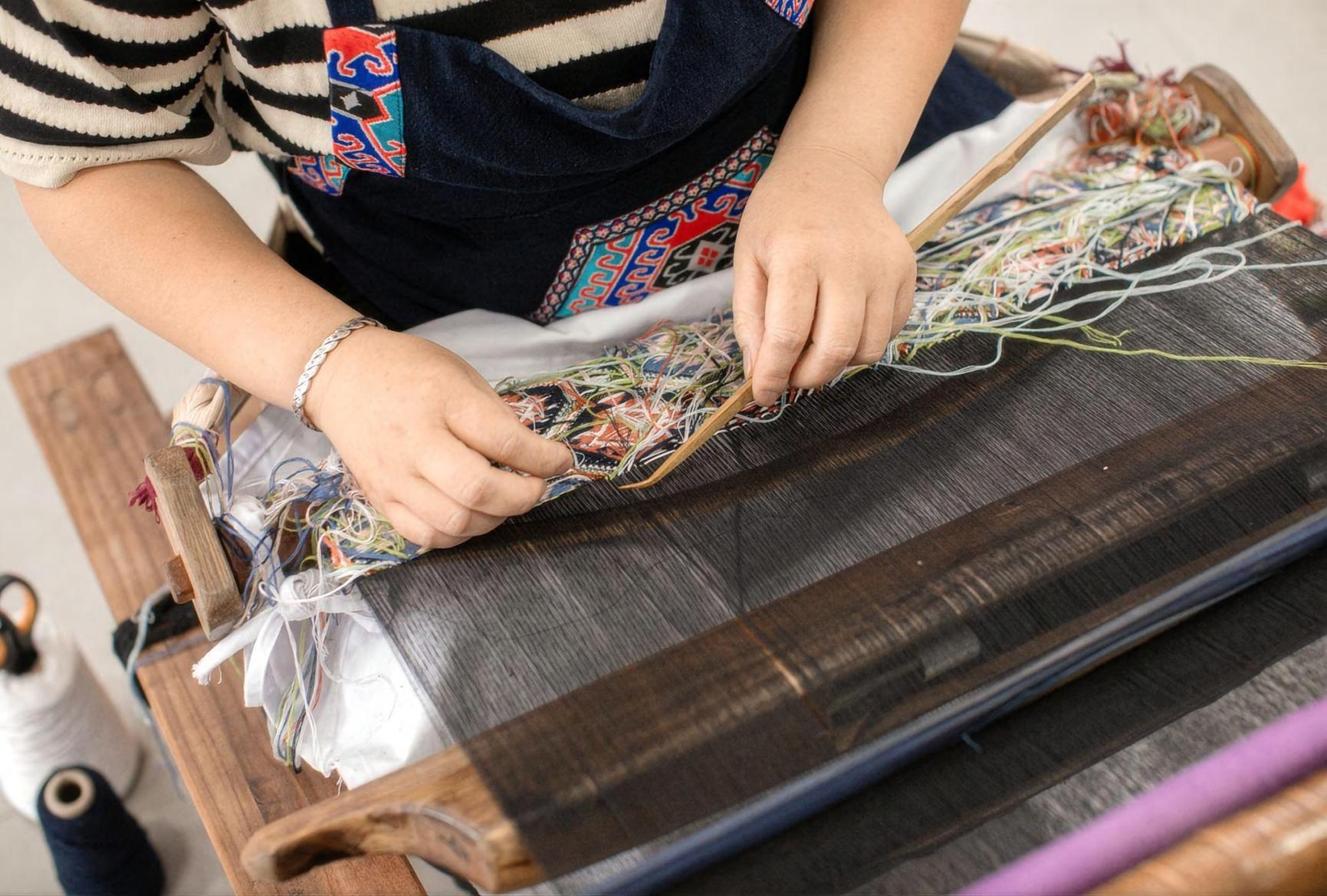
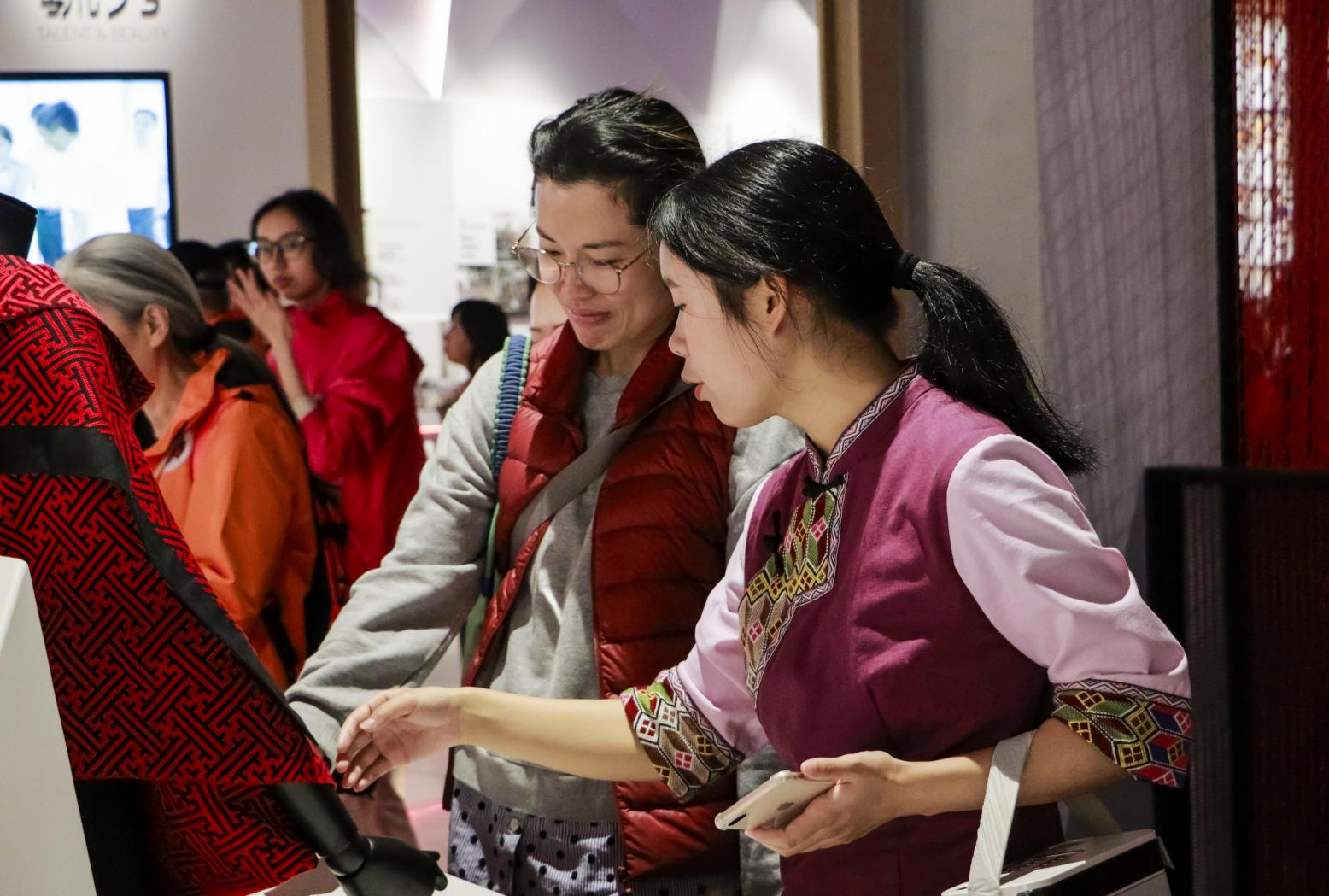
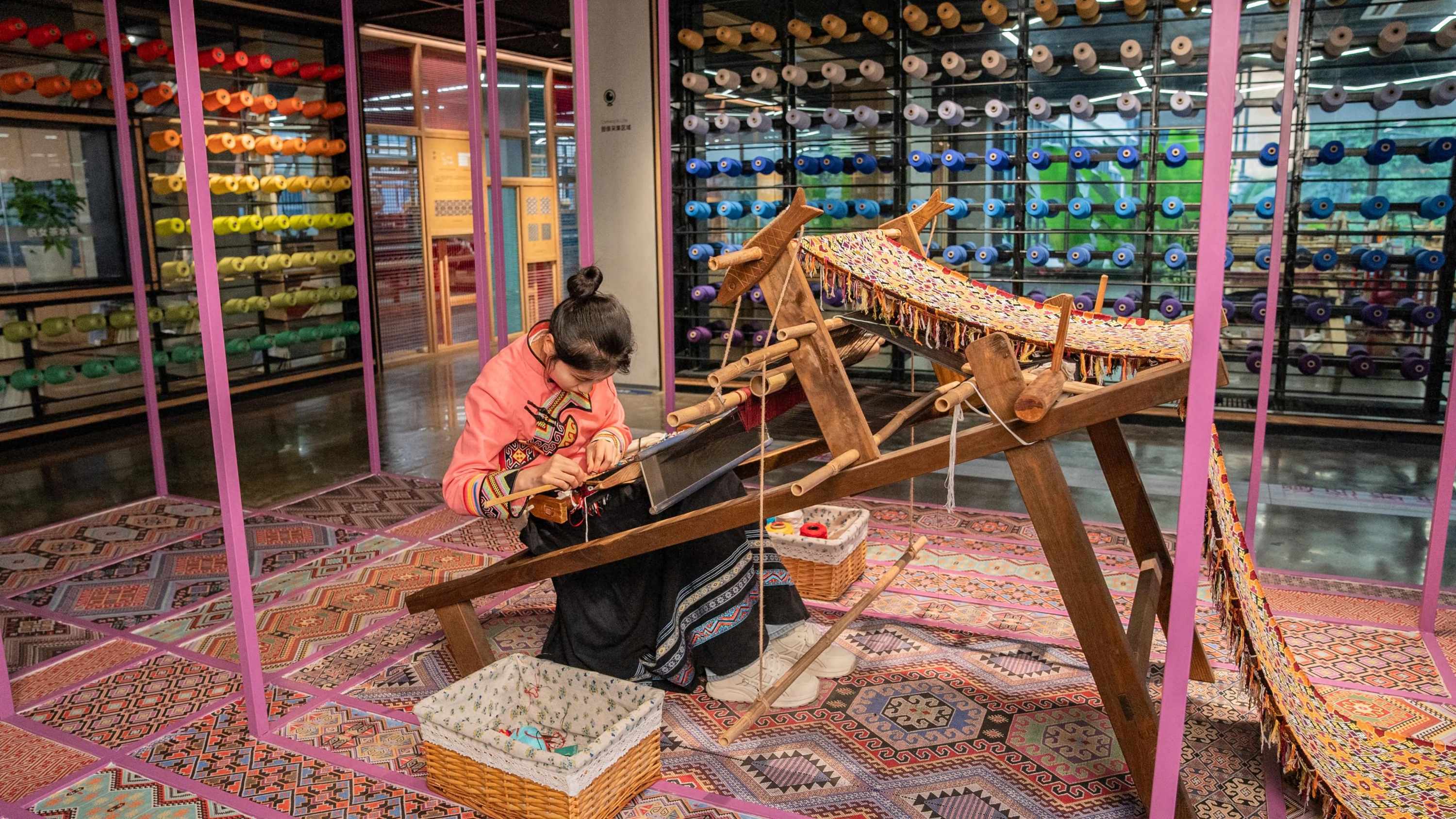
Combine a museum introduction with guidance at a traditional weaving loom. Feel how the threads move, try a short sequence and leave time for a photograph.
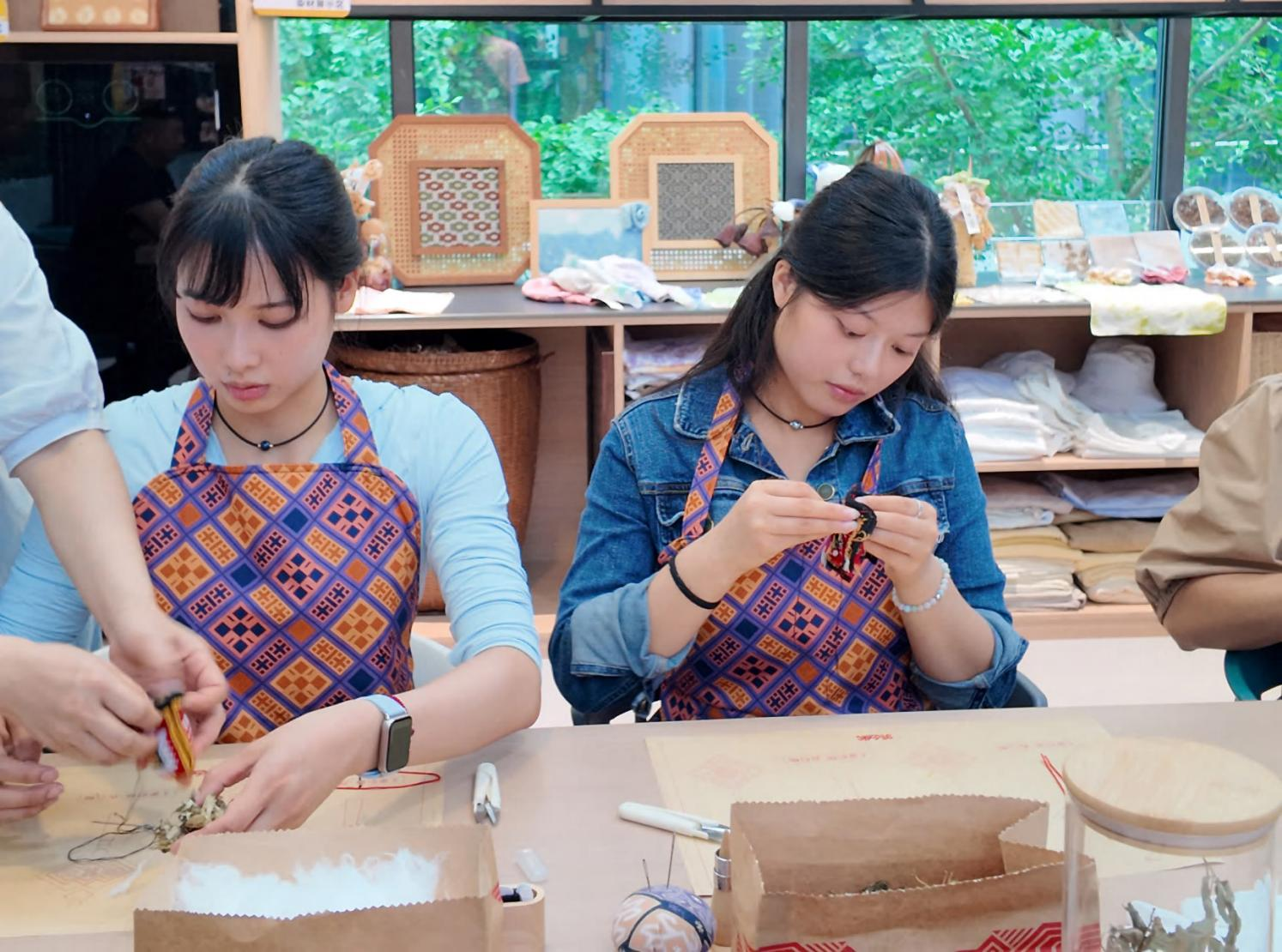
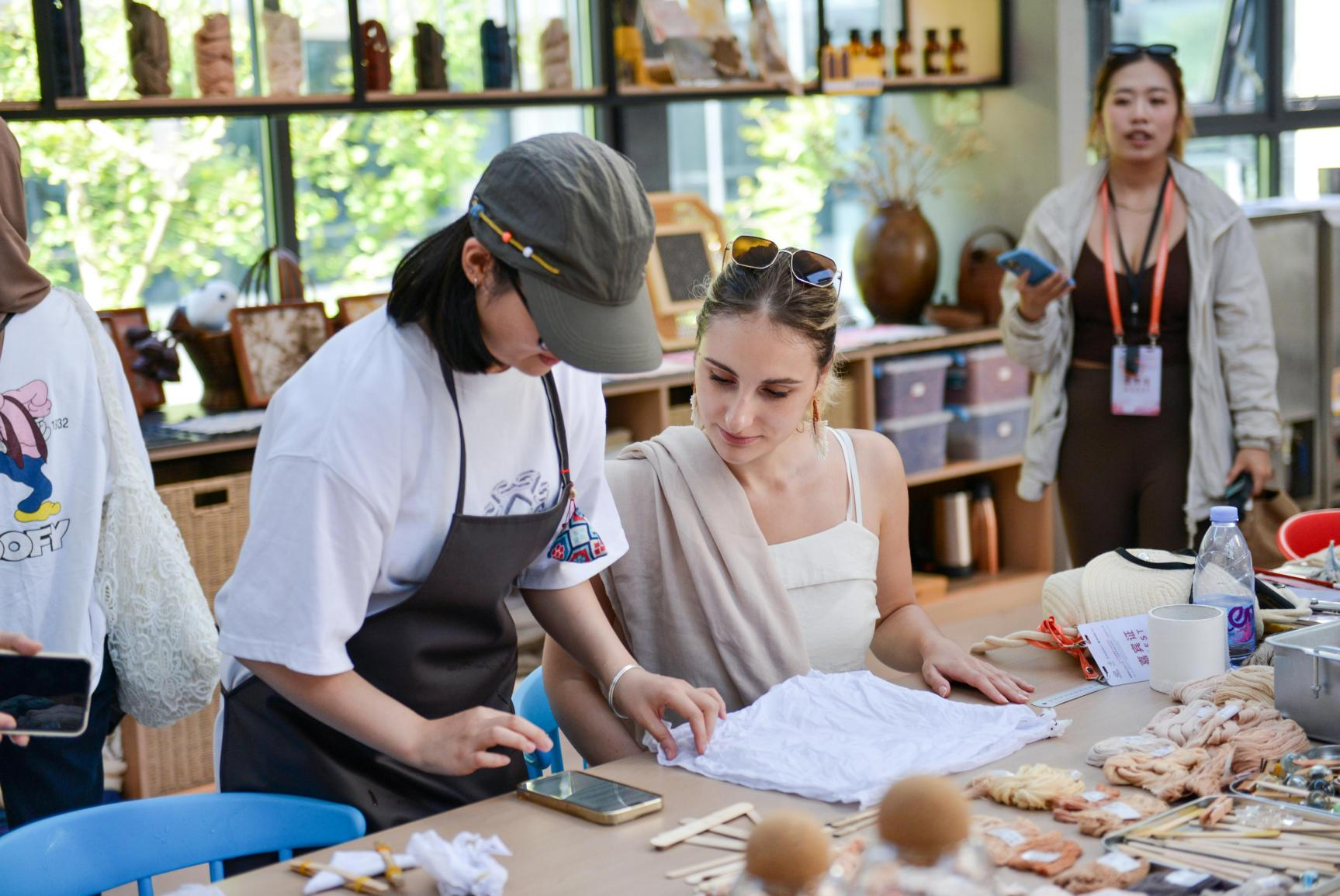
Follow the museum introduction and loom practice with a small sewing project. Make a brocade sachet with mugwort filling, and take your finished sachet with you.
After the museum visit and an introduction to weaving, explore the colour of local vine tea in a plant dyeing activity. Make a dyed handkerchief of your own.
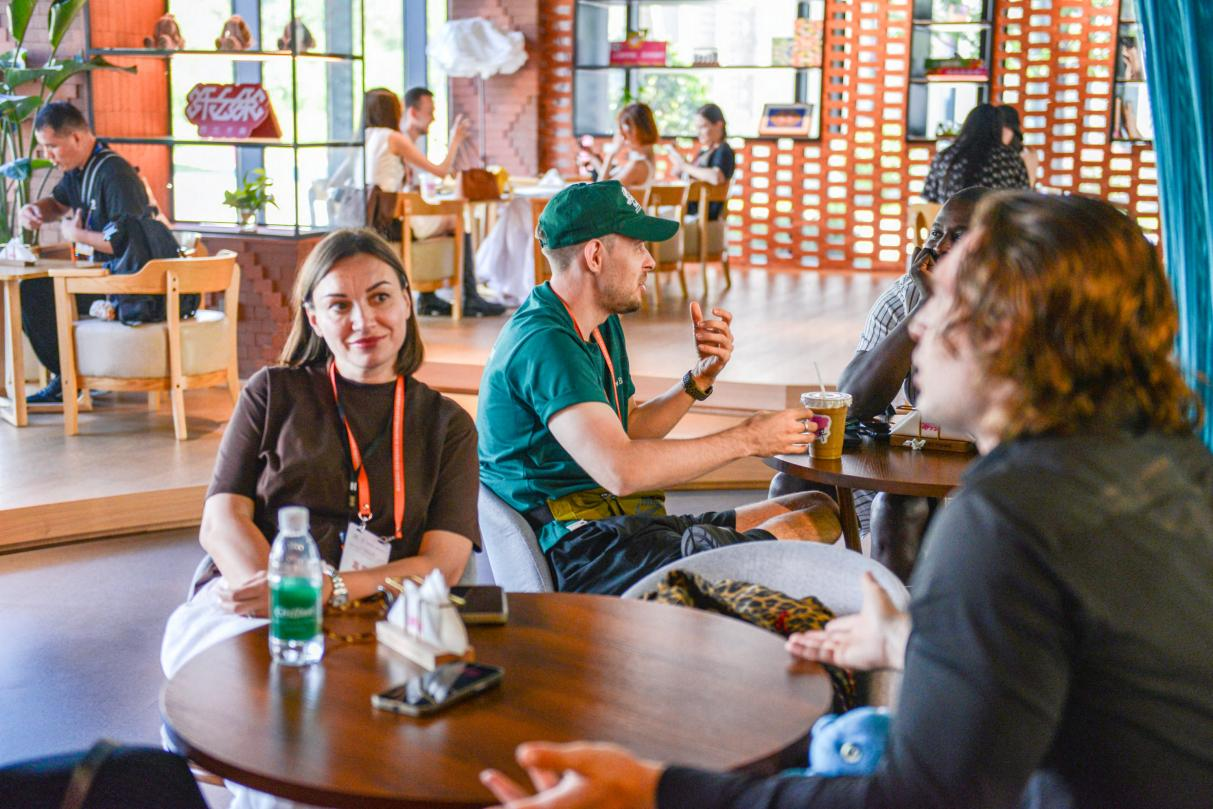
Bring the museum visit and loom introduction together with either sachet sewing or plant dyeing. Finish with a drink, pastries and fruit in the museum’s café or courtyard setting.
Tujia brocade gives colour and form to stories of daily life. At the China Tujia Brocade Art Museum in Yongding District, look closely at the pattern language, watch the work of weaving and choose a guided activity that fits your time in the city.
Introductory weaving is a chance to try the loom; it does not include a finished handwoven textile. Sachet sewing and plant dyeing offer a small piece to take home. We confirm the activity, language support, timing and any refreshments in your personal proposal.
Tujia brocade, often called Xilankapu, carries patterns associated with community life and local memory. Zhangjiajie’s museum workshop offers an accessible beginning to the discipline of weaving.
SHAPE YOUR ENCOUNTER
Make time to understand.
Keep the city-based museum visit and weaving introduction separate from a full scenic-area day. Choose a loom demonstration or one of the museum’s introductory activities; allow transfer time and confirm what you can finish during the session.
Pair the place with a living tradition
These are cultural pairings and possible travel extensions. Recognition of a tradition is separate from inscription of a World Heritage site.
Use a sample journey as a starting point and ask us to add this encounter. The activity is confirmed in your proposal, rather than automatically included in the sample itinerary.
China National Intangible Cultural Heritage · underlying tradition. This identifies the cultural tradition, not a certification of our visitor activity.